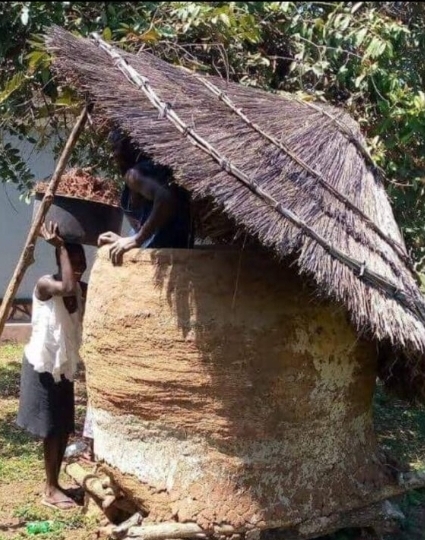

If you are joining us for the first time: In Episode 1, we visited Abongodero, the village named after Mzee Zakayo’s ingenuity. Zakayo never built a granary. He traded cattle for the harvest of others. His son, Okello Anyapo, inherited land but not discipline. When hunger came, his uncle Owera Apur, the only farmer who actually built, opened his granary to him. No rules. Just access. Okello emptied it, smiled, and said: “You allowed me. I merely accessed.” The proverb, which came from the lesson which Abongodero learnt from Okello Anyapo still echoes: You never send a starving man to the granary.
NOW LIFT YOUR EYES FROM THE VILLAGE.
In 1995, Uganda built a granary.
It was called the Constitution. The Constituent Assembly, our Owera, sweated over it. They filled it with grains, cereals and legumes: independence, fairness, accountability, public trust. They stored enough justice to last generations.
Then they handed the keys to Parliament and said:
“Guard this. Build walls around it. Regulate who enters, who eats, who guards. Pass laws to guide the President and the Judicial Service Commission in appointing, disciplining, and removing judicial officers.“
That was the command. Clear. Deliberate. Unambiguous, store the nation’s granary of justice to feed generations and posterity.
For thirty years, Parliament has done what the villagers of Abongodero did.
They admired the granary.
They walked around it. They named committees after it. They photocopied the Constitution into the Judicial Service Commission Act, sprinkled it with procedure, some insidous confidentiality and went home. They called that a good day’s job and pocketed fat salaries for dereliction of duty.
They left the rest to the Commission.
And what is this Commission?
A body composed largely of insiders. Judges. Judicial actors. The Attorney General, the government’s chief defender, seated comfortably in a structure that decides the fate of judges who sometimes rule against his own client.
It is as if Owera had not only handed Anyapo the keys, but appointed Anyapo’s hungriest siblings as the oversight committee to stop him from collecting excessive grains from the granary.
Friends regulating friends.
Parliament granted access. Parliament abandoned responsibility.
And Okello entered.
BEHOLD THE SEVEN FAMINES
1. The Shs 763 Billion “Justice Tax”
The Inspectorate of Government’s 2021 “Cost of Corruption” report estimated that Ugandan court users paid Shs 763 billion in bribes—43% of the 2019 justice sector budget.
Why?
Because Parliament never built the walls. The 2025 Regulations ensure that bribery does not lead to a judicial officer’s automatic removal. It whispers. It negotiates. It retires quietly with benefits.
At any judiciary function, you will hear rhetorical sloganeering about zero tolerance to corruption. The truth is the leadership and the whole institution preaches water and drinks wine. The structure of the Judicial Service Regulations, 2025 creates elite favors for the Judge, Registrars and the Magistrates.
We hunt “small thieves” in the civil service while the gatekeepers negotiate their exit through cabalist legislation.
2. The Incompetence Shield
A High Court judge can be removed for incompetence.
But for magistrates, the men and women deciding the everyday fate of boda riders, widows, and shopkeepers, incompetence does not lead to automatic removal. Parliament has allowed a regime where the “big fish” are fired for failing, but the “small sharks” are legally protected and recycled.
Why are judicial officers more “special” than nurses, teachers, engineers or lawyers in the civil service or private sector who are fired the moment they prove incompetent?
Because Parliament never built the walls.
3. The “Two-Man” Recruitment Cartel
Parliament’s silence allowed the Judicial Service Commission to create committees where the quorum is a mere two people, less than 50% of the committee.
The entire future of Uganda’s Bench can now be decided by two individuals in a private room, bypassing the multi-stakeholder wisdom the Constitution mandates.
Two people.
Deciding who judges you.
And Parliament watches.
4. The Executive “Pocket Veto”
Under Section 13(6) of the Act, no judge can be disciplined unless the Attorney General, the government’s own lawyer, is physically present.
By simply not showing up, the Executive holds a de facto veto over judicial accountability.
The government’s defender decides whether the judges who rule against the government face discipline.
You do not need a law degree to smell this rot.
5. Criminalizing Transparency
Instead of “open justice,” Parliament enacted Sections 17 and 23, making it a criminal offense to disclose Judicial Service Commission records without permission.
They didn’t just fail to build the granary.
They made it a crime to look inside and see what is being stolen.
6. The “Non-Accountable” Ghost Tier
By failing to define “Judicial Officer” properly, the law creates a phantom tier of Registrars, Deputy Registrars, Assistant Registrars, Chief Magistrates and Tribunal actors who exercise power over citizens but are legally insulated from oversight.
They have the power of a judge.
They have the accountability of a ghost.
7. The Commission That Judges Itself
The Judicial Service Commission receives complaints. Investigates them. Prosecutes them. Hears them. Decides them.
Investigator. Prosecutor. Judge. Jury.
All in one hut.
We are warned about such concentration of power. But warnings without legislative correction are like a quarrel of drunkards at the village square.
Parliament heard the warning.
Parliament did nothing.
AND WHEN THE VILLAGERS COMPLAINED…
When the Uganda Law Society, noisy, stubborn, unapologetic and unyielding, attempted to intervene?
Injunctions.
Uncause-listed petitions.
Elections stalled.
Appointments to the Judiciary proceeded like wedding ceremonies that will not wait for objections.
The granary was gutted politely.
“SHUT UP! YOU ARE GIVING US TRAUMA”
At the 2026 New Law Year, Chief Justice Flavian Zeija warned that social media attacks on judges would not be tolerated. Online criticism, he said, causes trauma and will be crushed.
Trauma from tweets?
Try the trauma of five years on remand while your case gathers dust.
Try the trauma of losing ancestral land because you cannot afford a surveyor.
Try the trauma of watching a bribe walk free while your child rots in detention.
The Uganda Law Society replied, correctly, that scrutiny is constitutional oxygen.
But the Chief Justice’s instinct was not an accident.
It was Okello Anyapo protesting demands for answers when Uncle Apur required answers for the granary that was depleted because he gave access without regulation. He permitted Anyapo to eat without brakes.
Because the elders of Abongodero reminded Apur that the roots of accountability are bitter but the fruits are sweet!.
[End of Episode 2]
 enenlegalworld