The Supreme Court has spoken. The revolution has won. The military courts are finished. It took 25 years of legal battles, endless delays, and the relentless fire of Uganda’s most radical legal minds, but justice has finally arrived. And when it came, it wasn’t subtle. It came with the full force of the Constitution, a gavel so loud it could shake the foundations of every military courtroom still pretending to be a temple of justice.
This is not just a legal victory; it is a demolition job on a long-standing abuse of power. It is the final nail in the coffin for a system that has for decades terrorized civilians, dragging them before military tribunals as if they were rogue soldiers, silencing dissent under the guise of national security. And the Supreme Court? Oh, the Supreme Court delivered its judgment with flair, with humor, and with the kind of clarity that leaves no room for debate.
Chief Justice Owiny-Dollo, ever the master of courtroom theatre, laid it all bare in ways that had the entire legal fraternity both laughing and nodding in agreement. Imagine a Uganda where he, a civilian, is picked to lead a military brigade to guard the war-torn eastern border with the DRC. Imagine him, clad in combat gear, barking orders to soldiers while probably asking them which way to point a gun. Or worse—picture him in a hospital theatre, standing over an unconscious patient, scalpel in hand, completely clueless about whether he’s holding a kidney or a liver. Madness, right? Exactly. That, he said, is the absurdity of putting untrained military officers in charge of dispensing justice.
This was the point where even the most rigid courtroom observer had to chuckle. But beneath the humor was a devastating truth: military courts are tribunals run by people without the first clue about judicial procedure, yet they have spent years presiding over cases, handing down life sentences and convictions like they were distributing rations at a military mess. The Chief Justice didn’t mince his words. The Constitution was clear, and so was the Court—military justice is for military personnel, period. Civilians have no business being tried there.
And yet, as the judgment was delivered, there was another remarkable moment. Counsel Caleb Alaka, one of Uganda’s legal firebrands, stood up and did something few saw coming—he apologized. On behalf of the Uganda Law Society, he expressed regret for the extreme activism, the relentless pressure, the public letters, the weekly legal firebombs the Radical New Bar had been hurling at the Supreme Court, demanding action. The judges listened, some perhaps amused, others with the quiet satisfaction of warriors who had just emerged victorious in a long and bloody intellectual battle.
The apology was sincere, but let’s be honest—this war was necessary. The Radical New Bar, under the fearless and uncompromising leadership of Isaac K. Ssemakadde, fought like hell to make this ruling happen. The legal establishment had long grown too comfortable, too resigned to waiting indefinitely for judgments while civilians continued to be dragged before military tribunals. The RNB was having none of it. Weekly press conferences, legal activism so sharp it cut through the silence, direct challenges to judicial inertia—this was lawfare at its finest. And in the end, the pressure worked.
The judgment is now out, and the message is clear: no more military courts for civilians. No more kangaroo justice. No more legal intimidation. If the army wants to try someone, that person better be wearing a uniform. Otherwise, they belong in the courts of law established by the Constitution. And for those still clinging to the old ways, still hoping that military justice can be used as a tool of fear and suppression? Pack up your case files. Your era is over.
For the Uganda People’s Defence Forces, the ruling leaves no room for negotiation. Civilians currently facing trial in military courts must be released. Every ongoing case must be dropped. Any attempt to defy this ruling will not just be illegal—it will be suicidal. The ULS and the RNB are watching. The Supreme Court is watching. And the Ugandan people, tired of impunity, will not tolerate another second of this nonsense.
Parliament? Time to clean house. The UPDF Act needs to be amended—immediately. Those loopholes that allowed military courts to overstep their jurisdiction must be sealed permanently. No more ambiguity, no more exploitation of civilians through legal gymnastics. This ruling has set the standard, now it’s up to lawmakers to ensure the law reflects it. And the Executive? The President, the Attorney General, the Director of Public Prosecutions—they need to act. Not tomorrow, not next week. Now.
For those who still think this is just another ruling, another judgment to be ignored or manipulated—think again. This is the beginning of a new era. The days when military courts were used as tools of intimidation are gone. The days when civilians had to fear being hauled before unqualified military judges who don’t know the difference between fair trial rights and a parade drill are gone. This is what victory looks like.
Uganda’s legal profession will never be the same. The Supreme Court has reaffirmed its place in history. The Radical New Bar has cemented its reputation as the most effective force for legal accountability in modern Uganda. And the Constitution? It has won. The rule of law has won. Justice has won.
The revolution is here, and it has no brakes.
A copy of the Judgment can be found here
The statement of the Uganda Law Society welcoming the Judgment can be found here
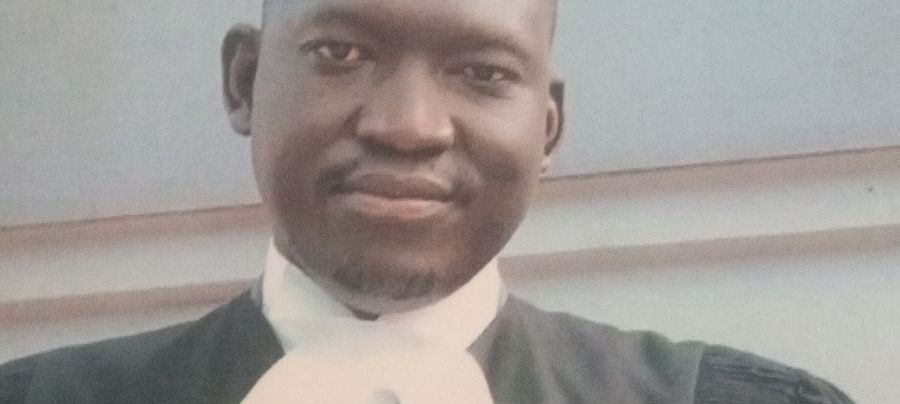
Enen Ambrose is a Rule of Law enthusiast and a supporter of the firebrand president of the Uganda Law Society, Isaac K Ssemakade.
Disclaimer: This write up is for informational purposes only and should not be taken as a substitute for professional legal advice. Readers are advised to seek the services of a qualified attorney in their area of Jurisdiction for situation specific legal advice and course of action.
Do you have a story in your community that sheds light on the Rule of Law discourse that you want us to discuss about? Or do you have valuable constructive feedback for us?
Please reach out to us on, ambrosenen@gmail.com or +256789856805
 enenlegalworld