What happened to Counsel Lukwago strikes at the heart of justice. Arresting and intimidating a lawyer for _preparing to serve court papers_ is a direct attack on the rule of law. If advocates can’t file and serve process safely, the courts themselves are under siege.
I hope this time the Judiciary will apply its Constitutional Duty under Article 126(1), of The Constitution of Uganda. _“Judicial power is derived from the people and shall be exercised by the courts… in the name of the people and in conformity with law and with the values, norms and aspirations of the people.”_
When an officer of court is “abducted” for doing his job, the Judiciary must: – Issue a statement The Chief Justice or DCJ or PJ should publicly condemn any interference with legal process. Silence reads as consent or complicity. – Demand immediate disclosure: Courts have inherent power to require security agencies to produce a detained advocate and state where he is he is especially where messages shared are distressing like what we are seeing-
Post by Erias Lukwago on X
Protect the process: No person is above service of process. – Judiciary has been put on trial by these events as to whether it will protect the judicial process or not.The whole world is watching I believe. – As for Ugandans ,its difficult to know what they think: New Normal has arrived for them. – Secondly Uganda Law Society must defend its members and the rule of law. They should file an-
Emergency petition in High Court for Lukwago’s production and safety. They should not wait for end of 48 hours. ULS should Call for judicial inquiry Into the “basement” photo, the arrest, and likely torture. Surely the Provisions of the Constitution particulatly Article 24 of the Constitution protects people from torture as “No person shall be subjected to any form of torture, cruel, inhuman or degrading treatment or punishment.”. It is mandatory.
I saw members on LDC Legal Alerts forum supporting Torture of suspects, and these were both Judicial Officers and Advocates, I hope they have seen the dangers of tolerating torture of anyone arrested I hope ULS will be serious on formally bringing this to the attention of the International community because independence of the judicial officers and lawyers has been terribly affected. They are now siezed with fear.
Lawyers who would persue this matter might be the next victims. No one is safe.
If ULS does not rise up and take practicable steps, the rights of their members to practice under Article 40(2) – Every Ugandan has a right to practice their profession will seriously be affected. 2. Independence of lawyers under UN Basic Principles on the Role of Lawyers must be upheld. _“Governments shall ensure that lawyers are able to perform all of their professional functions without intimidation, hindrance, harassment or improper interference.”_ 3. There can be no justice without Access to courts. If lawyers are arrested for serving papers, you’ve shut the court doors there by violating Article 28– Right to a fair hearing.
Every person regardless of the nature of his or her case has a right to legal representation. Harrassing lawyers should be condenmed in the strongest terms and action taken.
Even the Holy Word of God provides for legal services. Proverbs 31:8-9: _“Speak up for those who cannot speak for themselves, for the rights of all who are destitute. Speak up and judge fairly; defend the rights of the poor and needy.”_ Isaiah 1:17: _“Learn to do right; seek justice. Defend the oppressed.”_
A reign of terror starts when advocates are punished for representing particular clients or filing papers in court. It ends when the Judiciary says _“No. Not on our watch.”_ That is why Judiciary and ULS has to work together to end this foolishness and impunity
What should happen next 1. Immediate production: Lukwago must be brought before a judge within 48 hours per Article 23(4). 2. Medical examination: If the photo shows distress, an independent doctor must assess him for torture. 3. Protective orders: Court should bar security agencies particulary UPDF, from interfering with lawyers serving process in any case filed in Ugandan courts. 4. The judiviary should come out to condenm illegal ingazetted basements for this is not the first time its happening Everything goes back to the Judiviary as an arm of Government. Terror cannot rule where law stands. Judiciary should apply the law as it is. Their current complicit is allowing terror to stand. Eddy Mutwe, and others would not be in jail now if _Judiciary was exercising its Judicial independence. I know the word of God says: “Tyranny will be far from you; you will have nothing to fear” Isaiah 54:14 But that promise requires judges, lawyers, and representatives of citizens in Parliament to act and citizens themselves. Silence means you have consented to Terror. Is that so for Ugandans? Let Lukwago’s case open our eyes. No one is safe .
From Enen Legal World:
This Blog foreshadows for a high ranking Judicial Officer who prefers to remain anonymous for fear of “the basement” which is nolonger a secret.
Constitutionalism, Deterrence and the Price of Violating Non-Derogable Rights
Constitutional courts shape legal culture. Some decisions expand the reach of rights. Others contract it. Some become monuments to constitutional progress. Others become warnings from history.
Indeed, it may come to be remembered as one of the most consequential constitutional regressions since the promulgation of the 1995 Constitution.
The judgment has already generated intense debate. Supporters praise it as a restoration of balance between the rights of accused persons and society’s legitimate interest in the prosecution of crime. Critics view it as a retreat from the robust protection of non-derogable rights that Ugandan courts painstakingly developed over the last two decades.
I count myself among the latter.
Not because I underestimate the importance of criminal accountability.
Not because I believe every constitutional violation should automatically free every accused person.
But because I believe the Court has fundamentally misunderstood the constitutional function of consequences.
At its heart, Faruku is not a case about criminals.
It is a case about incentives.
It is a case about deterrence.
It is a case about the price the State must pay when it violates the Constitution.
And once one understands that, the implications become profoundly unsettling.
The provision was never principally about rewarding accused persons.
It was never principally about frustrating criminal trials.
Nor was it intended to create technical escape routes for the guilty.
Its purpose was institutional.
Its purpose was preventative.
Its purpose was deterrent.
Every legal system creates incentives.
A police officer deciding how to obtain evidence responds to incentives.
An investigator deciding whether to respect constitutional safeguards responds to incentives.
A security agency deciding whether compliance is worth the inconvenience responds to incentives.
The genius of Section 11(2) was that it altered those incentives.
It communicated a simple message:
If you violate non-derogable rights, you may lose the prosecution altogether.
That message did not exist to protect criminals.
It existed to discipline power.
It existed to ensure that constitutional compliance became the cheapest option available to the State.
The Court has now substantially weakened that discipline.
THE DOCTRINAL ERROR: WHEN A DETERRENT BECOMES A SUGGESTION
The central problem with Faruku is doctrinal before it is political.
Section 11(2) was not merely a remedy available to an accused person after a violation had occurred.
It was a prophylactic rule.
A constitutional deterrent.
A bright-line consequence designed to influence institutional behaviour before violations occurred.
The provision did not merely compensate victims.
It regulated power.
By emphasizing alternative remedies such as compensation, civil suits, administrative sanctions and criminal proceedings against offending officers, the Court transformed a deterrent into a suggestion.
That distinction matters.
A deterrent commands compliance.
A suggestion invites balancing.
A deterrent changes behaviour.
A suggestion merely expresses disapproval.
The practical consequence is that the constitutional cost of violating non-derogable rights has been reduced.
Rights rarely disappear overnight.
More often, they remain on paper while their practical force is quietly diminished.
That is why Faruku is so significant.
The issue is not whether rights still exist.
The issue is whether violating them has become cheaper.
ARTICLE 44 WAS WRITTEN IN BLOOD, NOT THEORY
Perhaps the most troubling feature of the judgment is its apparent detachment from the constitutional history that produced Article 44 itself.
Article 44 did not emerge from academic theory.
It did not emerge from abstract constitutional philosophy.
It emerged from Uganda’s encounter with arbitrary power.
It emerged from detention without trial.
It emerged from torture.
It emerged from disappearances.
It emerged from constitutional crises that taught painful lessons about what happens when power operates without meaningful restraint.
The framers of the 1995 Constitution understood something simple:
Power rarely restrains itself.
That understanding explains why certain rights were elevated beyond ordinary balancing exercises.
The Constitution does not merely describe freedom from torture as important.
It describes it as non-derogable.
That distinction is critical.
A right that may be balanced against competing interests is fundamentally different from a right that may not.
The Court repeatedly invokes society’s interest in prosecution.
But Article 44 itself represents a balancing exercise already undertaken by the framers.
They considered the demands of security.
They considered public order.
They considered law enforcement.
They nevertheless chose to place certain rights beyond derogation.
The question therefore is not whether courts should rebalance those interests today.
The question is whether courts are free to rebalance what the Constitution has already balanced.
That question deserves far greater attention than it has thus far received.
LEGAL CULTURE: A PERSONAL OBSERVATION
Years ago, I appeared before a Chief Magistrate in a criminal matter that had stagnated for nearly three years.
I argued that the accused person’s constitutional right to a fair and speedy trial had been violated.
The Magistrate looked at me and asked:
“Are you sure the Constitution says the hearing must be speedy?”
I answered in the affirmative.
A copy of the Constitution was produced.
The word was found.
The Magistrate then asked:
“But Counsel, why are you over-lawyering?, I thought you are in a hurry and have other things to do? Me I want to adjourn my matters today and travel for the weekend”
Many younger lawyers would find that exchange difficult to believe.
That is precisely the point.
For the last two decades Uganda’s legal culture has been evolving.
But together they built something larger than individual precedents.
They built a culture.
A culture in which State actors increasingly understood that constitutional violations carry consequences.
Faruku teaches a different lesson.
THE COURT’S BALANCING EXERCISE
To criticize the judgment honestly, one must first acknowledge its strongest argument.
Society possesses a legitimate interest in the prosecution of crime.
Victims possess rights.
Public safety matters.
Few reasonable people would celebrate a system in which serious offenders automatically escape accountability because constitutional violations occurred during investigation.
That concern deserves respect.
I do not pretend the question is easy.
There are undoubtedly hard cases at the margins.
But the answer to a difficult question is not to abandon deterrence altogether.
The Court’s solution effectively transfers the cost of constitutional violations away from the State and onto the victim of those violations.
The Court assures us that alternative remedies remain available.
Compensation.
Civil litigation.
Administrative sanctions.
Criminal prosecution of offending officers.
In theory, this appears balanced.
In practice, it appears detached from reality.
How many torture survivors successfully litigate compensation claims after years of detention, trial, imprisonment, poverty and trauma?
How many possess the resources necessary to commence fresh proceedings against the very institutions that violated their rights?
The remedy exists on paper.
Life exists in reality.
The two are not always the same.
THE REALITY PROBLEM
Constitutional theory cannot be divorced from constitutional reality.
Uganda is not debating torture in a vacuum.
Uganda is not debating arbitrary detention in a vacuum.
Uganda is not debating abuse of power in a vacuum.
We are debating these issues within a society where allegations of torture remain common, where unlawful detention continues to generate public controversy and where citizens routinely question whether constitutional safeguards are sufficient to restrain State power.
Perhaps the most chilling symbol of this reality is linguistic.
Ugandans now speak of “drones” not as aircraft but as a particular form of feared encounter with power.
Think about that.
Think about how much constitutional failure must occur before a society casually incorporates the language of disappearance into everyday conversation.
That normalization did not happen by accident.
It happened because constitutional safeguards increasingly appeared uncertain.
The question is whether Faruku strengthens those safeguards or weakens them.
In 1896, the United States Supreme Court decided Plessy v Ferguson.
The Court did not abolish equality.
It merely reinterpreted it in a manner that dramatically reduced its practical force.
Rights remained on paper.
Their effectiveness diminished in reality.
Fifty-eight years later, Brown v Board of Education repudiated that approach.
The lesson is not about race.
The lesson is about constitutional trajectories.
Constitutional progress is not inevitable.
Rights expand.
Rights contract.
Courts advance liberty.
Courts retreat from it.
Faruku does not abolish Article 44.
It does something more subtle.
And therefore potentially more consequential.
It preserves the right while reducing the consequences of violating it.
That is the structural similarity.
In neither case was the constitutional right formally erased.
Instead, the practical cost of ignoring it became negotiable.
That is how constitutional regressions often occur.
Not through dramatic declarations.
Not through open hostility to rights.
But through incremental reductions in consequence.
History teaches that constitutional decline rarely begins when courts announce that rights no longer matter.
It begins when courts assure us that rights still matter while simultaneously reducing the cost of violating them.
CONCLUSION
The Supreme Court may reverse Faruku.
It may not.
That question will be answered in due course.
The more profound question concerns constitutional culture.
For two decades Uganda appeared to be moving toward a constitutional order in which rights carried consequences and power carried limits.
Faruku signals movement in the opposite direction.
Whether that signal becomes a turning point or merely a temporary detour remains unknown.
History will answer that question.
The rest of us must live through it.
If future generations inherit a stronger constitutional culture, Faruku will be remembered as a wrong turn that was eventually corrected.
If they inherit a weaker one, where torture remains illegal but increasingly inexpensive for the State, they may remember it differently.
Not as the day constitutional rights disappeared.
But as the day violating them became cheaper.
Not as the day the Constitution died.
But as the day it was asked to whisper where once it could roar.
DISCLAIMER:
The contents of this Blog are not intended to be used as a substitute for legal advice. The author shall not accept liability for use of the contents of this Blog as legal advice. Readers are encuraged to consult qualified advocates for real life situations for legal advice.
JOIN THE UNDERGROUND ANDFUEL THE MOVEMENT
We have created a dedicated fans WhatsApp Channel. Don’t miss the latest updates, get early bird access to our latest blog posts and more, so much more. Click the following link to follow the Channel: https://whatsapp.com/channel/0029Vb9BQqw5a246bWVsLl3j
Independent institutional critique and advocacy for a radical overhaul of legal culture require time, deep research, and uncompromised independence. If these narratives bring value to your legal journey or challenge your perspective, please visit our HOME PAGE to see how you can support this platform directly and keep the critique fierce and relentless.
Author’s Note: The Chronicles of His Worship Mulyanyama is a serialized literary commentary designed to constructively critique the institutional and structural implications of the Magistrates Courts (Amendment) Act, No. 6 of 2026. This work is a creative exploration of the human infrastructure behind public service and is not intended to ridicule, embarrass, or undermine the integrity of the Judiciary.
The brown envelope had not lied.
TRANSFER OF FILES – FOR JUST CAUSE. No explanation. No appeal. Just a signature from the Chief Magistrate and a list of file numbers.
Among them: File No. 43. The twins fighting over cassava. Imat Nekolina’s envelope. Ocen Okello’s breach of contract case for the supply of beans to Kec Primary School.
All of them, transferred. To whom? For what reason? The envelope did not say.
Mulyanyama set the letter down. He did not call the Chief Magistrate. He simply stared at his phone.
Counsel Ogwang Adede woke before sunrise.
He had spent 200,000 shillings on fuel the previous evening – a calculated investment. Today, he would drive from Lira to Omwonyo‑le for Ocen Okello’s case. Four years of beans. Four years of adjournments. Today, he would close the defence under Order 17 Rule 4.
He checked his phone.
A message from the headmaster: “Fees balance remains. Your son cannot sit exams.”
He silenced it. First, court. Then fees.
Then he opened the Lira High Court WhatsApp group.
NOTICE:The Honourable Judge will not sit this week. He has been deployed to Omwonyo‑le for a donor‑funded SGBV session. All matters stand adjourned.
He refreshed. The Omwonyo‑le Magistrates Court group had a new notice:
NOTICE:His Worship Mulyanyama has been designated Registrar for the forthcoming SGBV session. Additionally, a donor‑funded plea bargaining session will run for two weeks. No judicial officer will be at Omwonyo‑le during this period.
He scrolled further.
UPDATE:All other magistrates and the Registrar have travelled for a Judiciary conference. Only those excused for donor conditionalities remain in session.
Counsel Ogwang Adede stared at the screen.
In Lira – no Judge. In Omwonyo‑le – no Mulyanyama. No Magistrate. No Registrar. No court. Two weeks.
He had spent 200,000 shillings on fuel. But that was not the worst of it.
That morning, he had been expecting a deposit of 30,000,000 shillings in taxed costs from a judgment debtor – Okullo Aram. The matter was coming up for Notice to Show Cause before the Registrar of the High Court in Lira. Okullo had called last evening, panicking, begging not to be thrown into civil prison. He was prepared to deposit the money in front of the Registrar.
Then Okullo sent a message: a photo of a notice from the Registrar’s chambers. The Registrar had travelled to Kampala overnight – for a donor‑funded workshop on case management.
After sending the notice, Okullo’s phone went silent.
Counsel Ogwang Adede called back. Twice. Three times. Nothing.
Later, he learned that Okullo Aram had five children in university and three in secondary school. The money that was meant for taxed costs had been redirected – to tuition fees, to accommodation, to books.
The debtor had not fled. He had simply reprioritised. And the law could not touch him – because the Registrar was not there to hear the Notice to Show Cause.
His clerk’s salary would wait. His legal assistant’s salary would wait. The headmaster’s message about his son’s exams would not wait.
Then his firm WhatsApp group buzzed.
A calling letter. From His Worship Munyakuzi, Chief Magistrate of Oneka Iden – the Chief Magisterial area under which Omwonyo‑le fell.
TRANSFER OF FILE – FOR JUST CAUSE. On the court’s own motion, Ocen Okello’s case is transferred to my court for hearing.
No application from any party. No consent. No explanation. Just just cause.
Counsel read it twice. His hands did not shake. They had done this before.
Mulyanyama had also seen the letter.
He picked up his phone and called Munyakuzi.
“Sir, with respect… those are live matters. Judicial independence –”
A pause. Then Munyakuzi laughed.
“Worship, did you not read Section 217A of the amendment? I have powers to transfer those files to my Court.”
The line went dead.
Mulyanyama stared at his phone. The ground at Omwonyo‑le had swallowed an axe. Now the law was swallowing itself.
Ocen Okello did not learn about the transfer from a noticeboard.
He learned it from Alyek Molly.
He had not even reached the bank. His Boxer motorcycle was still coughing dust somewhere between Abako and Oneka Iden when his phone vibrated.
He smiled when he saw the name. Alyek Molly – Registry. He answered immediately.
“My daughter… how is today?”
For a second, Alyek said nothing. Then her voice came – soft, tired, almost apologetic.
“Mzee… don’t come to court.”
Silence.
“I have already told your lawyer.”
Ocen slowed the motorcycle. “What now?”
Alyek looked through the registry window before answering. “His Worship has two critical assignments.” She lowered her voice. “He has been designated Registrar for the SGBV session… and after that… another plea bargain project. Two hundred files. Fifteen days.”
Ocen said nothing.
Alyek swallowed. “Mzee… save your fuel.”
The line went dead.
Forty minutes later, Ocen Okello sat inside the office of the loan officer.
Tie. Ledger. Calculator. No smile.
The file marked MORTGAGE RECOVERY – FINAL NOTICE lay open on the desk.
Ocen removed his cap. Held it in both hands. And began pleading.
“Sir… please do not sell my house.”
He swallowed. “The case is very near judgment, I promise.”
The loan officer said nothing. So Ocen continued.
“My lawyer says… no more than one month.”
He pointed weakly toward Omwonyo‑le. “The court has some delays… delays I do not fully understand… delays I cannot even explain properly…”
Just then – his phone vibrated again.
This time, Counsel Ogwang Adede.
He opened the message.
Brown envelope. Three words.
TRANSFERRED FOR JUST CAUSE.
Ocen read it once. Read it twice. Then slowly looked back at the loan officer… and for the first time in four years… did not know which debt was more dangerous – the one inside the bank, or the one inside the court.
By lunchtime, Omwonyo‑le was already whispering.
The new Chairperson of the School Management Committee of Kec Primary School – the same school that had eaten Ocen Okello’s beans – was an old boy of Chief Magistrate Munyakuzi.
In Omwonyo‑le, rumours travelled faster than judgments. And this rumour had teeth.
“He is willing to vouch for his old buddy,” Alyek Molly heard from a clerk in Oneka Iden. “To save the school from an old crippling debt.”
Alyek said nothing. She was still calculating her mother’s medication. Friday’s tuition. The per diem that would now not come.
That evening, Mulyanyama sat in his rented room above the pharmacy in Oneka Iden.
The brown envelope still lay on the table. Open. Unfolded. Unanswered.
The names stared back at him. Imat Nekolina. Ocen Okello. Four years. Red ribbons. Borrowed fuel. Dead witnesses. Transferred. For just cause.
His phone vibrated. Counsel Ogwang Adede.
Mulyanyama stared at the screen for two rings. Then answered.
No greetings. Just breathing.
Then Counsel spoke.
“Worship… what is going on?”
Silence.
“What happened?”
Another silence. Then the question that hit harder than any objection ever raised in court:
“Who complained?”
Mulyanyama looked again at the brown envelope. Then at the ceiling. Then finally spoke. Quietly. Almost apologetically.
“Counsel… I honestly have no idea.”
A pause. Then –
“Just orders from above.”
Neither man spoke again. For a few seconds, all that remained between lawyer and magistrate was breathing.
Then the line went dead.
And for the first time since the amendment, His Worship Mulyanyama realised something far more dangerous than corruption:
Sometimes a file is not stolen. Sometimes… it is simply called upward.
Before you blame a magistrate for “delayed justice”… ask two questions:
Who funded the last special session in your court? And how many times has a file been transferred – without your consent – “for just cause”?
The system is not broken. The system is fully booked.
This post is a pure work of fiction and creative literature. The characters, dialogue, specific incidents, and settings—including the character of His Worship Mulyanyama and the location of Omwonyo-le Magistrates Court—are products of the author’s imagination or are used fictitiously. Any resemblance or exact matches to actual persons, living or dead, real-life judicial officers, or specific ongoing cases is entirely coincidental. This text is created solely for the purpose of systemic legislative critique and systemic advocacy; it is not maliciously constructed, nor should it be interpreted as an attempt to defame, misrepresent, or malign any living individual or public office holder.
The legal references in this Series is for information purposes only and is not intended to be used as a substitute for legal advice. The author does not assume responsibility or admit liability arising from the use of the contents of this blog as legal advice.
The author strongly encourages readers to consult a licensed attorney for specific context related legal advice.
FUEL THE MOVEMENT
Independent institutional critique and advocacy for a radical overhaul of legal culture require time, deep research, and uncompromised independence. If these narratives bring value to your legal journey or challenge your perspective, please visit our HOME PAGE to see how you can support this platform directly and keep the critique fierce and relentless.
There is a seductive danger in confusing development with institutional health.
Yes, Uganda has grown sectors. Yes, milk production rose. Yes, roads were built. Yes, factories emerged.
Let us even grant these achievements at their most generous interpretation, though many of the surrounding statistics and political narratives remain fiercely contested. The deeper question lies elsewhere.
Ancient empires also built roads.
The question is whether those roads outlasted the emperor, and in more recent history, whether the institutions managing them answered to citizens or merely to the political survival of one man.”
That is where Elison Karuhanga’s argument becomes deeply troubling.
Not because it defends industrialisation. Industrialisation is necessary.
But because it quietly asks Ugandans to romanticise concentrated power itself.
The article repeatedly frames scepticism toward entrenched political authority as elite cynicism, as though accountability were merely an inconvenience imposed by intellectual spectators standing outside history.
Yet history teaches something far less flattering.
Apartheid South Africa built one of the continent’s most sophisticated industrial economies. Gaddafi’s Libya produced impressive welfare indicators and modern infrastructure. Mobutu’s Zaire cultivated the imagery of national grandeur and developmental ambition.
Yet history eventually exposed the same weakness in each case: institutions had become subordinate to personalities, patronage, or exclusionary systems of power.
Infrastructure is not self-validating.
The real question is never whether factories, highways, dams, or industrial parks exist. The deeper question is whether the institutions beneath those projects remain independent enough to survive the men who built them.
Development without accountability does not eliminate instability.
It postpones it.
And when accountability weakens long enough, entitlement emerges. From entitlement comes impunity. And from impunity comes institutional decay.
That is precisely the warning at the heart of Mahmood Mamdani’s 2025 book, Slow Poison: Idi Amin, Yoweri Museveni, and the Making of the Ugandan State. Mamdani’s argument is not that Uganda failed because it lacked projects or economic ambition. It is that the post-independence dream was gradually dismantled through tribalised politics, institutional corrosion, political violence, and the fragmentation of citizenship itself.
A country may increase exports while weakening citizenship.
That is not transformation.
That is deferred fragility.
And perhaps nowhere is this contradiction more revealing than within the intellectual class now defending presidential mythology in the name of developmental realism.
Many of us were repeatedly lectured about the supposed “neutrality” of the Uganda Law Society whenever lawyers confronted excesses of state power. We were told institutions must remain above politics.
Yet neutrality now appears remarkably flexible when the task is constructing emotional narratives around presidential permanence and historical indispensability.
One begins to suspect that neutrality was never truly about insulating institutions from politics, but about regulating the direction in which criticism could travel.
That selective application is itself part of the institutional decay being ignored.
When institutions of accountability suspend their scepticism in order to celebrate power, they accelerate the very “slow poison” they should be resisting.
And this is why the romantic language of “stubborn men who shape history” should concern us more than inspire us.
History is full of stubborn men.
Some built nations.
Others merely built systems too personalised to survive them.
Uganda’s tragedy has never been a shortage of ambitious rulers.
It has been the absence of institutions strong enough to survive them, and disciplined enough to tell them no.
And if we are to have the rule of law rather than the rule of men with a gun, a Bible, and a pen, then a few stubborn men and women must demand that development be built on accountability, not just the romanticisation of power.
The roots of accountability are bitter, but the fruits are sweet.
This, fellow countrymen and women, is my contribution to that cause.
There is another kind of quiet violence in procedure.
Not when the law assumes communication where none exists. But when communication eventually occurs, and the law still struggles to recognise its procedural legitimacy because it arrived through unfamiliar technological form.
Days ago, in my earlier critique, The Quiet Violence of Procedure: When Digital Service Serves No One, I warned against a growing procedural danger within Uganda’s evolving E‑Justice architecture. I argued that a notice uploaded into ECCMIS is not necessarily a notice received; that “deemed service” is not always effective service; and that digital systems may satisfy procedural form while silently excluding the very litigants whose rights stand at risk.
The concern then was technological presumption.
This time, the concern is technological distrust.
The Case and Its Difficulties
In Bakampa Brian Baryaguma v Bbaaka Property Consultants (U) Ltd (Misc. Cause No. 0033 of 2023, 22 May 2026), the High Court held that service through WhatsApp, without prior leave for substituted service, was improper. The Applicant, self‑represented, sent the application to the Respondent company director’s WhatsApp number on 24 February 2023. The director only saw the message weeks later, on 4 April 2023, before instructing counsel who filed a response on behalf of the company.
The Court struck out the affidavit of service, holding that the Applicant was not authorised to effect service under Order 5 rule 7 of the Civil Procedure Rules and had not first obtained leave for substituted service. The Court further struck out the Applicant’s supporting affidavit for being argumentative and containing matters of law (contrary to Order 19 rule 3 CPR), and dismissed the application with costs.
I do not defend every aspect of the Applicant’s filings. The supporting affidavit may well have been defective under Order 19. The Applicant also admittedly did not first attempt conventional corporate service under Order 29 rule 2 CPR, nor did he obtain prior leave before resorting to WhatsApp. Those are genuine procedural weaknesses.
I raised a critical concern about the preparedness of lawyers for paperless transition come June 2026. This blog inverses that question back to the courts themselves. With a ruling which effectively rolls back all the gains in the courts’ E-justice and digital transformation journey, I equally ask, “are our courts really ready for a fair, meaningful and realistic digital transformation?“
The Conceptual Problem
The real issue is not whether procedural safeguards around electronic service should exist. The question is: should courts continue treating direct electronic communication as inherently inferior to conventional physical service, even where actual notice is eventually achieved and no prejudice is demonstrated?
Historically, substituted service existed because direct communication with a litigant had become impossible, impracticable, or evasive. Newspaper advertisements, affixing summons to premises, or leaving documents with third parties were indirect approximations designed to create the possibility of awareness where direct access could not be achieved.
WhatsApp communication to a litigant’s verified personal number occupies a very different space.
It is direct. It is individualised. It is traceable. And in many modern contexts, it may be more personal than conventional physical service itself.
Traditionally, courts have accepted service where documents are left with receptionists, secretaries, guards, clerks, or relatives – all based on the assumption that the communication will eventually reach the intended recipient. A WhatsApp message arrives directly on the litigant’s personal handset, often with timestamps, delivery indicators, and sometimes read receipts.
Ironically, historically accepted physical substituted service may sometimes be less direct than modern electronic communication.
That forces an uncomfortable question: In the smartphone era, why should communication sent directly to a litigant’s verified personal number automatically be treated as procedurally inferior to leaving papers with a receptionist, such that prior leave for substituted service is required?”
The Delay Problem – And Why It Is Not Decisive
Of course, the facts of this case reveal an important caution. The Respondent director did not see the message immediately. Weeks passed before the communication came to his attention. That delay cannot simply be ignored.
But the existence of delay does not necessarily establish that the medium itself was defective.
Physical summons may equally sit unread on office desks for weeks. Letters may remain unopened. Receptionists may misplace documents. The proper procedural inquiry cannot merely be whether awareness occurred instantly, but whether the chosen method was reasonably calculated to bring the proceedings to the attention of the affected party.
Here, the communication eventually did exactly that. The Respondent became aware. Counsel was instructed. An affidavit in reply was filed. Participation followed.
Which raises another important constitutional question: What actual prejudice was ultimately suffered?
That question becomes particularly pressing under Article 126(2)(e) of the Constitution, which requires courts to administer substantive justice without undue regard to technicalities – especially where the litigant is self‑represented and navigating complex procedural terrain without legal assistance.
Even if the Court was correct that service was technically defective, one may still ask whether striking out the affidavit of service, striking out the supporting affidavit, and dismissing the entire application with costs was proportionate. Could the Court instead have directed proper service and allowed rectification, particularly in a human rights enforcement application?
Uganda’s Own Jurisprudence Already Points Forward
Long before this dispute arose, Uganda had already begun integrating technology into adjudication. The Constitution (Integration of ICT into the Adjudication Processes for Courts of Judicature) (Practice) Directions, 2019 encouraged the use of technology to improve efficiency and expedition. The Judiciary’s ongoing embrace of ECCMIS, electronic filing, virtual hearings, and paperless procedure reflects an unmistakable institutional movement toward digitally facilitated justice.
More importantly, Ugandan jurisprudence has already recognised technologically facilitated service itself.
In Male H Mabirizi K. Kiwanuka v Attorney General, Justice Ssekaana Musa expressly acknowledged that service through “email or facebook or whatsApp or any other technologically advanced means” are methods calculated at bringing proceedings to the attention of parties. The Court further recognised that personal service is required only “wherever practicable” before concluding that service was effective because participation followed.
That reasoning shifts procedural legitimacy away from ceremonial delivery and toward communicative effectiveness.
And that is where the Bakampa ruling becomes difficult to reconcile with the Judiciary’s broader digital trajectory.
A Concrete Way Forward
What is needed is not a revolution, but a practice direction.
The Chief Justice should issue guidance clarifying that electronic service via WhatsApp, SMS, or similar direct messaging platforms – when sent to a verified number and followed by reasonable confirmation (such as a follow‑up call or text) – may be recognised as valid service without prior leave, provided that:
· The sender proves actual notice (e.g., delivery receipt, screenshot, or acknowledgment); · No prejudice is caused to the recipient (e.g., sufficient time to respond); · The court retains power to set aside service if injustice is shown.
This would bring Uganda’s procedural law into alignment with its own constitutional commitment to substantive justice and its declared embrace of digital transformation.
Conclusion
Uganda’s courts now stand between two procedural imaginations. One remains rooted in paper legitimacy and inherited analog assumptions. The other recognises that constitutional fairness depends not on the medium, but on whether proceedings actually come to the attention of the affected party.
That tension is no longer merely technological. It is jurisprudential.
In Geoffrey Gatete & Another v William Kyobe, the Supreme Court distinguished between “deemed service” and “effective service,” warning that procedural law may presume notice without proving actual awareness. The Bakampa difficulty inverts that concern: awareness eventually existed, participation followed, yet the communication remained procedurally suspect because it arrived through a medium still viewed with doctrinal caution.
This is not an argument against procedural safeguards. It is an argument for procedural realism in the age of digital justice.
Because justice does not only fail when communication never reaches. Sometimes, it also falters when the law hesitates to recognise communication after it has already arrived.
DISCLAIMERS:
This blog is not an attack on the Learned Judge in the Bakampa decision. It is fair commentary intended to foster a discussion and self reflection on the Judiciary’s forthcoming paperless transition to fully digital courts, for E-justice and digital transformation must serve justice rather than suffocate or truncate it.
This blog is not intended to be used as a substitute for legal advice. The author accepts no liability or responsibility for any losses that arise from use of information as legal advice. Readers are encouraged to consult a licensed attorney of their choice for situation specific legal advice.
Enen Ambrose Member, Judiciary Affairs Committee, Uganda Law Society.
For comments or feedback, write to: enen@enenlegalworld.com
If you are joining us for the first time: In Episode 1, we met Mzee Zakayo, who never built a granary but ate from the labor of others. His son Okello Anyapo inherited his appetite but not his cattle, and emptied his uncle Owera Apur’s granary because he was given access without rules.
In Episode 2, we lifted our eyes to Uganda’s constitutional granary, built in 1995, and watched Parliament abandon its duty to build walls around it. We saw the seven famines: the Shs 763 billion justice tax, the incompetence shield, the two‑man cartel, the executive pocket veto, the criminalization of transparency, the ghost tier of unaccountable actors, and the commission that judges itself.
In Episode 3, we watched while the petition slept. Application No. 11 of 2025, filed to halt judicial appointments, was never cause‑listed. The new Chief Justice and Principal Judge were sworn in while the application to pause their own appointments gathered dust in a court the Chief Justice once presided over.
In Episode 4, we knelt under the ojede cii with Owera Apur. We heard him pour out his soul: “How long shall the wicked gloat? How long shall the guilty feast while the innocent gnash their teeth in hunger?” The leaves trembled. Something, somewhere, had heard the cry.
In Episode 5, the ancestors answered across the border. We watched Cecil Miller, a man who never earned his seat, climb to Chief Justice, strangle habeas corpus, fire a judge with a single letter, and finally stood naked in a parking lot, shouting “Nyayo!” while cameras clicked and newspapers stayed silent. We learned that the ancestors do not file cause lists. They let the consequences ripen. And when the fruit is ready, it falls.
Now we return to Abongodero. The leaves have stopped trembling. Owera Apur has risen from the roots. And the question that began under the tree must now be answered by the living.
I. THE PROVERB FULFILLED
The elders of Abongodero had a saying:
You never send a starving man to the granary.
But we did.
We sent Okello Anyapo, the Judicial Service Commission, into the granary with no rules, no walls, no oversight. We watched him eat. We watched him grow fat. We watched him smile and say: “You allowed me. I merely accessed.”
And then we blamed him for being hungry.
But the fault was never Okello’s. The fault was Owera’s, the farmer who opened the door without building the walls. The fault was the village that admired Zakayo’s ingenuity and named itself after his emptiness.
The fault was Parliament’s.
For thirty years, Parliament held the keys to the granary. For thirty years, they walked past it, admired it, named committees after it, but never built the walls.
The Constitution commanded them. The people expected them. History waited for them.
And they did nothing.
II. THE SEVEN FAMINES ARE STILL WITH US
Now the famine is here.
Not the famine of weather. Not the famine of soil. A famine of justice.
· Shs 763 billion paid in bribes by court users, 43% of the justice sector budget. · Magistrates protected from removal for incompetence while Judges, Justices of Appeal and Justices of the Supreme Court face removal for incompetence. · Two people in a private room deciding who judges the nation. · The Attorney General holding a pocket veto over judicial discipline. · Transparency criminalized, a crime to look inside the granary and see what is stolen. · A ghost tier of unaccountable officers exercising power without oversight. · A commission that investigates, prosecutes, judges, and acquits itself.
And when the villagers cried out?
Injunctions. Uncause‑listed petitions. Stalled elections. Appointments proceeding like wedding ceremonies that will not wait for objections.
And finally, at the 2026 New Law Year, the warning:
“Social media attacks on judges will not be tolerated. Online criticism causes trauma and will be crushed.”
Trauma from tweets?
Try the trauma of five years on remand while your case gathers dust. Try the trauma of losing ancestral land because you cannot afford a surveyor. Try the trauma of watching a bribe walk free while your child rots in detention. Try the trauma of knowing that the man who now sits as Chief Justice once presided over the court that received an application to halt his own appointment, and the court never listed it.
That is trauma.
III. BUT THE ANCESTORS ARE NOT THE ONLY AUDITORS
The ancestors answered Miller. They let the consequences ripen. They stood him naked in a parking lot.
But the villagers of Kenya did not sit under a tree and wait. They organized. They spoke. They asked the questions that the powerful did not want to hear. They built institutions; the Law Society of Kenya, the human rights groups, the journalists who published what the newspapers would not, and they forced the system to answer.
Owera Apur did not return from the ojede cii to do nothing. He returned to the village square. He returned to the burial grounds. He returned to the ballot.
Because the ancestors do their work slowly. The living must do theirs urgently.
IV. THE BURIAL QUESTIONS
Across Uganda, in a thousand burials, graduations, and church introductions, your Members of Parliament are sitting on white chairs, waiting to be praised.
They have come to eat. They have come to be photographed. They have come to say, “I feel your pain.”
This time, you must ask them something different.
Not: “What have you brought us?”
But: “What have you done about what takes from us?”
Stand at the burial. Wait for the microphone. Look at your MP, whether they are Minister, Whip, or backbencher, and ask:
“Honourable, year in, year out:
We cannot get bail. We rot in remand for years before seeing a judge.
We lose our land at the High Court because the system is slow, expensive, and rigged against peasants.
Justice is only for those who can bribe or wait.
You are our voice in Parliament.
What have you done, specifically, to fix the courts that inflict this suffering on us?
Have you consulted the Uganda Law Society?
Have you studied the reforms they propose for judicial appointments, discipline, and accountability?
Do you even know that the Uganda Law Society exists?
And if you know, what Bill have you tabled, seconded, or supported to build the granary our Constitution demanded thirty years ago?”
Ask this question.
Not on WhatsApp. Not in a private message.
In public. On the record. Where the cameras are. Where the other mourners are listening.
Because an MP who deflects at a burial has nowhere to hide.
Because a question asked in the village square becomes a political fact that cannot be uncause‑listed.
Because this is how pressure builds, not from the top down, but from the grave up.
The Silence After the Question
If your MP stammers, they will remember that stammer on Election Day.
If your MP promises vaguely, record the promise. Send it to them in one year. Ask again.
If your MP says, “I didn’t know about this,” you have just educated a legislator. Your work is done, for now.
If your MP says, “I am already working with the Uganda Law Society,” ask for the Bill number. Ask for the Committee stage date. Ask when the granary will be built.
Do not let them leave that chair without accountability.
And then, do this;
Call your area MP. Not to abuse them. To instruct them.
“Honourable, I voted for you. Now I need you to table a Private Member’s Bill, or push the government to table one, that finally regulates the Judicial Service Commission and the President in judicial appointments and discipline.
The Uganda Law Society has already done the homework. They have studied the models. They have drafted provisions. They are waiting for a Member of Parliament with courage enough to carry their work into the Chamber.
Why are you not that Member?”
One call changes nothing.
Ten thousand calls change everything.
V. TO THE 12TH PARLIAMENT: THE NEW GUARD
You have been voted in. In May 2026, you will be sworn in.
History greets you warmly, as it greets all new MPs. You hold privilege, power, and a brief season when the public still listens.
You may fill your five years with funerals, allowances, foreign trips, Anti-Citizen legislation like the recentlt passed Sovereignty Act, 2026. You can choose to discuss mundane things like “Nyash” (like Hon. Odur Jonathan) or even fart in the august house (a video Speaker Annet Anita Among quizzing and probing which member of Parliament had visited the air is on public record). For some of you, you may merely look to rehearsals for 2031, which the media has widely reported is usually rigged.
Or you may build. But I verily warn you; if you don’t champion
The fixes demanded in ULS Constitutional Petition No. 12 of 2025 do not require miracles. They require sweat.
· Legislation that regulates the regulators. · Discipline standards that apply equally from magistrate to Chief Justice. · Structures that separate friendship from accountability. · A Judicial Service Commission where the Attorney General does not sit in judgment over judges he has fought in court.
The Uganda Law Society’s Judiciary Affairs Committee has done the technical work. They are not your enemies. They are your research department, waiting to be retained by democracy.
Walk across the stream. Consult them. Then legislate. But I verily say this to you: If you don’t legislate the reforms hinted here and many others, your voters will be thrown under the bus. They will continue to pay the “justice tax” and rot in jails under the weight of case backlog. And if they listen to us, they may hold you accountable at the ballot on polling day!
VI. TO THE CONSTITUTIONAL COURT
The villagers are watching your door too.
They know that the Uganda Law Society filed Application No. 11 of 2025 in July last year, an urgent application asking this court to halt all judicial appointments until the main petition could be heard. They know the application argued that the Judicial Service Commission was unlawfully constituted, missing the two nominees the Constitution requires from the Uganda Law Society.
That application was never cause‑listed. No reasons were given.
The appointments proceeded anyway. The new Chief Justice and Principal Judge were sworn in. And the man who now presides over this court once presided over the very court that received that application, the application to pause his own appointment.
The villagers know these things because they are public facts, not allegations.
Now they wait. Not for a guarantee of victory. Not for a prediction of outcome. They wait to see whether this court has the courage to list the application—to summon the Judicial Service Commission, the body that recruits judges and holds the power to initiate removal of judges, and to hear the arguments of the Uganda Law Society.
Cause‑list the interlocutory application, My Lords.
Let the court sit. Let the lawyers speak. Let the Judicial Service Commission, your recruiters, your employers, the body that can initiate your removal; be called to account before the very judges it helps appoint.
It does not matter, in the end, whether the application is granted or denied. What matters is this: does the court have the courage to summon its own employer? Does it have the spine to look at the body that controls judicial careers and say: “Sit down. Answer. We will hear this case.”
The people are not asking for a favorable outcome. They are asking for a court that is not timid. A court that does not hide behind cause lists. A court that can be a bully‑beater; that can summon the powerful and demand an accounting.
Show us that the Judicial Service Commission is not above the law. Show us that it is not above the courts.
Cause‑list the application. Let the world see whether this bench has balls made of titanium alloy.
The proverb is not a verdict. It is a question. And the question hangs in the air, waiting for your answer.
VII. TO THE CITIZEN WHO FEELS HELPLESS
You are not powerless.
You do not need a law degree to ask a question. You do not need a Twitter verification badge to demand accountability. You do not need to file a petition to remind your MP that they work for you.
The granary will be built when building it costs more than neglecting it.
Make neglect expensive.
Ask the question at the burial. Record the answer. Share it. Remember it on Election Day.
And when you feel the weight of the system pressing down, when you have knocked on every door and found them locked; remember Miller.
Remember that the ancestors are patient. Remember that parking lots are everywhere. Remember that the system you build to protect yourself may one day become the cage you cannot escape.
But also remember this: the ancestors do not act alone. They act through us. Through the questions we ask, the votes we cast, the institutions we build, the silence we refuse.
The ancestors answered Miller. But the Law Society of Kenya, the human rights lawyers, the journalists, the citizens—they answered too. They did not wait for the parking lot. They built the walls that Miller’s allies had left empty.
So shall we.
VIII. THE CHOICE
Mzee Zakayo is long dead.
But his children are still in Parliament. Some of them sit on the Judicial Service Commission. Some of them wear robes and warn about trauma from tweets.
And the villagers?
They are still standing at the granary door. Still waiting. Still hungry.
Abongodero is tired.
Hunger remembers.
And this time, the people are not just watching the granary door.
They are standing at the burial, waiting for the microphone.
They are standing at the courthouse, waiting for the cause list.
They are standing at the ballot, waiting for 2031.
Build the granary, Honourable.
Cause‑list the application, My Lords.
Ask the question, Citizen.
Or be prepared to answer for the emptiness;
In this life, and at the judgment.
You never send a starving man to the granary.
And you never send a sleeping Parliament to guard justice.
But you also never leave the granary to the ancestors alone. The end!
DISCLAIMERS
1. On Sub Judice
This series references ULS Constitutional Petition No. 12 of 2025 and related applications only as evidence of public grievance and legislative failure. It does not urge the Constitutional Court to grant or dismiss the petition. It does not analyze the merits of the petitioners’ arguments. It does not predict or demand any particular judicial outcome. The duty of Parliament to legislate exists independently of this or any litigation.
All facts presented regarding judicial appointments and cause lists are matters of public record.
2. On Intent
This series is not a call for mob justice, disorder, or disrespect toward judicial officers. It is a call for legislative accountability, civic engagement, and institutional reform. It is written in the tradition of the village baraza; where truth is spoken plainly, proverbs carry the weight of law, and leaders are expected to listen without punishing the messenger.
Criticism of systems is not attack on persons. Demanding accountability is not contempt.
3. On Legal Advice
Nothing in this series constitutes legal advice. The author is an Advocate and member of the Judiciary Affairs Committee of the Uganda Law Society, but writes here in his personal capacity. Readers with specific legal problems should consult a licensed practitioner.
Enen Ambrose Advocate Member, Judiciary Affairs Committee Uganda Law Society.
If you are joining us for the first time: In Episode 1, we visited Abongodero, the village named after Mzee Zakayo’s ingenuity. Zakayo never built a granary. He traded cattle for the harvest of others. His son, Okello Anyapo, inherited land but not discipline. When hunger came, his uncle Owera Apur, the only farmer who actually built, opened his granary to him. No rules. Just access. Okello emptied it, smiled, and said: “You allowed me. I merely accessed.” The proverb echoes still: You never send a starving man to the granary.
In Episode 2, we lifted our eyes from the village and saw Uganda’s constitutional granary, built in 1995. The Constituent Assembly, our Owera, filled it with independence, fairness, accountability, and public trust. Then they handed the keys to Parliament and commanded: build walls, regulate who enters, who eats, who guards. For thirty years, Parliament did nothing. They left the granary to the Judicial Service Commission—a body of insiders, judges, and the Attorney General. It was as if Owera had handed Okello the keys and appointed his hungriest siblings as overseers. We witnessed the seven famines: the Shs 763 billion justice tax, the incompetence shield, the two‑man recruitment cartel, the executive pocket veto, the criminalization of transparency, the ghost tier of unaccountable officials, and the commission that judges itself. When the Uganda Law Society cried out, it was met with injunctions, uncause‑listed petitions, stalled elections, and the quiet gutting of the granary.
In Episode 3, we watched while the petition slept. ULS Constitutional Petition No. 12 of 2025 was filed, laying bare the rot. Alongside it came Application No. 11 of 2025, asking the court to halt all judicial appointments until the petition was decided. The Constitutional Court did not cause‑list that application. So the appointments proceeded. The new Chief Justice, Flavian Zeija, and the new Principal Judge, Jane Francis Abodo, were sworn in, while the man who would become Chief Justice had presided over the very court that received the application to pause his own appointment. The court did not list it. No reasons were given. In Abongodero, the elders say: when the man guarding the granary door benefits from what passes through it, the door stays open.
Now we arrive at the question no constitution can answer.
Of invocations, supplication to the ancestors!
Under the ancient ojede cii tree in Abongodero, as the sun bled its last light across the horizon and the first shadows of night crept in like uninvited mourners, Owera Apur returned alone. The shea nut tree-yao, stood immovable, its 160‑year‑old trunk scarred and resolute, roots plunging deep into the fertile black earth that had swallowed generations of the departed. Its wide canopy spread like outstretched arms, ready to receive the heaviest of burdens. No one else was there. Only the wind, the rustling leaves, and the aching silence of a man whose soul had reached its limit.
He fell to his knees at the base of the trunk, pressing his forehead against the rough bark until it bit into his skin. His hands clutched the earth, fingers digging into the soil as though he could pull the ancestors up by their very bones. Tears already streamed down his weathered face, unchecked, unashamed. And then the plea began, not as words, but as a broken wail from the depths of his spirit, echoing the desperate cries of mothers who once stood barren before the altar, begging for life where death had taken root.
The Yao (Shea-nut) tree. Copyright owned by Marco Schimdt. Used under creative commons license
“Ancestors of this land! You who planted the first seeds under this very ojede cii… hear me! I pour out my soul before you like water spilled on thirsty ground. My heart is poured out; my spirit is crushed. How long, O spirits of the soil and sky, how long will you stand silent while the wicked gloat over our suffering? How long shall you watch the thief laugh while the righteous weep blood?”
He struck his chest with a closed fist, once, twice, three times, each blow a drumbeat of agony.
“Zakayo… my brother… my blood… you who walked this earth before me, you who left us too soon, where are you in the realm of the ancestors? Come near! Stand with me under this tree that has outlived us both. I call you by name, Zakayo, as a child calls for its father in the dark. You who focused only on trade, on the markets, on the coins that flowed through your hands… why did you forget? Why did you not teach your son Okello the sacred things? The hard work that bends the back but strengthens the soul? The resilience that stands when storms come? The honesty that keeps a man’s word sharper than any spear? The endurance that tills the land until it yields, even when the rains refuse to fall?”
Owera’s voice cracked, rising into a lament that shook the leaves above him.
“You left him weak, Zakayo! A son who cannot till the soil, who cannot plant one seed with his own hands, who cannot endure even one dry season without complaint. Yet he feels entitled, entitled to be fed, entitled to the inheritance, entitled to the sweat of others while he sits in the shade and demands! Entitlement without accountability! A child who never learned that the earth gives only to those who bleed into it first. And now he has become the thief, the one who rigs the elders with bribes and twisted promises, the one who silences the council that should guard justice. He walks untouched, laughing, while we starve in spirit. How now shall we live, my brother? Tell me, how shall we live when the son you left behind devours what the ancestors planted for all?”
He rose unsteadily, circling the massive trunk, palms sliding over the bark as if reading every scar of time.
“Spirits of Abongodero, guardians who remember every oath sworn beneath this ojedecii… contend with him! Rise up against Okello as you once rose against those who betrayed the land. Let his rigged elders tremble in their sleep. Let their tongues turn bitter with the silver they swallowed. How long will you watch the wicked gloat? How long shall the guilty feast while the innocent gnash their teeth in hunger? The scales are broken. The voice of the wronged is buried under promises and lies. The family bleeds still because justice is denied. Zakayo, intercede! Ojede, our father, intercede too! Manaci our grandfather and Oluge our great great gandfather, all of you, tell the ancestors: the wound festers. Your own blood, Okello you left behind has become the shadow that blocks the sun.”
The plea deepened, repeating like waves crashing against an unyielding shore. Owera poured libation from a calabash, water mixed with Wiri (kwete), letting it soak into the roots while his voice rose higher, raw and unrelenting.
“Ancestors, if you yet walk among us, if blood still calls to blood… see my tears! See my brokenness! I have no more strength to carry this alone. The child you left behind, Zakayo, has grown into a man who knows only taking, never giving. He cannot plant, cannot harvest, cannot endure, yet he claims everything as his right. Entitlement without sweat! Without honesty! Without the resilience you never taught him! And now the elders dance to his tune, the council is bought unlike Ojede andManaci, who resolved disputes between their people in Abongodero with stoic intergrity. Now we are left asking: How shall we live? Shall we teach our own children to bow to thieves? Shall we not pass on the legacies of Ojede and Manaci? Shall weswallow silence until it poisons our blood? Shall the ojede cii itself bear witness to our shame forever?”
He fell to the ground again, prostrate, forehead in the dust, body shaking with sobs that came from a place deeper than grief.
“How long, O ancestors? How long shall you watch the wicked prosper while we waste away? How long shall Okello’s laughter echo across the land you blessed? Intervene! Unravel the knots he has tied with silver and deceit. Expose the bribes in the full light of day. Let the rigged council fall like dry leaves in the wind. Shake this tree if you hear me! Stir the branches! Let Zakayo’s voice thunder through the canopy! Give us a sign that we are not forsaken, that justice sleeps but will awaken like a lion from its lair!”
The night had fully claimed the sky. Owera Apur’s voice had grown hoarse, yet the lament continued pouring out, wave after wave, until the air itself felt heavy with the weight of his words. He remained there, drenched in sweat and tears, chest heaving, hands still clutching the sacred roots. The ojede cii stood silent… but the leaves began to tremble, not from wind alone. A single low murmur seemed to rise from the depths of the trunk, as though the ancestors were gathering, listening, weighing every broken syllable.
The crescendo hung in the darkness like smoke from a sacrificial fire, thick, unrelenting, desperate. The plea had been poured out completely, soul‑bare and unfiltered, just as a barren woman once poured out her anguish before the altar, vowing everything if only life would come. Now the veil was torn wide open. The spirits hovered close. The tree itself seemed to breathe.
And under its ancient shade, Owera Apur waited, heart laid bare, knowing that something, somewhere, had heard the cry.
In the next episode: we shall see that ancestors have answered prayers before, elsewhere, far away from Abongodero.
If you are joining us for the first time: In Episode 1, we met Mzee Zakayo, who never built a granary but ate from the labor of others. His son Okello Anyapo inherited his appetite but not his cattle, and emptied his uncle Owera’s granary because he was given access without rules. In Episode 2, we lifted our eyes to Uganda’s constitutional granary, built in 1995, and watched Parliament abandon its duty to build walls around it. We saw the seven famines: the Shs 763 billion justice tax, the incompetence shield, the two-man cartel, the executive pocket veto, the criminalization of transparency, the ghost tier of unaccountable actors, and the commission that judges itself.
THIS IS THE SOIL FROM WHICH ULS CONSTITUTIONAL PETITION NO. 12 OF 2025: UGANDA LAW SOCIETY VS ATTORNEY GENERAL ROSE
The petition was filed. The Application for a temporary injunction to halt Judicial appointments pending disposal of the main petition; The arguments were made. The rot was laid bare.
And the Constitutional Court is in no hurry.
The cause list does not call it. The months pass. The granary empties further.
Every day the petition sleeps is a day Okello eats.
Every delay is a verdict delivered without judgment, a verdict that says: this urgency is not our urgency.
The villagers are watching the courthouse door, just as they watch the granary door.
And the door does not open.
WHILE THE PETITION SLEPT
An urgent Constitutional Application, Application No. 11 of 2025, was filed alongside the main petition. It asked the court to halt all judicial appointments pending the determination of the substantive petition.
Among the grounds: the Judicial Service Commission was unlawfully constituted, missing the two nominees the Constitution requires from the Uganda Law Society.
The Constitutional Court did not cause-list that application.
So the appointments proceeded.
The new Chief Justice, the Hon. Fr. Flavian Zeija, was sworn in. The new Principal Judge, the Hon. Judge Jane Francis Abodo, was sworn in.
Before his elevation, the Hon. Dr. Justice Zeija was the Deputy Chief Justice. In that capacity, he presided over the very Constitutional Court that received Application No. 11 of 2025, the application asking the court to pause appointments, including his own.
The court did not list the application. No reasons were given. The appointments proceeded.
In Abongodero, the elders would say: when the man guarding the granary door benefits from what passes through it, the door stays open.
These are facts. Draw your own conclusions.
THE POWER TO STOP ALL THIS LIES IN YOUR HANDS AS A CITIZEN AND AJURI CONSTITUENCY IS PROOF OF CONCEPT.
The Honorable Hamson Obua did not lose by accident.
He rehearsed monarchy in public. He crowned himself Holy Trinity, God the Father, Honorable Member of Parliament, Ajuri Constituency, God the Son, Government Chief and God the Holy Spirit, Vice National Chairperson of the National Resistance Movement for Northern Uganda of political titles. He spoke succession like family inheritance: Museveni, then Muhoozi, then Muhoozi’s children.
Ajuri listened.
They watched soldiers. They watched a disputed poll. They watched power glare at them from armored vehicles.
And they voted again.
Twice in under one month.
History does not always move slowly. Sometimes it slaps.
Enter Badman Jalameso.
Teacher. Organizer. Refusal embodied. Not a dynasty. Not a surname throne. Just a man carried by exhaustion with entitlement.
Badman Jalameso is not a saint. He is a signal.
The signal is this: voters will rise when the granary stays empty.They will require answers and when the answers are not forthcoming, The leader who fails to answer appropriately will be sent back home.
If you are joining us for the first time: In Episode 1, we visited Abongodero, the village named after Mzee Zakayo’s ingenuity. Zakayo never built a granary. He traded cattle for the harvest of others. His son, Okello Anyapo, inherited land but not discipline. When hunger came, his uncle Owera Apur, the only farmer who actually built, opened his granary to him. No rules. Just access. Okello emptied it, smiled, and said: “You allowed me. I merely accessed.” The proverb, which came from the lesson which Abongodero learnt from Okello Anyapo still echoes: You never send a starving man to the granary.
NOW LIFT YOUR EYES FROM THE VILLAGE.
In 1995, Uganda built a granary.
It was called the Constitution. The Constituent Assembly, our Owera, sweated over it. They filled it with grains, cereals and legumes: independence, fairness, accountability, public trust. They stored enough justice to last generations.
Then they handed the keys to Parliament and said:
“Guard this. Build walls around it. Regulate who enters, who eats, who guards. Pass laws to guide the President and the Judicial Service Commission in appointing, disciplining, and removing judicial officers.“
That was the command. Clear. Deliberate. Unambiguous, store the nation’s granary of justice to feed generations and posterity.
For thirty years, Parliament has done what the villagers of Abongodero did.
They admired the granary.
They walked around it. They named committees after it. They photocopied the Constitution into the Judicial Service Commission Act, sprinkled it with procedure, some insidous confidentiality and went home. They called that a good day’s job and pocketed fat salaries for dereliction of duty.
They left the rest to the Commission.
And what is this Commission?
A body composed largely of insiders. Judges. Judicial actors. The Attorney General, the government’s chief defender, seated comfortably in a structure that decides the fate of judges who sometimes rule against his own client.
It is as if Owera had not only handed Anyapo the keys, but appointed Anyapo’s hungriest siblings as the oversight committee to stop him from collecting excessive grains from the granary.
The Inspectorate of Government’s 2021 “Cost of Corruption” report estimated that Ugandan court users paid Shs 763 billion in bribes—43% of the 2019 justice sector budget.
Why?
Because Parliament never built the walls. The 2025 Regulations ensure that bribery does not lead to a judicial officer’s automatic removal. It whispers. It negotiates. It retires quietly with benefits.
At any judiciary function, you will hear rhetorical sloganeering about zero tolerance to corruption. The truth is the leadership and the whole institution preaches water and drinks wine. The structure of the Judicial Service Regulations, 2025 creates elite favors for the Judge, Registrars and the Magistrates.
We hunt “small thieves” in the civil service while the gatekeepers negotiate their exit through cabalist legislation.
2. TheIncompetence Shield
A High Court judge can be removed for incompetence.
But for magistrates, the men and women deciding the everyday fate of boda riders, widows, and shopkeepers, incompetence does not lead to automatic removal. Parliament has allowed a regime where the “big fish” are fired for failing, but the “small sharks” are legally protected and recycled.
Why are judicial officers more “special” than nurses, teachers, engineers or lawyers in the civil service or private sector who are fired the moment they prove incompetent?
Because Parliament never built the walls.
3. The “Two-Man” Recruitment Cartel
Parliament’s silence allowed the Judicial Service Commission to create committees where the quorum is a mere two people, less than 50% of the committee.
The entire future of Uganda’s Bench can now be decided by two individuals in a private room, bypassing the multi-stakeholder wisdom the Constitution mandates.
Two people.
Deciding who judges you.
And Parliament watches.
4. The Executive “Pocket Veto”
Under Section 13(6) of the Act, no judge can be disciplined unless the Attorney General, the government’s own lawyer, is physically present.
By simply not showing up, the Executive holds a de facto veto over judicial accountability.
The government’s defender decides whether the judges who rule against the government face discipline.
You do not need a law degree to smell this rot.
5. Criminalizing Transparency
Instead of “open justice,” Parliament enacted Sections 17 and 23, making it a criminal offense to disclose Judicial Service Commission records without permission.
They didn’t just fail to build the granary.
They made it a crime to look inside and see what is being stolen.
6. The “Non-Accountable” Ghost Tier
By failing to define “Judicial Officer” properly, the law creates a phantom tier of Registrars, Deputy Registrars, Assistant Registrars, Chief Magistrates and Tribunal actors who exercise power over citizens but are legally insulated from oversight.
They have the power of a judge.
They have the accountability of a ghost.
7. The Commission That Judges Itself
The Judicial Service Commission receives complaints. Investigates them. Prosecutes them. Hears them. Decides them.
Investigator. Prosecutor. Judge. Jury.
All in one hut.
We are warned about such concentration of power. But warnings without legislative correction are like a quarrel of drunkards at the village square.
Parliament heard the warning.
Parliament did nothing.
AND WHEN THE VILLAGERS COMPLAINED…
When the Uganda Law Society, noisy, stubborn, unapologetic and unyielding, attempted to intervene?
Injunctions. Uncause-listed petitions. Elections stalled. Appointments to the Judiciary proceeded like wedding ceremonies that will not wait for objections.
The granary was gutted politely.
“SHUT UP! YOU ARE GIVING US TRAUMA”
At the 2026 New Law Year, Chief Justice Flavian Zeija warned that social media attacks on judges would not be tolerated. Online criticism, he said, causes trauma and will be crushed.
Trauma from tweets?
Try the trauma of five years on remand while your case gathers dust. Try the trauma of losing ancestral land because you cannot afford a surveyor. Try the trauma of watching a bribe walk free while your child rots in detention.
The Uganda Law Society replied, correctly, that scrutiny is constitutional oxygen.
But the Chief Justice’s instinct was not an accident.
It was Okello Anyapo protesting demands for answers when Uncle Apur required answers for the granary that was depleted because he gave access without regulation. He permitted Anyapo to eat without brakes.
Because the elders of Abongodero reminded Apur that the roots of accountability are bitter but the fruits are sweet!.
There is a village called Abongodero. Abongodero means without a granary.
The villagers named it after Mzee Zakayo’s ingenuity.
Zakayo was clever. He never built a granary of his own. Instead, he raised cattle, fat bulls, glossy heifers. When hunger season approached, he would walk to a farmer whose granaries groaned with millet and offer a bull in exchange for rights to a certain number of storehouses. Enough to feed his household. Enough to impress the neighbors.
The arrangement was sealed with a handshake. Everyone knew Zakayo’s cattle. Everyone knew he paid.
The villagers admired him.
“..Look at Zakayo!..”they whispered around evening fires. “He eats from granaries he never built!“
They admired him so much that they named the village after his ingenuity.
Abongodero.
A photo of a granary. Credit. Uganda Today: from article: A testament to tradition: the art of grain in Uganda’s homesteads by Chris Kato.
But abundance has a wicked sense of humor.
Zakayo’s children grew up knowing which families owed them food, which granaries bore their father’s mark. They inherited cattle, but not discipline. They inherited the right to eat, but not the wisdom to plant.
One of them was Okello Anyapo.
Anyapo. The lazy one.
Okello inherited land so fertile it blushed when rain touched it. Black soil. Generous soil. Soil that would have yielded harvests his grandfather never imagined.
But his hoe remained smooth. His fields grew weeds tall enough to vote.
When hunger came, Okello blamed the sun for burning too bright. He blamed the rain for falling too hard. He blamed the ancestors for not speaking loudly enough. He blamed everyone except his idle hands.
Across the stream lived Owera Apur.
Apur the Farmer.
He did not give speeches about productivity. He simply woke before the rooster finished its gossip. He dug. He planted. He weeded. He waited. His granary stood behind his hut like a quiet monument to repetition.
He had no cattle to trade. He had only his back, his hands, and his patience.
His granary stood full.
Proof that the land was never the problem.
Then hunger came like a leopard.
The families who once owed Zakayo’s children had rebuilt their stores. They no longer needed cattle. They needed their millet for themselves.
Okello’s inheritance could not be traded for what no one would sell.
Hunger clawed him thin.
He crossed the stream.
“Uncle,” he said. “We are blood. Remember Father Zakayo? The village bears witness to his name.”
In Lango, dignity comes before shame. Owera sighed. He looked at his granary—full from seasons of sweat.
He opened the door.
“Enter,”he said. “Take what you need.”
Not ownership. Not supervision. Not rules.
Just access.
Okello entered empty and emerged round.
He returned the next day. And the next. Soon he stopped pretending to farm at all.
Why sweat when sacks yawn open? Why ration when no one counts? Why plant when the granary door never closes?
By planting season, Owera opened his store to prepare for the rains.
It echoed like a drum.
Empty.
When confronted, Okello adjusted his waistband and smiled.
“You allowed me.“ “There were no rules.“ “I merely accessed.”
And that is how Abongodero learned what their ancestors should have known:
You never send a starving man to the granary.
[End of Episode 1]
Stay tuned and on the look out for Episode 2 of the legend of Abongodero.




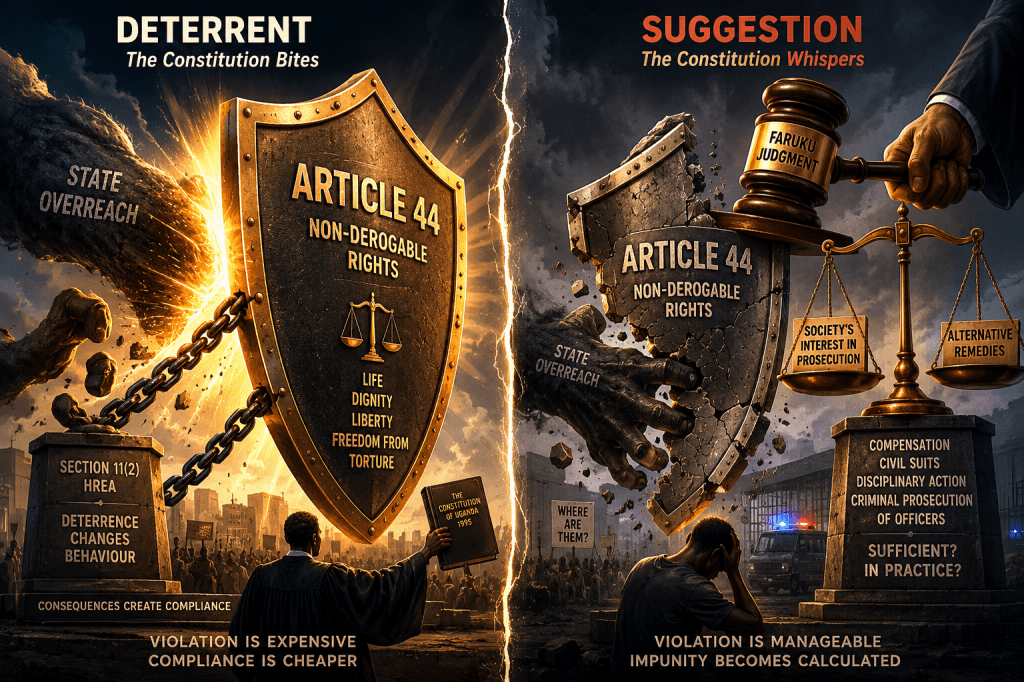


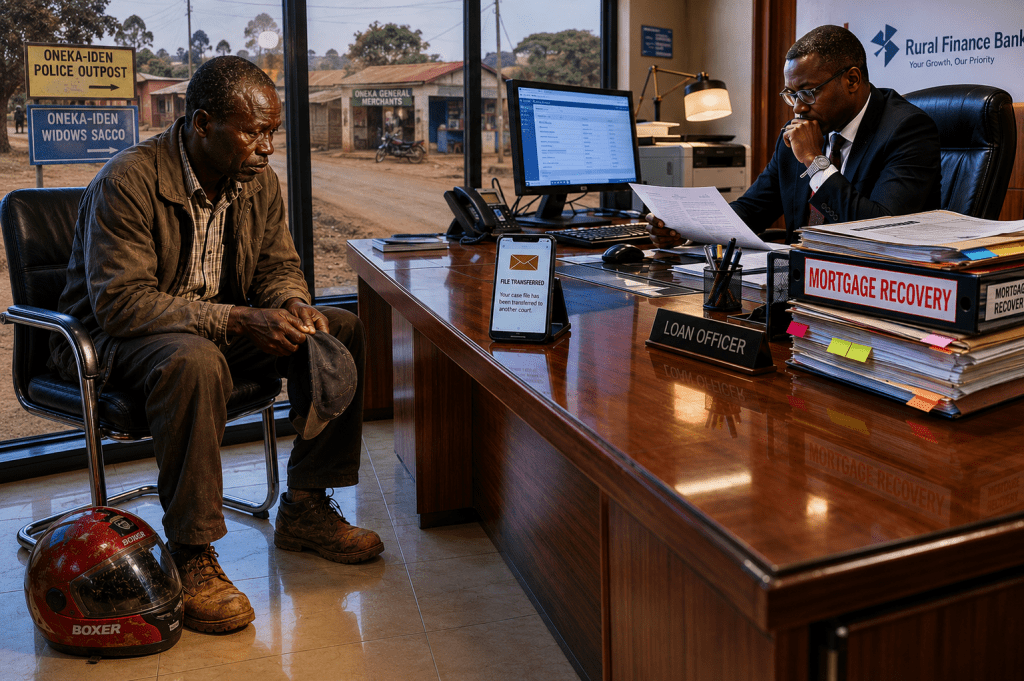

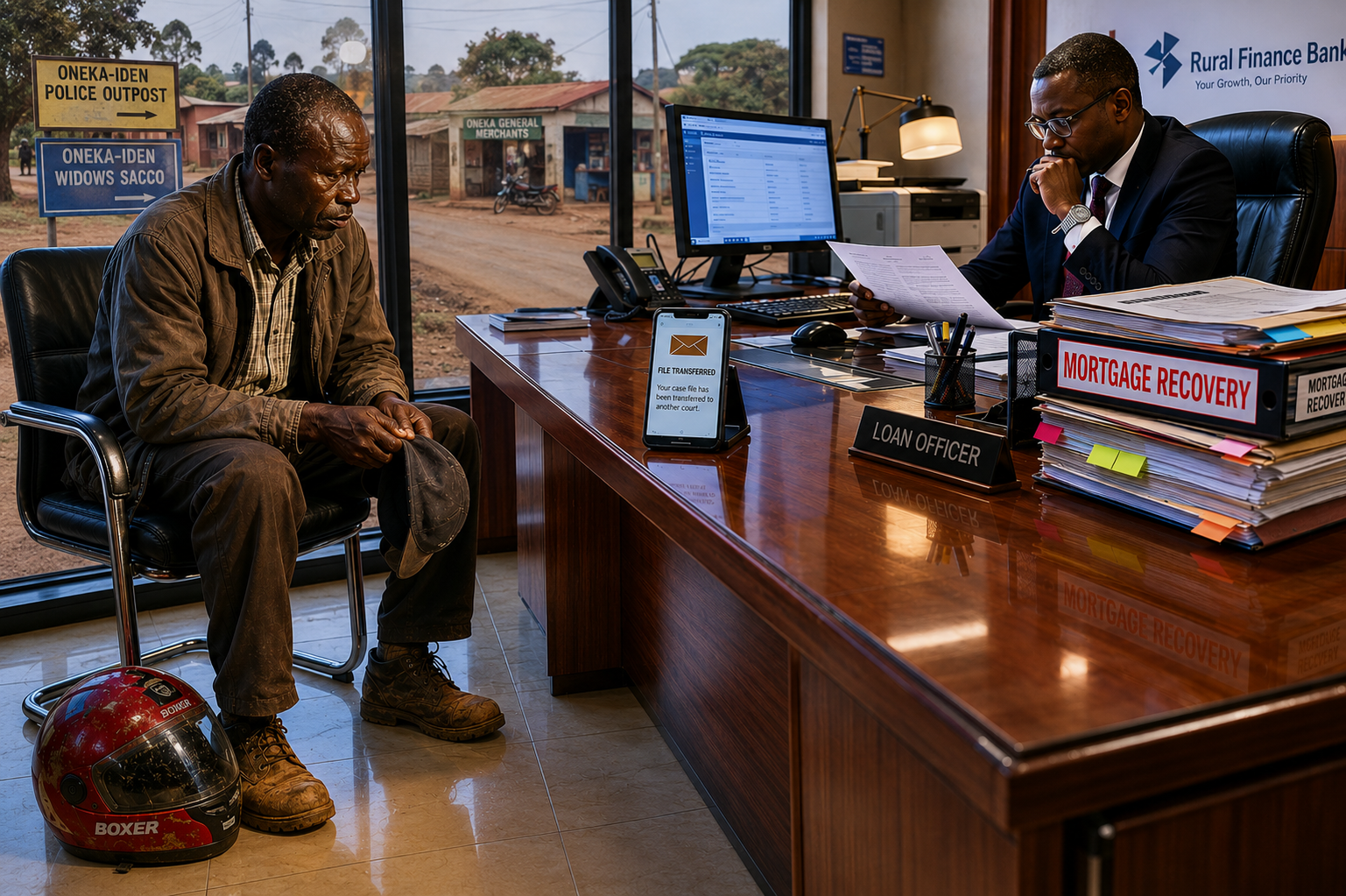
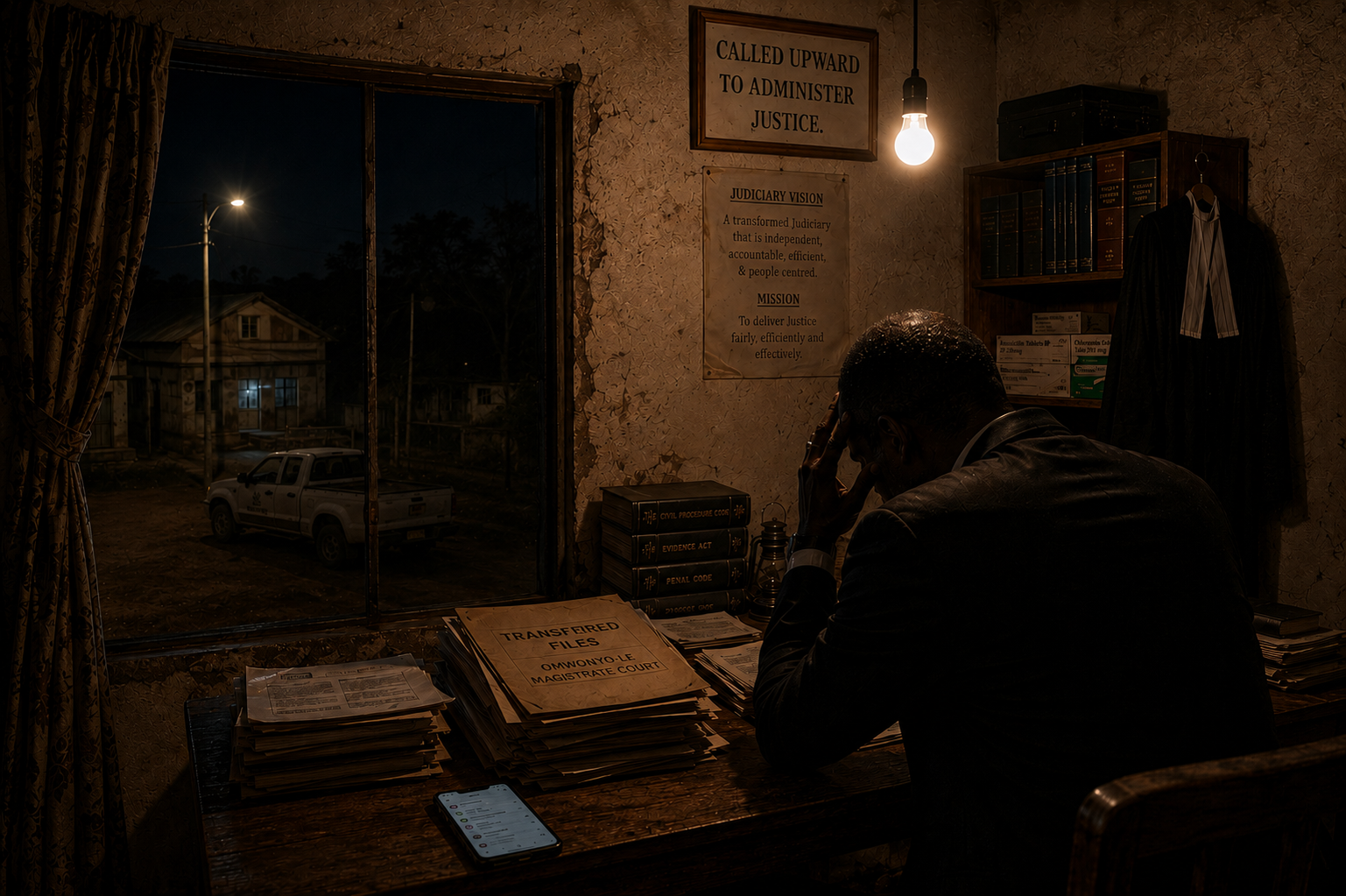



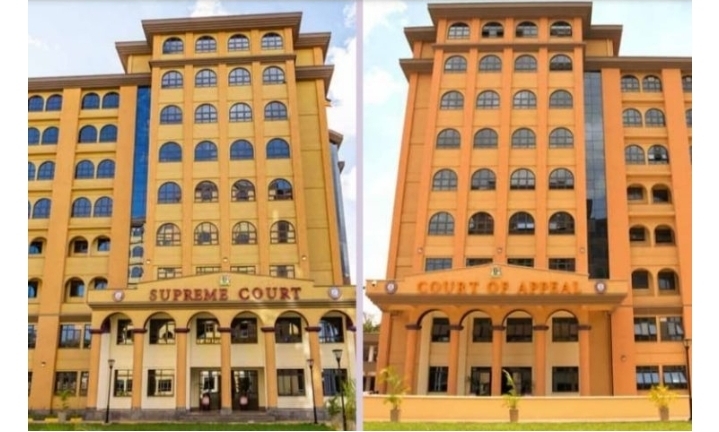

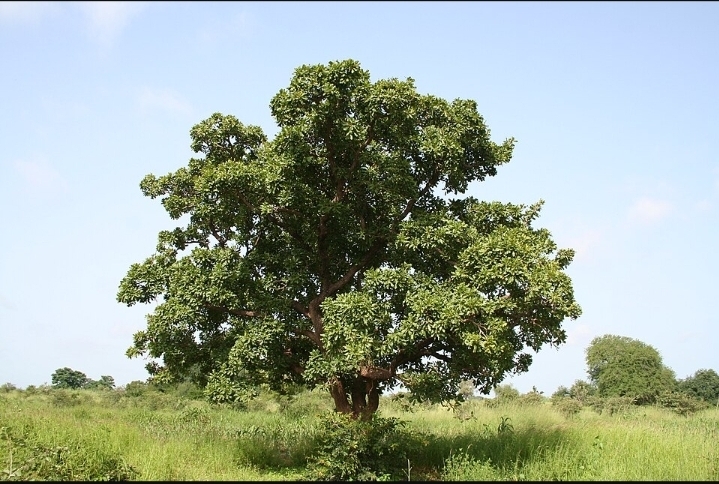

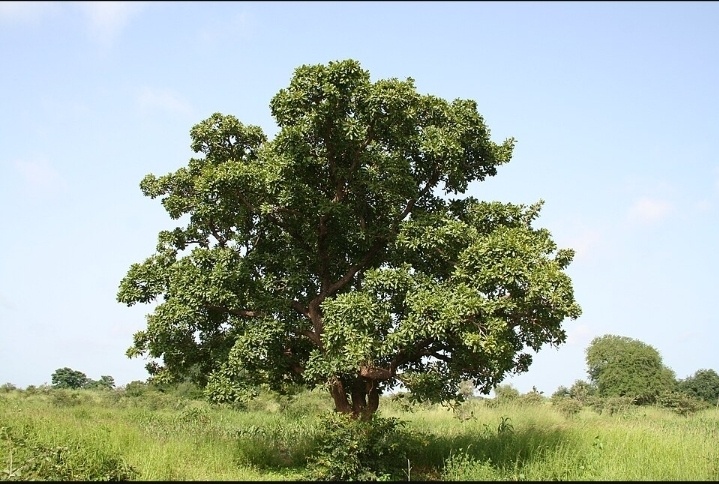






 enenlegalworld
