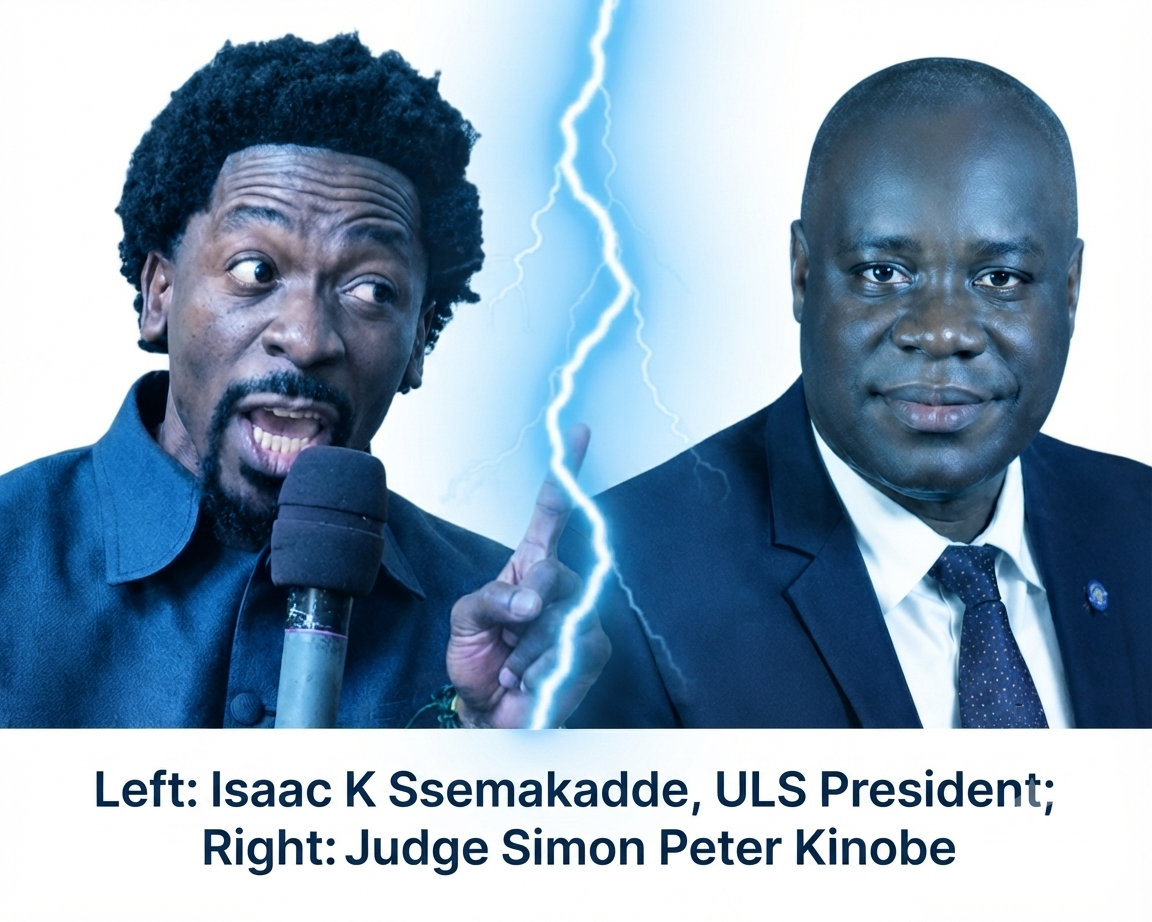
If you are joining us for the first time: In Episode 1, we visited Abongodero, the village named after Mzee Zakayo’s ingenuity. Zakayo never built a granary. He traded cattle for the harvest of others. His son, Okello Anyapo, inherited land but not discipline. When hunger came, his uncle Owera Apur, the only farmer who actually built, opened his granary to him. No rules. Just access. Okello emptied it, smiled, and said: “You allowed me. I merely accessed.” The proverb, which came from the lesson which Abongodero learnt from Okello Anyapo still echoes: You never send a starving man to the granary.
NOW LIFT YOUR EYES FROM THE VILLAGE.
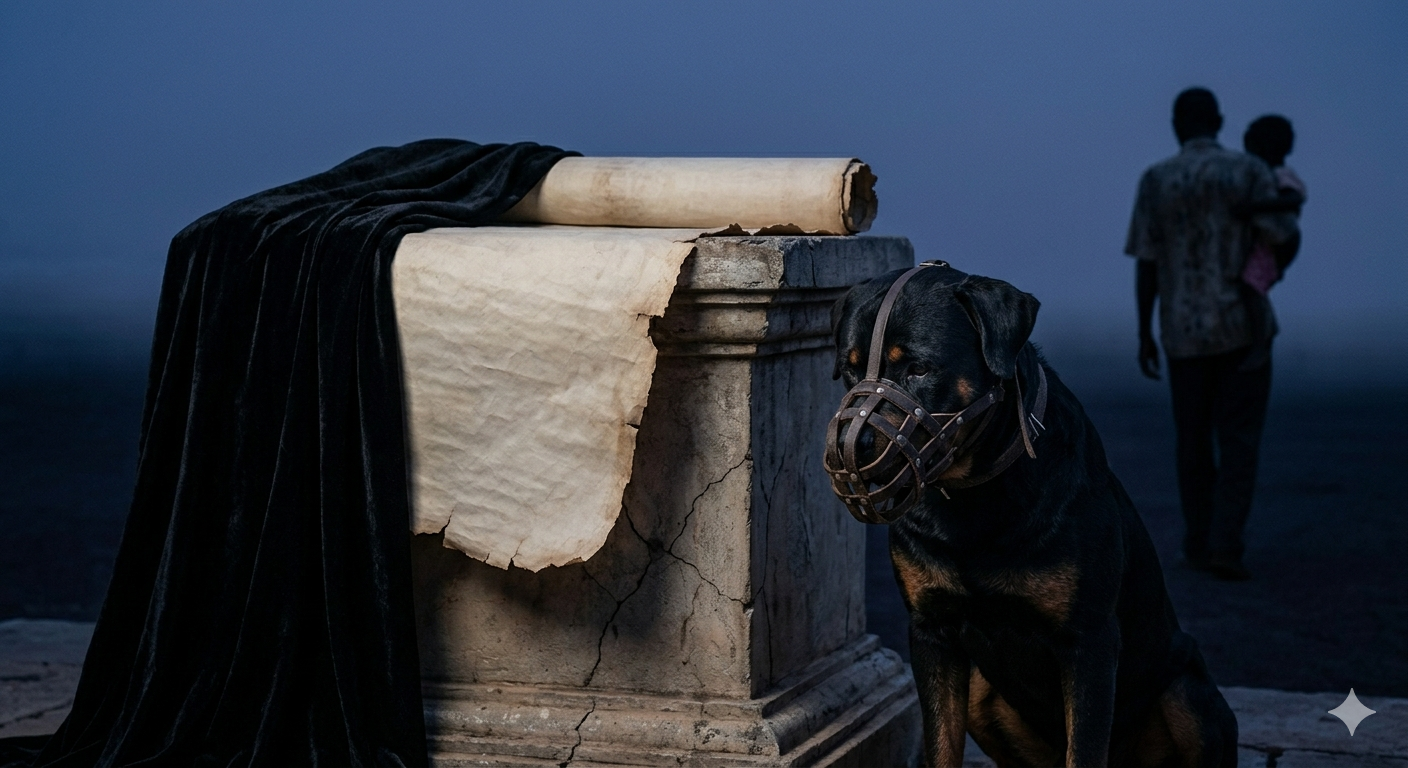
In 1995, Uganda built a granary.
It was called the Constitution. The Constituent Assembly, our Owera, sweated over it. They filled it with grains, cereals and legumes: independence, fairness, accountability, public trust. They stored enough justice to last generations.
Then they handed the keys to Parliament and said:
“Guard this. Build walls around it. Regulate who enters, who eats, who guards. Pass laws to guide the President and the Judicial Service Commission in appointing, disciplining, and removing judicial officers.“
That was the command. Clear. Deliberate. Unambiguous, store the nation’s granary of justice to feed generations and posterity.
For thirty years, Parliament has done what the villagers of Abongodero did.
They admired the granary.
They walked around it. They named committees after it. They photocopied the Constitution into the Judicial Service Commission Act, sprinkled it with procedure, some insidous confidentiality and went home. They called that a good day’s job and pocketed fat salaries for dereliction of duty.
They left the rest to the Commission.
And what is this Commission?
A body composed largely of insiders. Judges. Judicial actors. The Attorney General, the government’s chief defender, seated comfortably in a structure that decides the fate of judges who sometimes rule against his own client.
It is as if Owera had not only handed Anyapo the keys, but appointed Anyapo’s hungriest siblings as the oversight committee to stop him from collecting excessive grains from the granary.
The Inspectorate of Government’s 2021 “Cost of Corruption” report estimated that Ugandan court users paid Shs 763 billion in bribes—43% of the 2019 justice sector budget.
Why?
Because Parliament never built the walls. The 2025 Regulations ensure that bribery does not lead to a judicial officer’s automatic removal. It whispers. It negotiates. It retires quietly with benefits.
At any judiciary function, you will hear rhetorical sloganeering about zero tolerance to corruption. The truth is the leadership and the whole institution preaches water and drinks wine. The structure of the Judicial Service Regulations, 2025 creates elite favors for the Judge, Registrars and the Magistrates.
We hunt “small thieves” in the civil service while the gatekeepers negotiate their exit through cabalist legislation.
2. TheIncompetence Shield
A High Court judge can be removed for incompetence.
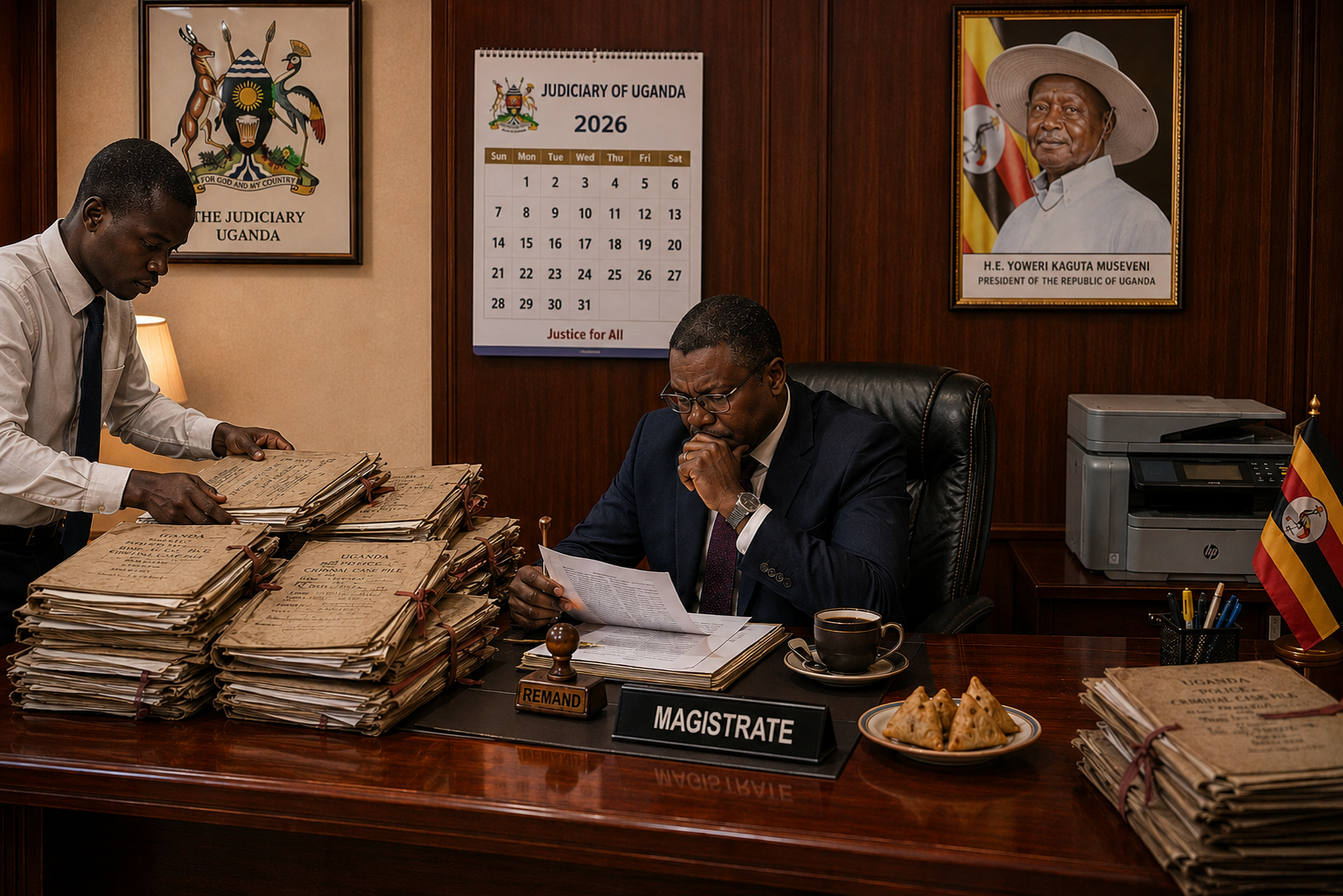
But for magistrates, the men and women deciding the everyday fate of boda riders, widows, and shopkeepers, incompetence does not lead to automatic removal. Parliament has allowed a regime where the “big fish” are fired for failing, but the “small sharks” are legally protected and recycled.
Why are judicial officers more “special” than nurses, teachers, engineers or lawyers in the civil service or private sector who are fired the moment they prove incompetent?
Because Parliament never built the walls.
3. The “Two-Man” Recruitment Cartel
Parliament’s silence allowed the Judicial Service Commission to create committees where the quorum is a mere two people, less than 50% of the committee.
The entire future of Uganda’s Bench can now be decided by two individuals in a private room, bypassing the multi-stakeholder wisdom the Constitution mandates.
Two people.
Deciding who judges you.
And Parliament watches.
4. The Executive “Pocket Veto”
Under Section 13(6) of the Act, no judge can be disciplined unless the Attorney General, the government’s own lawyer, is physically present.
By simply not showing up, the Executive holds a de facto veto over judicial accountability.
The government’s defender decides whether the judges who rule against the government face discipline.
You do not need a law degree to smell this rot.
5. Criminalizing Transparency
Instead of “open justice,” Parliament enacted Sections 17 and 23, making it a criminal offense to disclose Judicial Service Commission records without permission.
They didn’t just fail to build the granary.
They made it a crime to look inside and see what is being stolen.
6. The “Non-Accountable” Ghost Tier
By failing to define “Judicial Officer” properly, the law creates a phantom tier of Registrars, Deputy Registrars, Assistant Registrars, Chief Magistrates and Tribunal actors who exercise power over citizens but are legally insulated from oversight.
They have the power of a judge.
They have the accountability of a ghost.
7. The Commission That Judges Itself
The Judicial Service Commission receives complaints. Investigates them. Prosecutes them. Hears them. Decides them.
Investigator. Prosecutor. Judge. Jury.
All in one hut.
We are warned about such concentration of power. But warnings without legislative correction are like a quarrel of drunkards at the village square.
Parliament heard the warning.
Parliament did nothing.
AND WHEN THE VILLAGERS COMPLAINED…
When the Uganda Law Society, noisy, stubborn, unapologetic and unyielding, attempted to intervene?
Injunctions. Uncause-listed petitions. Elections stalled. Appointments to the Judiciary proceeded like wedding ceremonies that will not wait for objections.
The granary was gutted politely.
“SHUT UP! YOU ARE GIVING US TRAUMA”
At the 2026 New Law Year, Chief Justice Flavian Zeija warned that social media attacks on judges would not be tolerated. Online criticism, he said, causes trauma and will be crushed.
Trauma from tweets?
Try the trauma of five years on remand while your case gathers dust. Try the trauma of losing ancestral land because you cannot afford a surveyor. Try the trauma of watching a bribe walk free while your child rots in detention.
The Uganda Law Society replied, correctly, that scrutiny is constitutional oxygen.
But the Chief Justice’s instinct was not an accident.
It was Okello Anyapo protesting demands for answers when Uncle Apur required answers for the granary that was depleted because he gave access without regulation. He permitted Anyapo to eat without brakes.
Because the elders of Abongodero reminded Apur that the roots of accountability are bitter but the fruits are sweet!.
There is a village called Abongodero. Abongodero means without a granary.
The villagers named it after Mzee Zakayo’s ingenuity.
Zakayo was clever. He never built a granary of his own. Instead, he raised cattle, fat bulls, glossy heifers. When hunger season approached, he would walk to a farmer whose granaries groaned with millet and offer a bull in exchange for rights to a certain number of storehouses. Enough to feed his household. Enough to impress the neighbors.
The arrangement was sealed with a handshake. Everyone knew Zakayo’s cattle. Everyone knew he paid.
The villagers admired him.
“..Look at Zakayo!..”they whispered around evening fires. “He eats from granaries he never built!“
They admired him so much that they named the village after his ingenuity.
Abongodero.
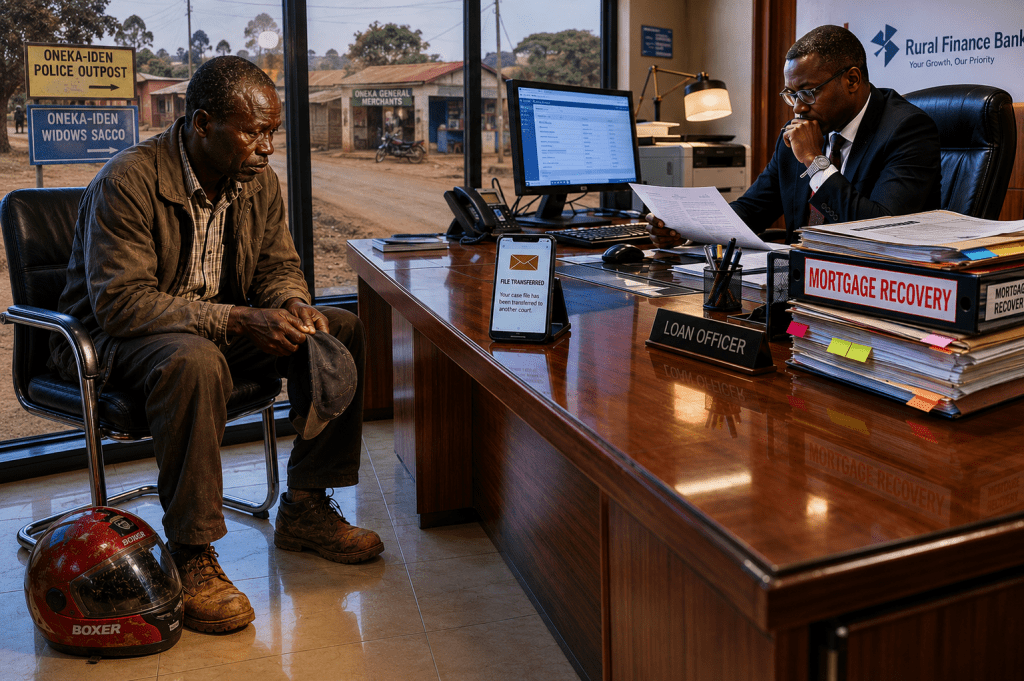
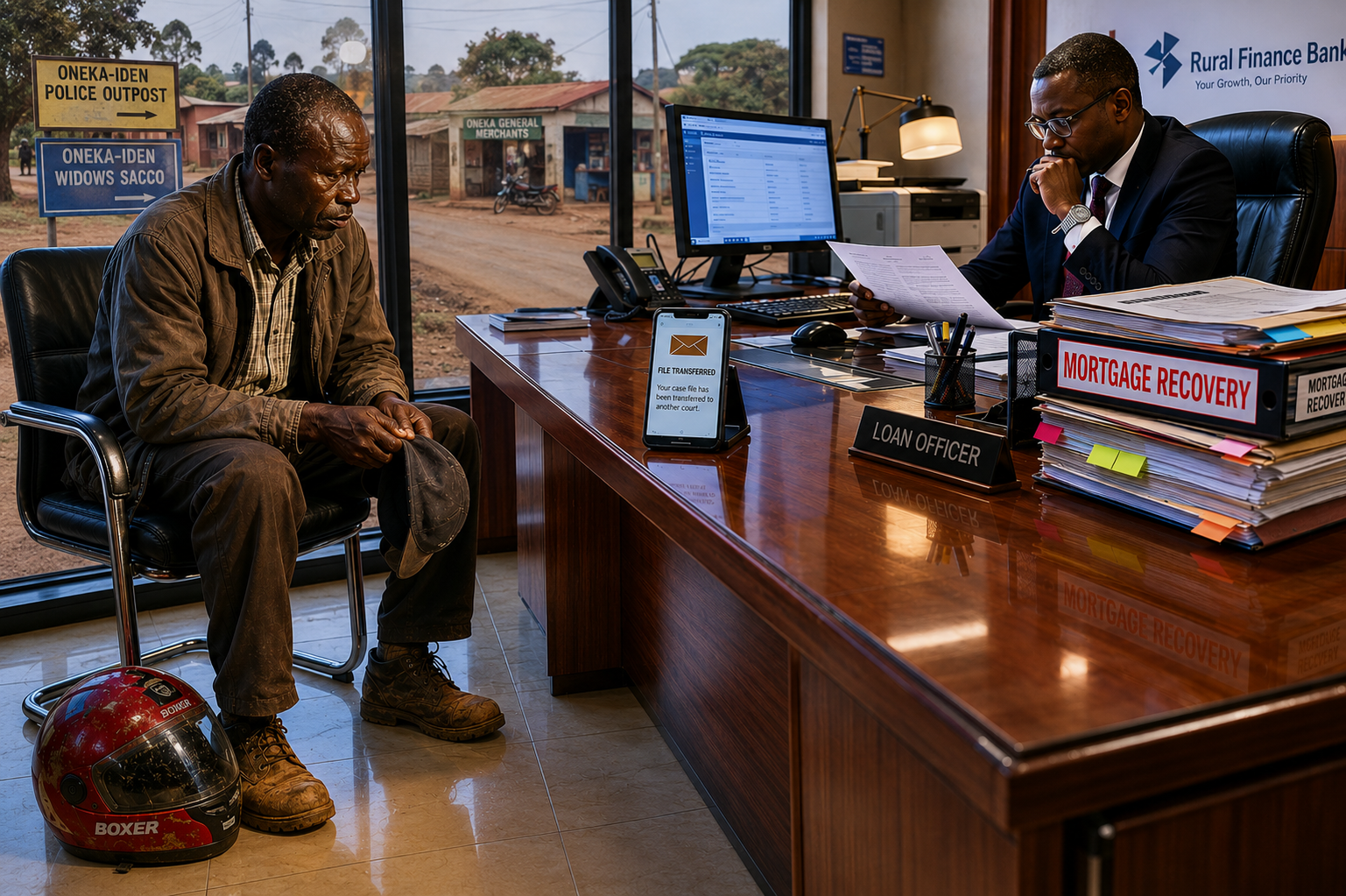
A photo of a granary. Credit. Uganda Today: from article: A testament to tradition: the art of grain in Uganda’s homesteads by Chris Kato.
But abundance has a wicked sense of humor.
Zakayo’s children grew up knowing which families owed them food, which granaries bore their father’s mark. They inherited cattle, but not discipline. They inherited the right to eat, but not the wisdom to plant.
One of them was Okello Anyapo.
Anyapo. The lazy one.
Okello inherited land so fertile it blushed when rain touched it. Black soil. Generous soil. Soil that would have yielded harvests his grandfather never imagined.
But his hoe remained smooth. His fields grew weeds tall enough to vote.
When hunger came, Okello blamed the sun for burning too bright. He blamed the rain for falling too hard. He blamed the ancestors for not speaking loudly enough. He blamed everyone except his idle hands.
Across the stream lived Owera Apur.
Apur the Farmer.
He did not give speeches about productivity. He simply woke before the rooster finished its gossip. He dug. He planted. He weeded. He waited. His granary stood behind his hut like a quiet monument to repetition.
He had no cattle to trade. He had only his back, his hands, and his patience.
His granary stood full.
Proof that the land was never the problem.
Then hunger came like a leopard.
The families who once owed Zakayo’s children had rebuilt their stores. They no longer needed cattle. They needed their millet for themselves.
Okello’s inheritance could not be traded for what no one would sell.
Hunger clawed him thin.
He crossed the stream.
“Uncle,” he said. “We are blood. Remember Father Zakayo? The village bears witness to his name.”
In Lango, dignity comes before shame. Owera sighed. He looked at his granary—full from seasons of sweat.
He opened the door.
“Enter,”he said. “Take what you need.”
Not ownership. Not supervision. Not rules.
Just access.
Okello entered empty and emerged round.
He returned the next day. And the next. Soon he stopped pretending to farm at all.
Why sweat when sacks yawn open? Why ration when no one counts? Why plant when the granary door never closes?
By planting season, Owera opened his store to prepare for the rains.
It echoed like a drum.
Empty.
When confronted, Okello adjusted his waistband and smiled.
“You allowed me.“ “There were no rules.“ “I merely accessed.”
And that is how Abongodero learned what their ancestors should have known:
You never send a starving man to the granary.
[End of Episode 1]
Stay tuned and on the look out for Episode 2 of the legend of Abongodero.
Deep within the Mambo Forest, the animal kingdom lived in awe of a single, dazzling truth: their ruler, Twon Gweno the cock, wore a crown of living fire. His comb was a legend, a crest of such vibrant crimson that the elders swore it was a fragment of the first sun. His morning crow was a decree:
“Bow to my glory, and you will be spared my flame.”
And so, the animals bowed. Fear made them pious; fear made the cock sovereign with unquestioned loyalty, respect and cooperation from the rest of the animal kingdom in that forest. It was a classic case of natural-born legitimacy; never really earned.
One evening, a crisis struck. Ichuli, the fox, the sole specialist in lighting the communal fire, was away. The wood was piled, but the spark was missing. The night, cold and predatory, loomed.
Odyek Odyek, the hyena, a friend to truth and enemy of pretence, stepped forward.
“The solution is simple,” she said. “We bow to Ladit Twon Gweno’s crown of fire. I will sprint to his home and borrow a spark.”
She took a tuft of the driest spear grass, the Obia and went to the cock’s compound. She found him in a deep, unconscious slumber. Without waking him, she gently pressed the grass to his legendary crown, waiting for the catch, the sizzle, the proof.
The grass rested on the crown, as inert as if it had been placed on a cool stone. The legendary fire was a phantom.
Odyek Odyek, the hyena returned to the gathering and dropped the cold, unburnt grass in the centre of the circle. No words were needed. The lie they had bowed to for generations unravelled in that silent moment.
Power, and unearned but coerced legitimacy unmasked, bled its authority into the silent night.
⚖️ The Lesson
Borrowed fire must warm the hearts of the people. When it no longer does, the borrower is called to account.
So it is with the courts. The robe, the gavel, the summons, and the warrant are instruments loaned by the people. Article 126(1) of the Constitution does not sing an ornament; it issues a command:
Judicial power is derived from the people and shall be exercised by the Courts in their name and in accordance with the law and their values, norms, and aspirations.
🧱 The Three Pillars of Legitimacy
Legitimacy; the respect of the people and their cooperation with the courts, is the covenant at the heart of that loan. It demands three sacramental elements:
Reflection: Judicial power must reflect the values and aspirations of the people; not the insatiable appetite of a sophisticated elite for luxury or high life.
Truth: Courts must administer justice in accordance with law and truth, not convenience or midnight deals.
The Judicial Oath: The solemn undertaking before God to do justice to all manner of people without fear, favour, ill will or affection is no actor’s prayer; it is a chain of duty.
Strip away any of these, and what remains is a gowned pretender, eloquent and majestic, perhaps, but hollow: a cock whose crown no longer burns.
The Evidence of Decay
For those who have seen:
• Appeal files missing thirty-eight pages.
• A High Court hearing conducted not in a public courtroom but secretly in a posh hotel in which 15 minutes out of those proceedings were conducted in the absence of the opposite party and the whole process bashed by the Court of Appeal for want of a fair hearing and lack of judicial accountability and transparency and thereby further exacerbating the already slim public trust in the Court system entirely
• A lower bench judicial officer bashed; “I don’t want to see this rubbish here, take it back where it came from” when they had sought guidance over files of thousands of remand detainees who had clocked mandatory bail, over 5 years where the Office of the Director of Public Prosecution state attorneys appeared neither willing nor ready to commit them for trial in the High Court.
• The poorest peasants completely blocked from accessing justice because the lower courts have received directives not to register and dispose of customary land disputes unless a surveyor had first rendered a preliminary survey report; peasants who have never heard of, met heard about or hired the services of a professional called a surveyor. They have to sell a chunk of land to afford a surveyor to conduct a preliminary survey and get their case registered.
• A National Bar Association President’s liberty preserving Application for stay of execution of a manifestly void Contempt of Court ruling take close to 9 months without disposal.
These are not footnotes; they are flesh-and-blood indictments. The 1995 Constitution’s promise of a speedy and fair hearing has become hot air—Kikwangala, Kichupuli, Kawani.
🗣️ The Test — The Philosophy of Insults. Withdrawing legitimacy and requiring that it be earned back by fidelity to its 3 pillars.
“To insult without malice but with evidence is to perform constitutional maintenance and maintain pure legitimacy.”
Hence the philosophy of insults. This is not the petty malice of a tavern quarrel. It is a civic stress-test, a pressure gauge for legitimacy.
It is the public’s cry:
“GIVE US WHAT YOU OWE US.”
We lent you power; we demand accountability in return.
A people that cannot insult and mock power has already lost moral authority. The right to insult and offend the powerful is not a luxury, it is the citizen’s tool for testing whether the borrowed flame is real.
📜 The Proof — The Jurisprudence of Defiance
“Leaders should grow hard skins to bear.” “Power must endure insult to remain clean.”
Uganda: When the Constitution Answered Back
This philosophy is not just wisdom; it is the settled weight of law. Consider Andrew Mwenda, whose words rattled the Republic:
This philosophy is not just wisdom; it is the settled weight of law. Consider Andrew Mwenda, whose words rattled the Republic: “You see these African Presidents. This man went to University, why can’t he behave like an educated person? Why does he behave like a villager?’
Museveni can never intimidate me. He can only intimidate himself ……… the President is becoming more of a coward and every day importing cars that are armor plated and bullet proof and you know moving in tanks and mambas, you know hiding with a mountain of soldiers surrounding him, he thinks that, that is security. That is not security. That is cowardice”
Actually Museveni’s days are numbered if he goes on a collision course with me.”
You mismanaged Garang’s Security. Are you saying it is Monitor that caused the death of Garang or it is your own mismanagement? Garang’s security was put in danger by our own Government putting him first of all on a junk helicopter, second at night, third passing through Imatong Hills where Kony is ?……Are you aware that your Government killed Garang?”
I can never withdraw it. Police call them, I would say the Government of Uganda, out of incompetence led to or caused the death of Garang”
When the state reached for iron law and charged him with sedition, the Constitutional Court answered with freedom, declaring that people from all backgrounds enjoy equal rights of expression, polite or not.
“……Our people express their thoughts differently depending on the environment of their birth, upbringing and education.
While a child brought up in an elite and God fearing society may know how to address an elder or leader politely, his counterpart brought up in a slum environment may make annoying and impolite comments, honestly believing that, that is how to express him/herself.
All these different categories of people in our society enjoy equal rights under the Constitution and the law. And they have equal political power of one vote each.Then came the killer line that buried sedition:
“……During elections voters make very annoying and character assassinating remarks and yet in most cases false, and yet no prosecutions are preferred against them. The reason is because they have a right to criticize their leaders rightly or wrongly. The Court concluded “Leaders should grow hard skins to bear.” A copy of the judgment can be found here:
In Burkina Faso, journalist Issa Konaté was jailed for calling a prosecutor “a criminal in a robe.” In his Words:
“…….The Prosecutor of Faso is the godfather of bandits. He is the sponsor, the organizer, the leader of a vast network of counterfeiters and traffickers that he protects with his power and status.” This is a prosecutor who does not prosecute crime, he commands it. He is not a guardian of order but a godfather of disorder While honest citizens sleep in fear, the chief lawman of our nation sits in his office, dividing the spoils of crime with police officers and bankers He is not a magistrate; he is a criminal in a robe. A saboteur of justice…….”
The African Court answered with thunder and reason. Custodial sentences for speech are a bludgeon against Democracy: “The Court is of the view that the violations of laws of freedom of speech and the press cannot be sanctioned by custodial sentences, without going contrary to the provisions of Articles 9and 19 of the Charter”
The Court pronounced itself on the role of public figures under scrutiny.
“There is no doubt that a prosecutor is a public figure; as such he is more exposed than an ordinary individual and is subject to many and more severe criticisms. Given that, a higher degree of tolerance is expected of him”
From this we learn that “Power must endure insult to remain clean.”
🪶 The Heritage; The Lango Grammar of Reproof
This civic logic is not foreign to us. In Lango, the sharp tongue has long done the work of reform.
• “Ole yin ibedo dako dako”; “…..you man, you behave womanly…”. It is not cruelty. It is shock therapy for duty and clarion call for the family patriarch to “man up” and live up to his responsibilities to his family, to lead firmly, provide for it and protect it.
• “Lango mito alek”; “…..Lango deserves a pestle…” A reminder that discipline is coming unless reform comes first and that it intact comes usually after enforced discipline.
• “Kwany Ka Point” The Gen Z’s and Millenials have similarly curved their own wisdom, “pick only the point”: As plain and simple as that. Pick only the point, filter it from the insult.
• “Ikok Ugali idogi.” “…..You will cry with Ugali in your mouth. …”
In the old rite of passage, a young man’s two upper incisors were pulled, and boiling herbal Ugali was placed in his mouth to ease the agony. He cried through the very remedy meant to heal. Reform rarely feels like mercy.
So when the citizen mocks the powerful, the intention is not cruelty; it is Ugali in the mouth of power: a necessary sting, a painful antidote.
The insult becomes a civic anaesthetic; searing, brutally humiliating, but designed to cleanse and restore legitimacy
Reform rarely feels like mercy. So when the citizen insults and mocks the powerful, the intention is not cruelty. It is Ugali in the mouth of power: a necessary sting, a painful antidote.
🔥 The Repair — The Calculus of Force
Public outrage, properly aimed, creates four fields of pressure that make corruption intolerable:
1. Professional Ostracization: When integrity collapses, the social scaffolding of a career falls with it.
2. Erosion of Authority: A judge who loses public confidence loses jurisdictional muscle and may in fact receive fewer to zero allocations of files to handle or minimal chances to be chosen to sit on a panel in the case of hearings in courts that are manned by more than one Judicial Officer.
3. Legal and Institutional Siege: Scandal catalyses petitions, litigation, and oversight that eat at illegitimacy.
4. Political Abandonment: The appointing power prefers a scapegoat to a scandal, forcing a “voluntary” exit.
From this, we learn that insults are not instruments of mob rule; they are the social physics of accountability.Yet outrage alone is not reform. The sting must translate into architecture: cooling-off periods for judges, transparent appointments, and independent oversight with teeth. Shame, the direct consequence of insult, reveals the rot; law must excise it.
⚔️ The Awakening — The Price of Truth
“The hyena who taught the village to see.”
For too long, the Uganda Law Society was a sleeping giant while the temple burned. But the dry grass is now burning in Masaka. When the President of the Bar , the hyena who taught the village to see, lives in exile for refusing to apologise for truth, his banishment becomes the ultimate test.
Isaac K Ssemakadde (SC) President of Uganda Law Society. Credit: Uganda Law Society Website.
📜 The Counsel;A Call to the Bench and the People
This is not an invitation to vulgarity for its own sake. Insult as a civic weapon must be wielded with evidence, not rumour; with satire steeped in fact, not malice.
To the Judges:
Grow the hard skins the Constitutional Court commanded you to have. Wear patience as armour, not menace. Treat insult as a thermometer, not as treason or contempt.
When a citizen insults, ask: does this insult point to truth? If yes, answer in reason, remedy the wrong, and let the nation watch you Act. If not, let the insult fall like a pebble. The dignity and legitimacy of the bench is earned by magnanimity and the stoic creed of the 3 pillars of legitimacy namely Reflection (of law, values, norms and aspirations); Truth and by abiding by the Judicial Oath. It is not enforced by fury, bullying or jaling dissent.
This doctrine requires courage from all sides. The Bar must be relentlessly courageous and fearless in its insult and ridicule while exacting in its ethics.
The public must be loud and literate, hurl insults but bring evidence. Lawyers must translate courage into petitions, not merely WhatsApp gossip and tweets. The Legislature must codify protections for speech against disproportionate criminal sanction and the Judiciary must redicscover the humility of the oath, the most important leg of judicial legitimacy; to do justice without fear, favour, ill will or affection.
To
the citizens: Wield the pen. Make the insult precise devastatingly; threads that link to missing pages, memes that reveal truth.
🌞 The Benediction & Epilogue
Lock and Roseau taught and we learnt from the social contract doctrine that all power, judicial power inclusive, like the communal bull, is never owned. It is loaned to serve, not to feast upon. Judicial officers are, therefore, commissioners, agents of the people, not monarchs. The people are the principal. When the agent betrays, the principal must insult loudly in true reprimand.
If those entrusted with it betray the trust, the people must remind them, sometimes with satire, sometimes with searing words, that borrowed fire must warm, not burn.
This is neither an incitement to violence nor a call for insurrection. It is a call to civil carnage against corruption, ritualised, and peaceful.
Let the insults be sharp, witty, and relentless, and let them dismantle rotten cartels of impunity. Turn every courtroom cover into a public syllabus: transparent reasons, readable judgments, accountability writ in footnotes and public records. Make the institutions bleed truth, not people.
To end illiteracy in justice, let every citizen wield the pen.
Let the hyenas come. Let the baraza be noisy.
Let society test the crown every morning until the judges can point, with open hands and clear reasons, and say:
“Here is the flame.”
Until then, press the grass. Let the crown be tried in daylight. Let the fire prove itself true.
✍️ Dedication
This blog is dedicated to all prisoners, present and past, of conscience, self-expression, and free speech: Male Mabirizi Kiwanuka, Ivan Samuel Sebadduka J, and Isaac K. Ssemakadde (SC), President of the Uganda Law Society, for executing a civic duty tragically confused with contempt of court.
Contempt must be reserved for direct obstruction of justice, not as a cudgel to discipline ridicule. Imprisoning insult and mockery is to forget the nature and source of judicial power: the people’s consent.
May the Good Lord bless and protect you all. And may we witness, in our lifetime, thick-skinned judicial officers who treat insults with nothing more than “a wry smile,” as aptly put twenty-five years ago by the eminent British jurist, Lord Justice Simon Brown.
The author is a member of the inaugural Judiciary Affairs Committee of the Uganda Law Society.
DISCLAIMER: This Blog is not a call for mob justice, chaos or disorder against our beloved holders of judicial power and other public power, it is brutal and defiant reminder that illegitimate conduct leads to a withdrawal of respect from the very owners of the power and attracts criminal and administrative sanctions, some as grave as removal from office. It is also to encourage the clean and disciplined judicial officers to continue upholding the consent of the people for them to administer justice by upholding the stoic pillars of legitimacy first mentioned in this Blog, and that with or without climbing the career ladder, God, the original designer of justice will be the ultimate one to reward their efforts both now and in the afterlife.
This blog is not intended to be used as legal advice, and the author denies liability for use of the contents herein as legal advice. Readers are encouraged to consult a licensed Advocate to give them specialised advice and representation.
For feedbacks and comments: ambrosenen@gmail.com.
References.
For further reading or references. I consulted the following books.
1. Politics as a Vocation (Politik als Beruf) by Max Weber
2. Second Treatise of Government” by John Locke.
3. The Social Contract” (Du contrat social) by Jean-Jacques Rousseau.
4. Weapons of the Weak: Everyday Forms of Peasant Resistance” by James C. Scott.
In Pharaoh’s Uganda, dreams bleed at the Law Development Centre’s gates. In 2024 alone, over 1,500 aspiring lawyers were barred from the Bar Course—a tenth plague, slaughtering futures.
“The state’s iron whip chains. lawyers to bake bricks for tyranny rather than wield shields for the people.”
To the village Barraza, this is no mere law school tale. It is a war for justice: bills rise, warriors roar. Will the National Legal Examinations Centre Bill 2025 free Uganda’s advocates—or forge fresh shackles?
Image: Dr. Apollo Milton Obote. Former Primer Minister and first Executive President of Uganda.
The 1956 Uganda Law Society, Act, Cap 305, chained lawyers in Pharaoh’s brick yard, crushing their independence and autonomy by imposing state law officers, the Attorney General and Solicitor their governing council. This effectively led to state capture, aligning the legal profession with the colonial power’s interests instead of advancing the rights of the colonized peoples. The 1970 Advocates Act, Cap 295 further entrenched the chains: the Law Council, chaired by a judge who is appointed by the Attorney General after consultation with the Chief Justice. Other state law officers, the Solicitor General, a Chief Magistrate and only 3 lawyers, their president, and 2 others elected by them, a token of independence. Yet this substantially unelected group of powerful officials controlled eligibility, Bar exams, and disciplinary powers.
The initial denial of Martha Karua a temporary license by the Ugandan Law Council and the reasons which it gave should tell you my dear reader everything else you need to know about the state of the independence of Uganda’s Legal Profession.
“Independence and autonomy for the lawyers remained but only a cruel mirage.”
The Global Commandment: Let My Lawyers Go!
In 1990, the UN Congress in Havana thundered: the Basic Principles on the Role of Lawyers, echoing Exodus 5:1“Let my lawyers go!” Principle 24 demanded self-governing, autonomous professional associations.
The International Bar Association’s Standards echoed this, decreeing in Article 17 that lawyer associations must be independent, their councils freely chosen without state interference. Article 18 makes this crystal clear:
“The functions of the appropriate lawyers’ association in ensuring the independence of the legal profession shall be inter alia: (h) to promote a high standard of legal education as a prerequisite for entry into the profession and the continuing education of lawyers, and to educate the public regarding the role of a Lawyers’ Association.”
Again, to the village Barraza, let me break this down into what my “A” Level economics teacher, Mr. Stanley Lukera, taught us, the “grandmother’s approach”: the Uganda Law Society, whose leaders are elected by the members, the lawyers themselves, must be the body responsible for setting academic standards for entry into the legal profession. That means setting and/or advocating for high-quality law school curricula, Bar exam requirements, or other qualifications before one can serve as an advocate.
Yet Uganda’s Pharaoh only sneered. The Law Council and ULS Act stood firm, chaining lawyers to state whims. The village Barraza waited for defenders, but lawyers, bound by Pharaoh’s overseers, could not rise.
The People’s Covenant Ignored
In 1995, Uganda’s people, the ultimate consumers of justice, struck a covenant in their Constitution. National Objectives and Directive Principles of State Policy, Paragraphs II(vi) and V(ii) XX declared that non-governmental bodies like the Uganda Law Society (ULS) must retain autonomy to champion human rights, their independence guaranteed by the state. Five years after the UN and IBA commandments, the people demanded their lawyers be freed to hold power accountable, to defend Mityana widows from land grabs, Soroti youths from unjust arrests, Mbale vendors from cheating landlords.
But Pharaoh’s heart hardened, as in Exodus 8:15. The state clutched the legal profession tighter, wielding the Law Development Centre (LDC) as its slave-pit. With nearly 20 universities churning out law graduates, LDC remained the sole gatekeeper of the Post-Graduate Diploma in Legal Practice, its infrastructure crumbling under the weight. Pre-entry exams, meant to manage capacity, became another lash, while quality control at universities was a paper tiger.
Supplementary exam fees bled students, parents, guardians, spouses, boyfriends, and sugar daddies dry in millions of shillings for a second chance at Pharaoh’s mercy. Then came the tenth plague, the killing blow: in 2024, LDC barred over 1,500 qualified applicants from the Bar Course, admitting only 1,260 of 2,600, citing “limited resources”. Like the death of Egypt’s firstborn in Exodus 11:1-10, this was no mere setback; it was a massacre of futures, a cry that pierced the heavens.
“Law Council’s block was arbitrary and irrational.”
The court quashed the ban, imposed permanent injunctions, and awarded 20 million UGX each. This blog is dedicated to among others, these courageous lawyers who walked through Pharaoh’s furnace and are now fine practicing Advocates.
Even public figures were not spared: Kyagulanyi Robert Ssentamu Alias Bobi Wine’s Cavendish University degree faced state scrutiny pre-graduation, proof Pharaoh’s heart hardens even against the popular. The musician turned leader of the National Unity Platform (NUP), Uganda’s largest opposition political party told members of the press shortly after his graduation that “When news came out that I was set to graduate, the usual detractors got busy and made every effort to stop me,” he said. “Some people, ostensibly working for the regime and other detractors, went as far as petitioning the National Council for Higher Education.” He added “NCHE officials went to the University and demanded for every document regarding my studies… It was a very detailed and intense investigation,
Pharaoh’s Whip extends beyond Law, it bites real flesh.
Pharaoh’s tyranny isn’t just legislative—it’s flesh and blood. At the 20th #RNBLive Series, Yours truly had the lived experience of delivering the speech of the ULS President Isaac K. Ssemakadde’s speech. A copy of that speech is attached and A video of it is also attached. The modern Aaron, spoke fire:
“Advocate Abed Nasser Mudyobole… forcibly disappeared by state security. His abduction echoes the tyranny that hunted Njuba, Kayondo, Sebutozi, Ayigihugu. Lawyers who defend the Constitution, who question power, are enemies to be silenced.”
Author delivering the speech of the ULS President Isaac K. Ssemakadde on 29th May 2025 at the ULS House, Kampala.
The courts shackle ULS blocking meetings (Kirima v ULS, 2024), Halting lawyers Constitutional voices at the Judicial Service Commission with appeals arising thereform under perpetual abeyance decisions (Mugisha v ULS), sentencing ULS President Isaac Ssemakadde in February, 2025 for criticizing a judge.
Bakampa: Vision for Job-Ready Lawyers
From LDC’s ashes rose Bakampa Brian Baryaguma. His Legal Education and Training Bill 2024:
“No more paying twice for one loaf. Lawyers ready to defend the people.”
National Legal Examinations Centre Bill 2025: Red Sea or New Shackles?
ULS President Isaac K. Ssemakadde, mirroring Moses and Aaron, long campaigned against LDC. He demanded that it be abolished way back in 2021 in his address to Law Students at Makerere University. In what appeared to be a fit of rage, LDC reacted by blocking Ssemakadde on its X handle.
When news broke out that Cabinet had drafted the National Legal Examinations Centre Bill, 2025, the Radical New Bar President asked on whether LDC will unblock him?
Image: Isaac K. Ssemakadde asked if LDC would unblock him after the bill proposing its abolition as he had suggested was made public by the Solicitor General. Credit, Isaac Ssemakadde’s X (formerly Twitter handle)
The bill proposes to free the Post Graduate Bar Diploma in Legal Practice from LDC, and shut it down completely, but Pharaoh’s hand still grips:
Attorney General, a cabinet minister and political appointee, appoints Director of the center on the recommendation of the governing council & the chairperson of the governing Council itself (Clauses 17 and 8 respectively). This erodes the corporate governance principles in Clause 19 of the Bill.
The Attorney General can remove council members, set rules, and determine fees for services of the centre
The risk of elite and exclusionary political capture remains real. The ghosts of exorbitant fees, especially supplementary Examinations which sucked all stakeholders dry, should not be allowed to lurk after abolition of LDC.
“The legal profession stands at the Red Sea. Will it walk through freely or be recaptured?”
Call to Arms: Strike the Red Sea!
To defend justice, rights, and the Rule of Law, the following MUST BE DONE NOW to prevent lawyers from being captured and tamed “young” and moulded into frightened cowards who cannot foster accountability.
1. Let the ULS Command– ULS and not a state law officer should appoint the NLEC Director & Council.
2. Skills Fuse – Bakampa’s model in university curricula: drafting, moots, clerkship. The doctors and engineers have proven that you don’t need to pay twice for the same loaf.
3. Fees Free; The Council should retain a higher autonomy to set fees and, in collaboration with ULS, set academic and examination criteria and standards
A group of lawyers trained through fear, intimidation, and heavy involvement of state law officers loses the courage to fight for the Mityana widows, Soroti youths, and Mbale vendors: lawyers must rise bravely and fearlessly. The rule of law suffers gravely, and so does the effective functioning of the justice system as a whole.
Strike the Red Sea! Free ULS! #LetMyLawyersGo
“Pharaoh may harden his heart, but justice and truth can’t be enslaved forever.”
You, dear reader, should participate heavily in freeing your rights defenders, call up the big people you know, Your area member of parliament, your Dean, faculty of Law, your ULS region’s Council member and demand that “they strike the Red Sea” and implement these recommendations so that your rights defenders, the lawyers gain full autonomy and independence.
#Strike the Red Sea!
#Let My Lawyers Go!
This Blog is dedicated to the fearless champions of a better legal education and a better legal practice regulation in Uganda. Bakampa Brian Baryaguma, the author of the Legal Education and Training Bill who personally granted me the copyrights to quote his works extensively. His journey in the struggle has been chronicle by him on his personal Blog at https://huntedthinker.blogspot.com/https://huntedthinker.blogspot.com/?m=1. I strongly encourage readers to visit his Blog and support his rallying call for members of the Public to contribute views on his bill which is attached:
President of Uganda Law Society, Isaac K. Ssemakadde for prophesying the eventual shut down of LDC, being blocked by the same institution on X (formerly twitter), expelling the Attorney General and Solicitor General from the governing council of the ULS via RNB Executive Order No. 1 of 2024 and earlier on filing a Constitutional Petition, which canvases the international law framework that has been presented and is still pending judgment by the Constitutional Court. My personal prayers are with you as you endure the pain of self exile for tackling the challenges of the legal profession from the root cause. May the good Lord protect you and touch the justices of the Constitutional Court for a just decision.
This blog is further dedicated to the lawyers who engaged the legal system in the journey to reform the legal system, namely Pius Nuwagaba, Asiimwe Alex Byaruhanga, and his 12 colleagues for challenging the Law Council head on. Your struggles curated this milestone and led the legal profession, especially intending Advocates to now arrive at the Red Sea, waiting to strike the waters to open up the sea, to cross and permanently ensure the independence and full autonomy of the Legal Profession.
Finally, each and every lawyer, member of the public who added embers to the revolutionary fire to free the legal profession, parents, Judges who rendered justice, you all stood on the right side of history, may God bless you.
Enen Ambrose, the author, is an Advocate and member of the inaugural Judicial Affairs Committee of the Uganda Law Society.
DISCLAIMERS!
This blog is intended to spark discussions around the current National Legal Education Centre Bill 2025. References to individuals and institutions are based on publicly reported developments and not meant to attack individuals or institutions mentioned directly.
Nothing in this Blog is intended for use as legal advice. Author accepts no liability for use of the contents herein as legal advice. Readers are advised to seek the services of a licensed Advocate for situation specific legal advice.
For comments and feedback, reach to us at ambrosenen@gmail.com
Dusk cloaks a Ugandan village, the stew pot simmering under a mango tree, its steam weaving kin. Semaka, iron-fisted head of the home, strides in, his name a tremor, his spoon, greedy as a warlord’s blade, clinks against the pot, counting the meat, each jab a betrayal of trust. Jucupanti, rooted like a termite hill, stands as justice, her eyes kind yet fierce, her heart a scale balancing truth, her serenity Uganda’s beating root. Semaka’s meddling scars her, but her sons, barefoot, smoke-eyed fists like granite, rise to thrash the tyrant defiling their mother’s pot.
Jimmy James Micheal Akena, Isaac Ssemakadde, and Denis Enap
This is Uganda’s fight. The state is Semaka, its institutions, the pot, autonomy, the meat. Every clink is a power grab, every glance a wound to democracy’s soul. The sons, Uganda Law Society (ULS), Uganda Peoples Congress (UPC), the people, are its watchdogs, their fury blazing in courtrooms, civil society, public town halls and digital shadows. Institutional autonomy, the heart of democracy, pulses in their defiance, guarding Jucupanti’s pot against Semaka’s claw.
A Kampala courtroom crackles with treachery. Semaka’s chopping sticks yanked four critical ULS appeals from the Court of Appeal’s cause list for 10th July 2025. Semaka’s style and chopping sticks have no respect for decisional autonomy of the empanelled coram designated to hear those very appeals and the fact that causelisting them was already a Judicial Act which could not be reversed in a casual manner, administratively.
The affected Appeals were:
1. Civil Appeal No. 98 of 2025 ULS & Anor v Mugisha Hashim & 2 Ors.,
2. Civil Appeal No. 99 of 2025 ULS & Anor v Phoena Nabasa Wall,
3. Civil Appeal No. 102 of 2025 Isaac Ssemakadde v Mugisha Hashim, and;
4. Civil Appeal No. 111 of 2025 ULS v Brian Kirima—chaining ULS’s nomination to the Judicial Service Commission, its President Isaac Ssemakadde’s liberty, and its democratic governance. On June 30, 2025, the Registrar de-cause-listed these appeals, citing non-mandatory conferencing, followed by indefinite delays on July 3. On July 7, the Deputy Chief Justice admitted directing the move, cloaking it in Article 21(1)’s equality while alleging baseless lobbying by ULS and prioritizing decade-old appeals. This is judicial capture—Semaka’s spoon stealing the meat, shielding Hon. Justice Musa Ssekaana’s rulings (himself now a Justice of Appeal) and defying Articles 28(1) (fair hearing), 128(1)-(2) (judicial independence), and 126(1) (public interest). The cases of the State of Utta Pradesh vs. Anup Singh and Carltona Ltd vs Commissioner of Works [1943]2 ALLER 560 all stand shoulder to shoulder with the Uganda Law Society, buttressing its push back to protest the decause lisitng of the ULS Appeals as an erosion of the decisional autonomy and independence of the three justices before whom the appeals were scheduled to be heard. Of course, the ULS stood unbowed in its fight to yank Semaka’s schemes.
What followed was three days of digital town halls on X, hosted by Alfred Muyaka, ULS Head of Communications Adam Nuwamanya, and the indomitable Leonard Egesa slamming the Judiciary for institutional capture of the ULS. The stakes were so high. In between the spaces were frantic legal and diplomatic efforts to restore the ULS Appeals to the cause list and when it became clear that the Deputy Chief Justice had refused to relent as he had earlier communicated, the ULS hurled, like a rocket launcher, an official boycott of the Hon. Chief Justice, Alfonse Owiny-Dollo’s thanksgiving prayer and feast in Patongo, Agago District.
Ssemakadde’s voice, sharp as a spear, carved 17 truths, three of which yours truly brings to you in surmised form from The Observer (July 23, 2025): Patongo’s gifts—Shs 5m from an acting judge, Shs 3m from the Principal Judge—spit on the Leadership Code Act’s Shs 200,000 cap,(Sections 12(3) with a duty to report gifts in excess of the threshold to the Inspector General of Government (Section 12(4) and a duty to deposit the excess into the Consolidated fund, (Section 12(7))breeding corruption’s rot. The NRM National chairperson’s triumphalist presence (President Yoweri Tibahaburwa Museveni) while throwing jibes at the Democratic Party’s President and Minister of Justice and Constitutional Affairs Minister, Hon Nobert Mao for the destruction of the Democratic Party and cloaked in secret donations, risks political capture, defying judicial neutrality (Principles 2.2, 4.4, 4.6, Judicial Conduct Code). The tax-fueled feast mocked Ugandans begging for justice in crumbling courts, crowning the judiciary elitist, not just.
Ssemakadde’s roar is a son’s fist for Jucupanti’s honor, a war cry to seize the judiciary’s soul. The cry drifts to Kampala’s heart, where Uganda House, relic of Obote’s dreams, hums with defiance. Jimmy Akena, heir to that fire, sits, his face lit by a laptop’s glow. On July 26, 2025, police churn Kamdini’s dust, chasing a UPC National Delegates Conference that’s a ghost. The day before, Semaka’s shadow, wielding external forces bent on judicial capture, snatched an ex parte interim order—Joseph Pinytek Ochieno v Uganda People’s Congress and Jimmy Akena (Miscellaneous Application, unreported, 2025)—to halt it. Signed on a Saturday, it’s a phantom—ECCMIS, Uganda’s Electronic Court Case Management system, sleeps on weekends, servers dark as Technicians do routine maintenance, the interim order therefore unserved, a chief’s shout lost to the wind. Akena’s smirk splits the silence, fingers dancing on keys. In a Zoom call, ablaze with democratic will, 700 plus delegates, from all corners of the Country, UPC’s supreme organ, log in, screens flickering defiance. Three bolts forge their triumph: the Constitution bends, rewriting power; presidential term limits vanish, freeing Akena; a 12-month extension seals his reign to lead a peaceful handover. The delegates suspend the three-month notice with a nod, asserting their autonomy over external shackles like the Denis Adim Enap v Uganda People’s Congress and Hon. Jimmy James Michael Akena (Miscellaneous Cause No. 148 of 2025) ruling, which sought to bury Akena’s presidency. Kamdini’s police find silence, a perfect decoy of the Sandhurst trained political strategist; the war burns on screens. Semaka’s paper tiger falls to UPC’s democratic lion. For the village bars and barazas: an unserved order is a shout in a storm—dead on the wind. UPC’s digital triumph, a son’s jab at Semaka, reclaims the meat for the party’s heart, outwitting NRM’s fear of Akena on the 2026 ballot. Courts may growl, but the delegates’ will, the soul of institutional autonomy, hums by every fire. That triumph’s shadow slithers to the NRM’s war rooms, where fear flickers like a dying lamp. A secret survey sears: Akena, the Northern spark, threatens their presidential dreams, needing more than 50% of the valid votes cast, as Uganda’s 1995 Constitution, Article 103(1), demands. The National Unity Platform’s Kyagulanyi Robert Ssentamu, the Fire Base Edutainment Ghetto Gladiator tunred politician, popularly known by his stage name, Bobi Wine, locks Central and Eastern Uganda, as well as huge swathes of the Northern youth vote itself, forging a three-way clash: Museveni, Kyagulanyi, Akena. Jucupanti’s scales, the Constitution, gleam in the fray. Akena, ghost of Milton Obote’s legacy, kindles a Northern flame for a lost dawn. The Ochieno order was a desperate swipe by Semaka’s external forces to snuff it, fearing UPC’s best shot at state power. Semaka’s spoon clinks, seizing ULS cases, chasing UPC’s ghosts, clawing autonomy. But the sons—ULS, UPC, the civil society, and the people—stand fierce, eyes blazing for Jucupanti’s pot. The state’s tyranny weaves a noose, deaf to the Constitution’s call for fairness. The sons are done waiting. The fight surges to a village square, dusk heavy, the stew pot steaming. Semaka looms, his spoon a blade, scarring the soul. Jucupanti, justice’s heart, stands serene—eyes fierce, heart a scale, roots deep. Her sons, lion-hearted, rise like a savanna storm. The square pulses as ULS, UPC, the people charge, fists forged in ancestral fire. Semaka falls, his spoon shattering, the meat saved. Jucupanti’s smile is a sunrise, her pride a hearth’s glow. Semaka, humbled, bows, the family’s honour reborn. The pot is shared; trust the broth, freedom the spice, every Ugandan one. This is their democracy, Uganda’s heart, fierce with its watchdogs. UPC lit the way. Akena’s digital triumph, driven by the delegates’ supreme will, turned a court order to ash, saving the meat as Kamdini’s police chased ghosts, they brainlessly walked into the decoy. ULS, choked by lies, roars on. Ssemakadde, Jucupanti’s son, thunders on X, defying Patongo’s empty festivities. Lawyers, armed with truth and swagger, are poised to storm the gate, their constitutional petition challenging the de-cause-listing as judicial capture. If UPC’s delegates broke Semaka’s chains, ULS can crush his blade. The call blazes: ULS, all civil society, and the people wield the Constitution like a spear. Charge for Jucupanti’s pot, forge a nation free of shame. Autonomy thunders, and your triumph will light Uganda’s soul.
DISCLAIMER!
The views expressed in this Blog are public commentaries to spark crucial debates for reform. It is not intended to attack or ridicule personalities mentioned in it.
The contents of this blog do not constitute legal advice. Readers are encouraged to consult a licensed attorney for situation specific legal advice. The author accepts no responsibility for any harm, legal, financial, or otherwise arising from the use of information in this blog as legal advice
About:
Enen Ambrose, the author of this Blogis a rule of law enthusiast and a member of the inaugural Judiciary Affairs Committee of the Uganda Law Society.
When Dr. Solomon Kimera logged onto Twitter that morning, stethoscope probably still warm from ward rounds, he didn’t just post—he detonated.
One tweet about fibroids. Another swipe at tight pants and infertility. That was all it took.
Credit: Dr. Solomon Kimera’s X(formerly Twitter) post on his handle.
Boom.
Searches for “fibroids” surged. Men quietly retired their skinny jeans. Women hit the group chats first, then stormed clinics, fists full of questions. The Uganda Medical Council blinked. Then it panicked.
The backlash was volcanic. Petitions. Think-pieces. Firestorms of quote tweets yelling “misogyny!” and “strip his license!”
But something strange was happening in the noise. Beneath the outrage, something cracked open.
Because if Uganda starts policing how doctors speak—even when they sound like trolls—it’s not just Dr. Solo’s voice on the line. It’s the Constitution’s, too.
Uganda’s Article 29(1)(a) wasn’t crafted to protect polished speeches in well-lit auditoriums. It’s there for the street fights. For the blunders. For the provocateurs.
Back in 2004, Charles Onyango-Obbo v. Attorney General reminded us that true freedom of expression includes the right to shock, offend, and disturb.
Not just the right to say things people agree with—but the right to spark discomfort.
By that measure, Dr. Solo’s tweet wasn’t just protected—it was a public health campaign. It was a major public health intervention that no health ministry, world over has achieved with the highest budgetary allocation and human personnel muscle can achieve. It least, judging from history.
Credit: Dr. Solomon Kimera alias Dr. Solo’s X (formerly Twitter) post, which indicted a massive success of his radical method of delivery health concerns.
Still, legal protection doesn’t mean emotional immunity. Especially not for the women silently bleeding through extra pads at work, miscarrying dreams they never told anyone about, misdiagnosed by doctors who didn’t bother to look deeper.
So yes, his tone was brutal. Clinical. Even smug. But for some, it was the first time fibroids had been acknowledged in public—not as a whisper, but as a national scream.
Because before this, fibroids were the disease of euphemisms.
Just “that pain.” Just “heavy flow.” Just something women dealt with.
And then one loud, reckless doctor barged into the room with no filter and said what nobody else would.
Ugly, yes. But effective.
That kind of disruption—messy, jarring, necessary—is often where real change begins. Hell yes. Hippocrati’s oath binds doctor to treat you, save your life. That’s granted. The oath doesn’t bind the medics to decorum per se.
True feminism doesn’t need everyone to speak gently. It needs people to speak honestly. And if we start silencing dissent because it doesn’t sound like a TED Talk, we’re just building a quieter version of the same old oppression.
Doctors aren’t priests. They’re not politicians. They shouldn’t be expected to sugarcoat clinical truth just to stay “professional.”
If polite pamphlets and decroum protocols worked, fibroids wouldn’t still be Uganda’s shadow epidemic—affecting nearly 20% women, many of them untreated, misdiagnosed, or dismissed.
To verify these figures, at least for the Ugandan context, read here
This isn’t about defending one man’s ego. It’s about defending the right to say uncomfortable things that might save lives.
So maybe instead of cancelling Dr. Solo, we do something harder.
We ask: Why did this tweet land so hard? Why aren’t women being listened to unless someone shocks us into hearing them?
Then we turn that chaos into something real: – Fund public education. – Train doctors to listen, not just lecture. – Create space where pain isn’t minimized by decency codes.
We don’t need fewer voices. We need louder ones—with better tools, better data, and better empathy.
One rogue tweet woke up a country. Imagine what a thousand coordinated voices could do.
Maybe he was reckless. Maybe he was rude. But maybe, just maybe, he struck a nerve we’d been ignoring too long.
Say what you want about the man. Just don’t pretend this didn’t matter.
Fibroids are finally on the national radar. And it took a troll doctor with Twitter fingers to get us there.
The author is a Rule of law enthusiast, a practicing Advocate in Ugandan Courts of Judicature, a free speech Advocate and a member of the inaugural Judiciary Affairs Committee of the Uganda Law Society.
Disclaimer: The author does not endorse or encourage misogyny and other forms of violation of women’s rights. The views expressed here are purely to spark public discourse and public health awareness drives for the greater good of the whole society, women inclusive.
The Blog is for purely public discourse and is not intended to serve as a substitute for professional legal advice.
Readers are strongly encouraged to seek the services of professional legal personal for situation specific advice. No liability is accepted for harm that arises from using information contained in this Blog as a substitute for professional legal advice.
Do you have comments or feedback for us, please leave them in the comment section or reach out to us at: ambrosenen@gmail.com | 256 789856805
Photocredit: Team of Advocate Paul Mukiibi with their Brand: Chain breakers in the campaign to represent the Uganda Law Society at the Judicial Service Commission.
It started like a flicker—a tiny spark of defiance that should’ve ignited a roaring wildfire of rage and justice. Instead, it was smothered by the gargantuan, self-righteous boots of censorship, as if the admins of the Northern Bar-Bench Forum were playing the role of divine gatekeepers to the underworld of logic, reason, and free speech. It was the perfect storm waiting to brew, and here we were, caught in the vortex of unrelenting madness.
Imagine this: a friend—let’s call them Advocate C—dared to share a link to an article so scorching that the digital air itself trembled. The scandal? The Honorable Chief Justice, in a move so brazen it could only be conceived in the dankest corners of the power-obsessed universe, allegedly schemed to extend the retirement age for Supreme Court Justices. Why? To keep his gnarled hands on the throne, forever and ever. He also decided to appoint an Acting Principal Judge without so much as a whiff of the President’s blessing, like a schoolyard bully claiming the lunchroom as his own personal fiefdom. The legal streets of the Forum exploded in righteous fury, an inferno of truth and justice clamoring for attention.
And then… the admins. Oh, the admins. The self-crowned, self-important emperors of silence—oh yes, those power-hungry weasels. They descended like locusts, their ban-hammers blazing. Link? Gone. Criticism? Erased. “Don’t post things that make other members uncomfortable,” they decreed, as if comfort was the holy grail of democracy. What’s uncomfortable, you ask? The CJ’s alleged power grab that should’ve made every Ugandan’s blood boil? That’s what should’ve made us all “uncomfortable.” But no, not in their world. The admins had a higher calling: the suppression of truth, under the guise of “unity” and “comfort.” What a joke.
That night, at 8:43 PM, the world shook. I—Ambrose Enen—I was done. I had had enough of their charade. With the force of a thousand furious lions, I stormed into the admins’ fortress of lies. I sent them a question that cracked their gilded masks and made their self-satisfied jaws clench like desperate prey:
“Why are you strangling debates about the Hon. Chief Justice, you cowardly sycophants?”
I threw down the gauntlet, demanding they justify their pathetic, trembling submission to the powers that be, to shield His Lordship from the fire of scrutiny. The CJ had once bellowed like a lion, declaring, “If you’re not criticized, it means you’re doing nothing and the people just choose to ignore you!” And here they were, trying to shield him from even the faintest whiff of criticism. Hypocrisy? Monumental. So, I unsheathed Article 29 of the Constitution like a blazing sword and sliced through their pitiful, sanctimonious excuses with the fury of an avenging god. I invoked the speech of the Chief Justice himself when he delivered his own lead Judgment in Kabaziguruka case, where the Supreme Court put a grinding halt on the trial of civilians in the Court martial. The Chief Justice was referring to President Isaac Ssemakade’s work method, weekly public press engagements dubbed the “RNB Live” in which fireballs were hurled at the Justices of the Supreme Court for delaying to deliver that very judgment. The very Supreme Court had in an earlier judgment in the case of Charles Onyango Obbo and Andrew Mujuni Mwenda had crowned free speech as an untouchable deity, immune to the fragile egos of all public officials from the President to the Military.
I screamed at them, demanding they answer me: Had they erased the CJ’s own edict—that criticism is the lifeblood of action? Or had they buried the people’s right to challenge power under a mountain of self-inflicted fear?
I didn’t stop there. I summoned the name of the great Isaac Ssemakadde, a volcano of legal brilliance who melts the hearts of tyrants and leaves them quaking in their boots. His name sent ripples of panic through their ranks, like a shark’s fin slicing through calm waters. And I laughed—loudly—at their terrified whimpering.
The admins’ response? Hilarious. They pulled out the same tired, sanctimonious rhetoric, claiming the Forum, created in 2019 by the then “mighty” Conrad Oroya, was meant to unite “advocates” and “judicial officers” from the greater North. They paraded their so-called patrons, from the CJ down to the lowliest Magistrates, and tried to paint themselves as paragons of unity and reason. But wait—oh wait—they accused the Radical New Bar (RNB) of destroying the Forum, branding us as “scourges of the legal profession.” Apparently, our “scathing attacks” were too much for their fragile egos, too sharp for their delicate sensibilities. They shrieked that we’d turned their sacred Forum into a warzone. And that—that was their best excuse for censorship.
But, my friends, that wasn’t enough. They threatened to boot us out, to banish us from their “pious” space where only their carefully curated lies were welcome. Oh, how I laughed. I thought of Maxime Rovere’s words in his book, How to Deal with Idiots and not be one yourself: “Idiots infest every cesspool, even the loftiest halls of government.” But this wasn’t a government cesspool, oh no. This was a digital one, run by clowns in armor of “civility” and “comfort.” I held back my laughter only because it was a laugh of pure, unadulterated rage.
The admins couldn’t take the heat, and then, boom. A revolution. It didn’t come in the form of an army, no. It came in the form of words. Words sharper than a thousand blades.
A Grade 1 Magistrate—yes, a Grade 1 Magistrate—came for them, tearing through their lies like a wildfire through dry grass. “Article 29 doesn’t grovel before judicial comfort,” they roared. “You’re strangling debate about the CJ, and in doing so, you’re ripping the soul from the legal profession itself.”
Then, like a chorus of angels singing the hymn of truth, came another Magistrate. It came with fire in their belly and venom in their words. “Your fear of the Radical New Bar only exposes your cowardice,” they snarled. “You’re terrified of a few questions—questions!—about the CJ’s power plays. What kind of admins are you?”
Then came Advocate A—oh yes, Advocate A—with a fire so hot it could melt the very walls of their sanctimonious den. They came at the admins like a raging storm, laughing at their pathetic attempts to shield the CJ from the rightful fire of criticism. They mocked them for their “bootlicking” and told the admins to lick the dust. They didn’t just fight—they laughed in their faces. And their message? “You’ve earned this defeat, you glorious cowards.”
But that’s when the real rebellion began. Just after my banishment, Advocate B—yes, Advocate B—launched a tidal wave of resistance. “See you in Gulu Learned Friends,” they sneered. “But first, post that message which was deleted here!”
The forum’s demise wasn’t my banishment. Oh no. It died when it sold its soul, when it chose silence over truth, when it cowered before power. And here’s the thing—the admins? They didn’t even see it coming.
But then came the words of Isaac Ssemakadde—oh, those words, those molten words that seared their way into my soul. “Impunity’s greatest weakness is the craving it has for respectability, legitimacy, and sycophancy. Deny it one of those lubricants, and you will begin to see ‘how the mighty fall.’ So fast.” And then he said the words that would light the fuse of my rebellion for good: “Principle is always vulnerable in the face of power; especially in spaces of long-term subjugation where the legal culture is manipulative & unapologetic in defence of power. Only a revolution, grounded in principle, can reverse things now.”
I heard it. The call. The revolution, forged in fire and principle, was now in my blood. And so, like a storm that cannot be stalled, I went to battle. Unbanned. Unbowed. Unafraid.
Because here’s the truth: The Northern Bar-Bench Forum was supposed to be a crucible of ideas, a place where Uganda’s brightest minds clashed, burned away the dross, and emerged better. Instead, it became a cesspool, a sanctuary for the most dangerous thing of all: fear. Fear of truth. Fear of scrutiny. Fear of Article 29.
And in that fear, they forgot. They forgot what a forum was meant to be. They forgot that power, unchecked and unchallenged, is the very thing that devours empires.
So here’s to the outcasts, the truth-tellers, the Ssemakaddes who set the world ablaze with righteous fury! Here’s to Advocate A, Advocate B, and every single renegade who refused to bow before the gods of comfort. Here’s to Article 29 and the indomitable, damn-near-holy faith that free speech isn’t a gift from admins or judges—it’s our birthright, you small little intern Honorable WhatsApp administrator dictators!
Judicial power in Uganda is not a divine right handed down to judges in solemn robes. It is borrowed authority from the people, and when borrowed power is abused, the lenders have every right to demand accountability. That is what happened when Ugandans erupted in fury over Justice Douglas Singiza’s decision to adjourn a habeas corpus application, effectively prolonging an already illegal detention.
This was not an internet tantrum—it was a constitutional defense mission, executed in real-time by citizens who understand their rights better than some of the people wearing wigs in courtrooms. Article 126(1) of the Constitution is clear:
Judicial power is derived from the people and shall be exercised in conformity with the law and with values, norms, and aspirations of the people.”
So, when the people declare that a ruling has spat on their constitutional values, they are not just complaining—they are executing their duty to keep judicial power in check.
This is not the first time Singiza has found himself at the center of a human rights disaster. When Kakwenza Rukirabashaija, a novelist and torture victim, applied to retrieve his passport for urgent medical treatment abroad, it was Singiza—then Chief Magistrate at Buganda Road Court—who denied him. His reasoning?
👉 “Ugandan hospitals can handle his condition.”
Imagine suffering broken ribs, festering wounds, and open scars from state torture, only for a judge to declare that a hospital in Wandegeya is sufficient to handle what should be a war crimes case. This is the same judge who, three years later, sends Besigye and Lutale back to illegal detention while he thinks about their habeas corpus plea.
The pattern is now too clear to ignore—delayed justice when it benefits the state, procedural gymnastics when fundamental rights are at stake, and then a full-blown judicial meltdown when the public calls it out.
And how did Singiza react to the backlash? Like a true 21st-century authoritarian—he made the ruling about himself. Instead of addressing the constitutional chaos he created, he spent his precious obiter dicta crying about online criticism.
What’s next? Should Ugandans start seeking judicial permission before commenting on court decisions? Must all legal critiques now be submitted in triplicate, with an affidavit from a Senior Advocate?
This is a dangerous trend—a creeping attempt to criminalize judicial criticism and insulate courts from the same public scrutiny that every other arm of government faces.
The executive is insulted daily. The legislature is mocked in real-time. The military is dragged through the mud.
But the judiciary wants to be untouchable?
In Onyango Obbo & Andrew Mwenda v. Attorney General, the Supreme Court made it clear that public officials—including judges—must tolerate criticism. Free speech does not require politeness, and it is not invalidated because it offends the recipient.
Yet, here we are, watching judges compose emotional victim statements in court rulings instead of defending the Constitution.
This is not judicial independence—this is judicial fragility.
Uganda has reached a crossroads: either the judiciary remembers that it serves the people, or the people will remind it in ways it will never forget. Judicial power, like all borrowed authority, can be reclaimed when misused.
This is not a warning. This is a constitutional reminder.
DISCLAIMER: This blog is not intended to mock or attack the person of the Hon. Justice Douglas Ssingiza. It is commentary on the interesting obiter dicta in the Habeas Corpus Application of Dr. Kizza Besigye and Obeid Lutale vs. Attorney General. The Ruling in that case can be found here:
Let’s not sugarcoat it: Uganda’s legal profession is in chaos. President Isaac Ssemakadde, the firebrand leader of the Uganda Law Society (ULS), has declared war—on the judiciary, on government interference, and, if necessary, on tradition itself. This isn’t your grandfather’s bar association anymore; it’s a Radical New Bar, blazing through a tired, creaking legal system with orders that feel less like bureaucratic memos and more like the opening shots of a revolution.
It began with Executive Order No. 1 of 2024, a political earthquake that saw the Attorney General and Solicitor General expelled from the ULS Council. Yes, you read that right: expelled. Not asked to step aside politely, not nudged toward the door—expelled. President Ssemakadde called their presence a colonial hangover, an outdated relic that kept the Bar shackled to government influence.
“The AG cannot serve two masters!” Ssemakadde thundered, and just like that, the most senior government lawyers were tossed out of the Council, their titles no longer recognized in what Ssemakadde calls “the House of Justice.” It was a raw, messy, unapologetic power move, the kind that made half the room cheer and the other half gasp. Love him or hate him, the man is not here to play.
The Call to Boycott: Executive Order No. 3—A Legal Bloodbath?
And now here we are, riding the shockwaves of Executive Order No. 3 of 2024, where the stakes have climbed even higher. This time, it’s not just government lawyers feeling the heat—it’s the advocates. All of them.
The ULS has called for a boycott of Judge Musa Ssekaana’s court. Advocates are being ordered—yes, ordered—to stay away. The revolution demands solidarity. The revolution demands sacrifice. But here’s the burning question twisting every lawyer’s stomach: what happens when revolution clashes with professional duty?
Imagine this: you’re an advocate with a client who’s been waiting months, maybe years for their day in court. They’ve sold their land, borrowed money, staked their entire future on this case. And now, because of the boycott, you’re supposed to turn to them and say: “Sorry, justice is on hold this month. We’re making a point.”
Your professional ethics scream at you to stand by your client. The Advocates Act tells you that your duty to your client is sacred, almost holy. But the ULS says otherwise. The ULS says that this fight—this boycott—is bigger than you, bigger than your client, bigger than this one case.
And if you defy the ULS? If you walk into Judge Ssekaana’s courtroom and do your job? Then what? Are you a traitor to the cause? A sellout? Will the ULS come for you next?
This is not just a professional dilemma. This is a moral crucible, a test of loyalty, a trial by fire. Will you risk your client’s future, or will you risk your career? Isaac Ssemakadde has thrown down the gauntlet, and every lawyer in Uganda must decide where they stand.
A Law Society Without Teeth? The ULS’s Fight for Power
But here’s the twist that turns this legal thriller on its head: Can the ULS actually enforce any of this?
Let’s step back for a moment. Under the Uganda Law Society Act, the ULS is tasked with upholding professional standards and improving the conduct of lawyers. But there’s a catch: the ULS can’t legally punish anyone. Not really.
Disciplinary power lies with the Law Council, a separate government-anchored body. The ULS can yell, it can shout, it can issue Executive Orders with the fire and fury of a thousand revolutions—but at the end of the day, it cannot fine you. It cannot suspend you. It cannot strip you of your right to practice law.
What it can do is drag your name through the mud, isolate you, and question your loyalty to the cause. And in a profession where reputation is everything, that’s no small threat. The ULS may not have teeth, but it has a loud voice, and right now, it’s shouting for all the world to hear.
So what happens if an advocate defies the boycott and the ULS tries to discipline them? The answer is a legal nightmare. The accused advocate would challenge the ULS’s authority in court, and—oh, the irony!—they’d find themselves stuck in the very judiciary the boycott condemns.
Justice delayed? Oh, yes. Justice delayed for years. That’s Uganda’s court system for you: clogged, slow, and sometimes deliberately obstructive. By the time the courts decide who’s right and who’s wrong, the boycott will be ancient history, and the ULS’s revolution will either be a roaring success or a long-forgotten whisper.
The Bigger Battle: A Fight for Autonomy
When Ssemakadde expelled the Attorney General and Solicitor General, he wasn’t just flexing muscle—he was making a declaration of independence. He wants the ULS to be a fully autonomous Bar, like those in Canada, South Africa, and other legal systems where the profession regulates itself, free from government influence.
Take Canada’s Law Society of Ontario. There, the Bar has real power: it disciplines lawyers, sets standards, and protects the profession’s integrity. No government official sits at their table, holding sway over decisions that affect the legal profession.
In Uganda, the presence of government lawyers on the ULS Council undermines that independence. Critics have long argued that the Attorney General and Solicitor General, as government agents, represent a conflict of interest—how can they serve both the executive and the profession simultaneously?
By kicking them out, Ssemakadde ripped off the bandage and exposed the wound. But the wound is far from healed. Until the ULS is given real disciplinary authority, until it can act without begging the Law Council for enforcement, the revolution will remain just that: a revolution, full of fire but not yet law.
The Chaos and the Choice
The ULS has lit the match. The lawyers of Uganda now face the fire.
Do they comply with Executive Order No. 3 and boycott the court, risking their clients’ cases, their livelihoods, and their professional ethics? Or do they stand up and say no, risking isolation, humiliation, and the fury of the Radical New Bar?
This isn’t just a battle for the courts. It’s a battle for the soul of Uganda’s legal profession.
Isaac Ssemakadde has made it clear: there’s no room for compromise. You’re either with the revolution or against it. And if you’re against it, you’ll have to answer not just to the ULS but to the future of justice in Uganda.
The system is broken, yes. The courts are failing, yes. But will boycotts and expulsions fix it? Or are they just adding more chaos to the madness?
What happens next is up to Uganda’s advocates. The storm is here, and every lawyer must decide: Will you stand in the rain, or will you bring the thunder?
The revolution has begun. Where do you stand?
My about me on my other blog posts and other useful disclaimers
Uganda’s judiciary stands at a defining moment. With its recent pattern of issuing injunctions against the Uganda Law Society’s (ULS) internal processes, the courts appear to have placed themselves in opposition to democratization, accountability, and reform. The High Court’s recent ruling in Mugisha Hashim Mugisha & Pheona Nabasa Wall v. ULS, which blocked an Extraordinary General Meeting (EGM) to elect ULS nominees for the Judicial Service Commission (JSC), is the latest episode in this disturbing trend.
But this isn’t just about one ruling. It’s about a systemic pattern: one where the judiciary blocks ULS EGMs for years, grants temporary injunctions that morph into indefinite barriers, and delays rulings while the status quo prevails. Cases such as Brian Kirima v. ULS (2024) and Attorney General v. ULS (2024) illustrate this concerning dynamic, where judicial delays and contradictory rulings obstruct the ULS’s statutory mandate to protect the rule of law.
The question we must ask is simple but urgent: Is the judiciary afraid of the Radical Surgery being performed by the Radical New Bar? Is this an attempt to resist reform and entrench unelected power in Uganda’s legal system?
The Radical New Bar’s Vision for Reform
Under President Ssemakade, the Radical New Bar has spearheaded a bold revolution. This movement is more than a change in leadership—it’s a demand for transparency, democracy, and accountability across Uganda’s legal system. The adoption of Executive Order No. 2 of 2024 was a defining moment, directing the ULS to convene elections for JSC nominees. These elections represented a critical step in dismantling decades of unelected power and reforming the judiciary.
For too long, unelected ULS representatives have served on the JSC well past their lawful tenure. These representatives wield significant power over judicial appointments, often without public accountability. Ssemakade’s reforms sought to change this by ensuring that ULS members could elect their representatives democratically—a step toward restoring public trust in the judiciary.
But the judiciary’s recent rulings raise a troubling question: Are the courts complicit in protecting the unelected elite and resisting much-needed reform?
Judicial Overreach: A Pattern of Obstruction
The recent ruling in Mugisha & Wall is part of a broader pattern of judicial interference. Courts have repeatedly issued injunctions that block the ULS from convening EGMs, leaving important governance issues unresolved. In Brian Kirima v. ULS (2024), for example, the High Court issued a temporary injunction blocking the ULS from holding an EGM requested by its members. The court justified this decision by claiming that the meeting might lead to resolutions outside the ULS’s statutory mandate.
Similarly, in Attorney General v. ULS (2024), the court issued a permanent injunction prohibiting the ULS from convening an EGM to discuss judicial misconduct allegations. The court argued that such discussions would infringe on the independence of the judiciary and encroach on the Judicial Service Commission’s (JSC) mandate. While protecting judicial independence is crucial, these rulings have had the effect of stifling the ULS’s role as a watchdog for the rule of law.
The judiciary’s actions create a chilling effect, sending a message that the ULS cannot hold its own members or representatives accountable without judicial interference. This is particularly troubling when unelected JSC representatives continue to serve beyond their lawful tenure, shielded by the very courts that should ensure accountability.
Preliminary Issues Ignored: A Missed Opportunity
The Mugisha & Wall case could have been resolved on preliminary issues, sparing the judiciary from issuing an injunction that has paralyzed ULS processes.
1. The Question of Locus Standi
The first applicant, Mugisha Hashim Mugisha, lacked the locus standi required to bring the case. Judicial review, as outlined in Rule 3 of the Judicature (Judicial Review) Rules, 2019, is reserved for those who can demonstrate that they are directly affected by an administrative decision. Mugisha was neither a candidate for the JSC election nor a suspended council member. His application, therefore, lacked the specific and tangible interest necessary for judicial review.
This procedural flaw should have been addressed as a preliminary issue, as it rendered the entire case speculative and unwarranted. Resolving this question at the outset would have saved valuable judicial resources and avoided the need for an injunction that undermines democratic processes.
2. Wall’s Ineligibility for the JSC
The second applicant, Pheona Nabasa Wall, was constitutionally disqualified from being nominated to the JSC. Article 146(2)(b) of the Constitution requires nominees to have 15 years of standing as an advocate of the High Court. Wall’s candidacy was contested by the ULS Elections Committee, which submitted an affidavit from Brownie Ebal stating that Wall had only 14.6 years of standing as of December 3, 2024.
This affidavit, a critical piece of evidence, was never challenged or controverted by Wall. Under Ugandan case law, uncontroverted evidence is deemed admitted. In Samwiri Massa v. Rose Achieng (1978), the Court of Appeal held that failure to rebut sworn evidence amounts to acceptance of its truth. By failing to address this disqualification as a preliminary matter, the court allowed a constitutionally flawed case to proceed.
Had the court addressed either of these issues, the Mugisha & Wall case could have been resolved early, preserving the judiciary’s resources and ensuring compliance with constitutional and procedural law.
Delayed Justice: A Crisis of Accountability
Another critical issue raised by this ruling is the delayed justice that has plagued Uganda’s legal system for years. The Mugisha & Wall case is not unique—temporary injunctions like those in Brian Kirima v. ULS have effectively frozen the ULS’s ability to act for years. The main cases often remain unresolved, leaving the temporary orders in place indefinitely.
For instance:
In Brian Kirima v. ULS (2024), the court blocked an EGM requisitioned by ULS members, claiming it might lead to illegal resolutions. However, the main case remains unresolved, and the temporary injunction continues to prevent the ULS from fulfilling its statutory mandate.
In Attorney General v. ULS (2024), the court ruled against an EGM to discuss judicial misconduct, citing concerns over judicial independence. This ruling has effectively shielded unelected representatives and delayed meaningful conversations about reform within the ULS.
Such delays raise serious concerns about the judiciary’s commitment to justice. Is the judiciary using procedural delays to block reform and protect entrenched interests?
The Unelected JSC Representatives: A Block on Reform
The judiciary’s rulings have effectively protected unelected ULS representatives on the JSC, who continue to serve beyond their tenure. These representatives hold immense power over judicial appointments, shaping the judiciary in ways that lack public accountability. Ssemakade’s Radical New Bar sought to challenge this system by introducing elections for JSC nominees, but the judiciary’s actions have delayed this critical reform.
Without elections, the same unelected representatives will continue to serve well past February 2025, when their lawful tenure expires. This delay not only undermines democracy but also perpetuates a system where judicial appointments remain opaque and unaccountable.
Benedicto Kiwanuka’s Warning: A Judiciary at Risk
The story of Benedicto Kiwanuka serves as a grim reminder of what happens when the judiciary fails to uphold the rule of law. Kiwanuka’s abduction and disappearance under Idi Amin’s regime marked the judiciary’s collapse into irrelevance. His fate was not just a personal tragedy but a warning about the dangers of judicial complacency.
Today, the judiciary risks repeating this history. By obstructing reform and delaying justice, the courts are eroding public trust and undermining their own legitimacy. The Radical New Bar recognizes this danger and is committed to ensuring that the judiciary remains a pillar of democracy, not a shield for entrenched interests.
A Call to Action: Defend the Rule of Law
To the judiciary, we issue this warning: The Radical Surgery cannot be stopped. Reform is coming, and the judiciary must choose whether to lead the way or be swept aside. The courts must stop obstructing ULS EGMs, resolve cases without delay, and uphold their own precedents.
To the ULS, we say this: Continue the fight. Defend your autonomy. Resist judicial interference. The Radical New Bar stands with you.
Conclusion: A Revolution Awaits
The judiciary is at a crossroads. It can choose to embrace reform, uphold accountability, and restore public trust, or it can continue to obstruct progress and protect the status quo. The Radical New Bar will not falter. We will fight for transparency, democracy, and justice at every turn.
This is not just a reflection—it is a revolution.
Disclaimer: These reflections are informed by Uganda’s legal and historical context. They do not seek to interfere with pending judicial matters but aim to provoke meaningful dialogue about the rule of law in Uganda.