Judicial power in Uganda is not a divine right handed down to judges in solemn robes. It is borrowed authority from the people, and when borrowed power is abused, the lenders have every right to demand accountability. That is what happened when Ugandans erupted in fury over Justice Douglas Singiza’s decision to adjourn a habeas corpus application, effectively prolonging an already illegal detention.
This was not an internet tantrum—it was a constitutional defense mission, executed in real-time by citizens who understand their rights better than some of the people wearing wigs in courtrooms. Article 126(1) of the Constitution is clear:
Judicial power is derived from the people and shall be exercised in conformity with the law and with values, norms, and aspirations of the people.”
So, when the people declare that a ruling has spat on their constitutional values, they are not just complaining—they are executing their duty to keep judicial power in check.
This is not the first time Singiza has found himself at the center of a human rights disaster. When Kakwenza Rukirabashaija, a novelist and torture victim, applied to retrieve his passport for urgent medical treatment abroad, it was Singiza—then Chief Magistrate at Buganda Road Court—who denied him. His reasoning?
👉 “Ugandan hospitals can handle his condition.”
Imagine suffering broken ribs, festering wounds, and open scars from state torture, only for a judge to declare that a hospital in Wandegeya is sufficient to handle what should be a war crimes case. This is the same judge who, three years later, sends Besigye and Lutale back to illegal detention while he thinks about their habeas corpus plea.
The pattern is now too clear to ignore—delayed justice when it benefits the state, procedural gymnastics when fundamental rights are at stake, and then a full-blown judicial meltdown when the public calls it out.
And how did Singiza react to the backlash? Like a true 21st-century authoritarian—he made the ruling about himself. Instead of addressing the constitutional chaos he created, he spent his precious obiter dicta crying about online criticism.
What’s next? Should Ugandans start seeking judicial permission before commenting on court decisions? Must all legal critiques now be submitted in triplicate, with an affidavit from a Senior Advocate?
This is a dangerous trend—a creeping attempt to criminalize judicial criticism and insulate courts from the same public scrutiny that every other arm of government faces.
The executive is insulted daily. The legislature is mocked in real-time. The military is dragged through the mud.
But the judiciary wants to be untouchable?
In Onyango Obbo & Andrew Mwenda v. Attorney General, the Supreme Court made it clear that public officials—including judges—must tolerate criticism. Free speech does not require politeness, and it is not invalidated because it offends the recipient.
Yet, here we are, watching judges compose emotional victim statements in court rulings instead of defending the Constitution.
This is not judicial independence—this is judicial fragility.
Uganda has reached a crossroads: either the judiciary remembers that it serves the people, or the people will remind it in ways it will never forget. Judicial power, like all borrowed authority, can be reclaimed when misused.
This is not a warning. This is a constitutional reminder.
DISCLAIMER: This blog is not intended to mock or attack the person of the Hon. Justice Douglas Ssingiza. It is commentary on the interesting obiter dicta in the Habeas Corpus Application of Dr. Kizza Besigye and Obeid Lutale vs. Attorney General. The Ruling in that case can be found here:
The New Law Year was supposed to be ceremonial—a chance for the Bench and the Bar to sip tea and pretend they liked each other. Instead, it became a crime scene.
Chief Justice Alfonse Owiny-Dollo, tired of the Uganda Law Society’s relentless attacks, came out swinging. He stood before the nation, fists metaphorically clenched, voice dripping with fury.
At first, he played innocent. Pretended he wasn’t the one who had gagged Isaac Ssemakadde. Then, unable to hold back, he let the truth slip.
“I am the one who ordered that the President of the Uganda Law Society should not speak.”
And then, like a man who had been waiting to explode, he thundered:
“Only a fool, and I really mean it, it is only a fool who abuses you, insults you, dehumanizes you and thinks it will be business as usual. It cannot be business as usual unless you make amends.”
Boom. There it was.
The Judiciary was officially in its feelings.
The message was clear: Bend the knee, apologize, or face consequences.
But here’s the thing—Ssemakadde doesn’t kneel. The Radical New Bar doesn’t beg. And the Uganda Law Society doesn’t send apology cards.
Ssemakadde’s response was swift, brutal, and final:
“The Uganda Law Society doesn’t exist to soothe the Judiciary or assuage its egos. The Uganda Law Society’s role is to protect the Judiciary from Executive Overreach and to ensure public trust in the Judiciary.”
Translation? Cry if you want. The Bar owes you nothing.
THE BUILD-UP TO WAR: THE JUDICIARY’S NEVER-ENDING BLEEDING
This wasn’t just an outburst. This was months of pent-up fury.
The Judiciary had been bleeding out ever since the Radical New Bar declared war on its comfort zone.
Executive Order No. 1 threw the Attorney General and Solicitor General out of the ULS Council.
Executive Order No. 2 announced a Radical Surgery on the Judiciary—no anesthesia, just raw scalpel to the bone.
Executive Order No. 3 didn’t just boycott Justice Musa Ssekana—it excommunicated him from the legal faith.
Justice Ssekana, famous for delivering controversial and contradictory rulings had crossed a dangerous line.
He had blocked ULS elections for its representative to the Judicial Service Commission. Many saw it as blatant Judicial Overreach—the Bench trying to control the Bar.
The Radical New Bar did not take it lightly.
A total boycott of Justice Ssekana’s courtroom. His rulings became legal noise—heard but never taken seriously.
The ULS plaque that once honored him? REVOKED. PUBLICLY DISOWNED. SYMBOLICALLY BURNT.
A whistleblower campaign launched, calling for evidence to have him removed for Judicial Misconduct.
Ssekana was supposed to be finished.
But Uganda’s Judiciary is like a bad magic trick—the more incompetent you are, the higher you rise.
Instead of accountability, Ssekana is now pending vetting for the Court of Appeal.
A man under public investigation for judicial misconduct is being lined up for a promotion.
At this point, the Judiciary wasn’t just bleeding—it was leaking credibility like a sinking ship.
THE KABAZIGURUKA JUDGMENT—WHEN REAL POWER SPOKE, THE JUDICIARY COWERED
But let’s talk about the elephant in the room.
The Uganda Law Society forced the Supreme Court to deliver the Kabaziguruka Judgment on January 31, 2025. It was a victory for the Rule of Law—civilians could no longer be tried in military courts.
The Radical New Bar celebrated.
And then, Gen. Muhoozi Kainerugaba entered the chat.
Uganda’s Chief of Defense Forces. The President’s son. The man who commands tanks, fighter jets, and battle-hardened soldiers.
He wasn’t impressed.
He didn’t file for a review. He didn’t even bother to hide his disgust.
He called the entire Supreme Court “clowns.”
Then, he went further.
“We are coming for you.”
A direct threat. An undeniable challenge.
If any civilian had said this, contempt of court summons would have been printed, signed, and delivered in minutes.
But this was Uganda’s most powerful General.
What did the Judiciary do?
NOTHING.
No warning. No condemnation. No outrage. Just silence.
But when Ssemakadde calls out judicial incompetence? Suddenly, the Judiciary is offended. When Sebaduka criticizes the Bench? Suddenly, they have the power to throw someone in jail.
Muhoozi tells the Supreme Court “we are coming for you,” and they act like they didn’t hear a thing.
But when the Radical New Bar speaks, the Judiciary suddenly remembers how to fight.
THE FINAL SHOWDOWN: THE PUBLIC INQUIRY IS COMING
The Judiciary thought the worst was over? Not even close.
Because Isaac Ssemakadde doesn’t just fight battles—he wages wars.
Last year, he made a promise:
The Uganda Law Society would not wait for the broken, spineless, toothless Judicial Service Commission to act.
No more fake investigations. No more endless excuses. No more allowing compromised institutions to pretend they can police themselves.
The ULS would marshal a PUBLIC COMMISSION OF INQUIRY into the entire Bench.
And he gave the Judicial Service Commission a deadline—January 15, 2025—to furnish a report on its inquiry against Justice Ssekana.
The deadline came and went.
No report. No accountability. Just the same old game of protecting the powerful.
Now, the ULS Governing Council has just completed its retreat. What were they doing? COMBING THROUGH PUBLICLY GATHERED EVIDENCE AGAINST JUSTICE SSEKANA.
Evidence gathered as a result of Executive Order No. 3.
The Judiciary wanted a fight? Now, it has a full-scale public investigation coming straight for its doorstep.
And the Chief Justice still expects an apology?
The ULS will not apologize to a judge they have been investigating for potential removal.
The Judiciary wanted a war. Now, it’s getting one.
The horns are locked. The trenches are dug. The battle lines are drawn.
And if the Judiciary thought the Radical New Bar was dangerous before?
They haven’t seen anything yet.
This is no longer just a legal fight. This is institutional. This is existential. This is irreversible.
Brace yourselves. 2025 is about to be the most explosive year in Ugandan legal history.
NO APOLOGIES. NO COMPROMISES. NO MERCY.
JUSTICE WILL PREVAIL.
DISCLAIMER: This Blog is not intended to ridicule or attack the persons of the Honorable Chief Justice Alfonse Chigamoi Owiny Dollo, the Hon. Justice Musa Ssekana. It is purely public commentary on the spat that happened at the opening of the New Law Year at the Supreme Court, Kampala.
The information contained in this Blog is not intended to be used as Legal advice. The author accepts no liability for injury arising from using the information contained in the Blog as Legal Advice. Readers are advised to seek the services of a qualified attorney in their area of Jurisdiction to deal with specific scenarios.
Do you have a story that would contribute to the Rule of Law discussion that you want us to write about? Reach out to us at ambrosenen@gmail.com
In the dead of night, in the shadow of suburban homes, a quiet crisis unfolds—a crisis so pervasive, so searing, that its scars are too often ignored. It’s the story of the forgotten, the unseen: the domestic workers who scrub our floors, cook our meals, and care for our children. But behind their tireless work lies an underbelly of exploitation, a cycle of pain and resentment that breeds unimaginable cruelty.
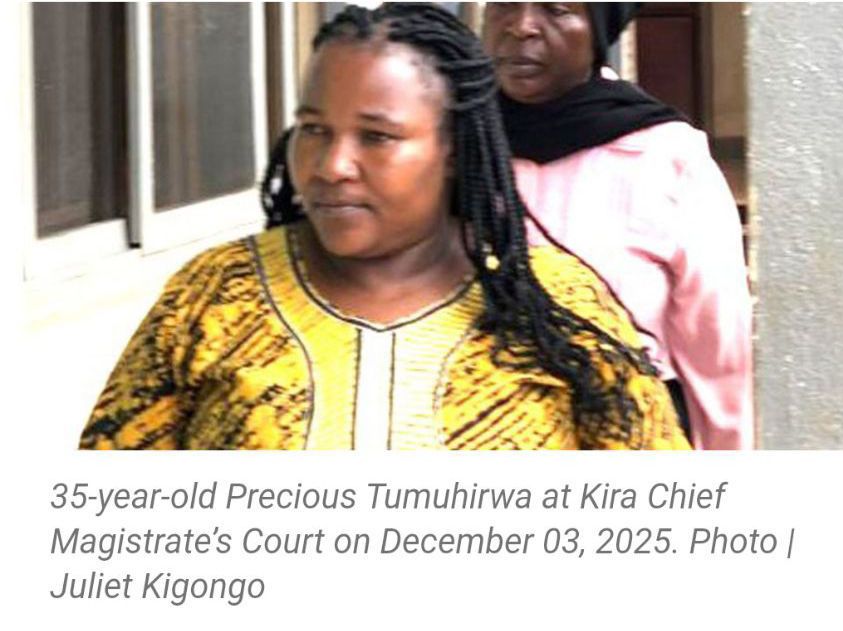
Photo Credit: Daily Monitor, Uganda
Imagine a child, no older than a toddler, helplessly crying out as a maid—someone entrusted with their safety—lashes out in violence. It isn’t fiction. It’s the stark reality of Uganda today. Jolly Tumuhiirwe, the maid filmed mercilessly torturing a toddler in 2014, became the face of a brutal phenomenon. Her face, twisted in anger, her hands raised to strike—captured in grainy footage that would haunt us forever. It was not just the horrifying sight of a child being brutalized. It was the image of a system so broken, it allowed this cruelty to flourish in the first place.
Tumuhiirwe’s vile act was far from an isolated incident. In 2017, Juliet Nanyonjo, another maid, was caught on camera strangling a six-month-old infant she was hired to look after. The infant’s desperate gasps for air were a harrowing cry for help from a child unable to protect themselves from the violence of someone whose very job was to nurture and care. This was not an isolated act of brutality; this was the outcry of a broken system, where the emotional toll on domestic workers pushed them to lash out at the most vulnerable—children who had no voice, no power.
But why do these workers, often women themselves, turn to such extremes? Why is it that some—just a few—feel the need to vent their anger and frustration on children? To truly understand this, we must peel back the layers of systemic failure that lead to these horrors.
A System That Breeds Violence: How Abuse is Manufactured
At the core of this problem lies a system that has long neglected the rights and humanity of domestic workers. These women—many of them mothers, daughters, and sisters—are tasked with the most sensitive of duties: caring for our families. Yet, their labor is often undervalued, their working conditions unbearable, and their voices silenced.
Imagine working 12 to 16 hours a day, with no set break, no proper compensation, and no respect. Picture living in overcrowded, unkempt quarters, with no privacy or dignity. And for those who dare speak out, the threat of being replaced by another desperate soul looms large. This is the grim reality for many domestic workers. They are often invisible—seen only as tools to be used and discarded at will.
And when their bodies and spirits are worn thin by exhaustion and mistreatment, it is the children who bear the brunt of their anger. Those innocent beings, who trust in the adults around them, become the objects of misplaced rage. When a maid tortures a child, it is not just an individual act of cruelty—it is the product of years of exploitation, neglect, and emotional trauma. Workers who are constantly under pressure, constantly treated as subhuman, inevitably break. The violence is not a reflection of their inherent nature but a symptom of a broken system that has pushed them to the edge.
The Minimum Wage Debate: A Dead End for Reform
The absence of a minimum wage in Uganda is more than just a legal issue—it’s a crisis in human dignity. Domestic workers are paid a pittance for the backbreaking work they perform. Often, they receive far less than a living wage, and their hours are unregulated. This leaves them vulnerable not only to economic exploitation but also to psychological and emotional abuse. With little hope of earning a decent living, many domestic workers are forced to stay in situations that drain them of their energy, their spirit, and their will to continue.
The Employment Bill, which was meant to address this issue, has been languishing in Parliament for years. Despite proposals for minimum wages, regulated working hours, and better working conditions, the bill has failed to pass into law. This failure is not just a legislative oversight; it is a moral failure—a failure to protect the most vulnerable members of our society.
Without a legal framework that guarantees fair wages and basic protections, domestic workers are left at the mercy of their employers. And when an employer turns a blind eye to their well-being, or worse, exploits them for financial gain, the worker becomes a ticking time bomb—her anger and frustration building to a breaking point. The result is often tragic.
How Other Jurisdictions Have Tackled the Issue
The abuse of domestic workers is not a problem unique to Uganda. Countries around the world have struggled with similar issues, but many have taken significant steps to address the systemic exploitation of domestic workers. And while no system is perfect, these reforms serve as a reminder that change is not only possible—it is necessary.
1. The Philippines: As one of the largest exporters of domestic labor, the Philippines has long grappled with issues of abuse against domestic workers. In response, the country passed Republic Act No. 10361 (the Domestic Workers Act), which provides protections for workers, including fair wages, regulated working hours, and the right to safe working conditions. This law also mandates that workers receive at least one day off per week, paid holidays, and protection from abuse.
2. United Arab Emirates (UAE): The UAE has a significant population of migrant domestic workers, many from Southeast Asia and Africa. In 2017, the UAE introduced the Domestic Workers Law, which provides workers with a minimum wage, regulated hours, and protections against physical and verbal abuse. The law also requires that workers’ salaries be paid on time, and that they receive rest periods during their shifts.
3. South Africa: In 2013, South Africa passed the Basic Conditions of Employment Act (BCEA), which extended labor protections to domestic workers. This legislation set limits on working hours, mandated paid leave, and established a minimum wage for domestic workers. This law has been a landmark victory in the fight for labor rights, ensuring that domestic workers are no longer treated as second-class citizens.
4. Brazil: In Brazil, the Domestic Workers’ Law of 2013 was a groundbreaking reform that extended labor protections to domestic workers. This law guarantees workers the right to a minimum wage, paid leave, overtime pay, and a regulated workweek. It was a significant step forward in recognizing the rights of domestic workers and ensuring their dignity and well-being.
These examples show us that meaningful reforms are not only possible—they are essential. By enacting similar laws in Uganda, we can begin to create a system that values domestic workers, protects them from abuse, and provides them with the dignity they deserve.
ILO’s Role and International Legal Framework
Uganda is a signatory to several international treaties that address the rights of domestic workers. Among these is the International Labour Organization (ILO) Convention No. 189 on Domestic Workers, adopted in 2011. This treaty sets out comprehensive labor rights for domestic workers, including the right to decent working conditions, protection from abuse, and the right to fair pay. It requires member states to implement laws that regulate working hours, establish minimum wages, and provide protections against exploitation.
Uganda, like many countries, has yet to fully integrate these protections into its national laws. While the Employment Bill has been proposed, the failure to enact it into law leaves domestic workers vulnerable to mistreatment and exploitation. The ILO Convention No. 189 calls on governments to ensure that domestic workers enjoy the same rights as other workers, and Uganda must live up to these obligations.
The Universal Declaration of Human Rights also provides a framework for protecting the dignity and rights of all workers, including domestic workers. Article 23 of the declaration states that everyone has the right to work in favorable conditions, receive equal pay for equal work, and enjoy the right to rest and leisure. Uganda must heed these global standards and enact reforms that protect domestic workers from abuse and ensure that their labor is properly valued.
Empathy Over Abuse: How We Can Break the Cycle
The cycle of abuse must end. But to break it, we must address the root causes. We must recognize that domestic workers are not disposable. They are not invisible. They are human beings deserving of the same rights, the same respect, and the same protections as any other worker.
To the employers of Uganda: How long will we continue to dehumanize the very individuals who care for our children, cook our meals, and clean our homes? How long will we let the vulnerability of these workers be exploited for our benefit? Empathy cannot be an afterthought. It must be the foundation of our treatment of domestic workers. They are not machines to be used and discarded. They are women, mothers, daughters, sisters. Their pain is real, their anger justified. When they lash out, it is because they have been ignored for far too long. The time for kindness, respect, and justice is now.
To Hon. Betty Amongi, the Minister of Gender, Labour and Social Development, and the Parliament of Uganda: The time to act is now. The Employment Bill must no longer be allowed to gather dust in the corridors of Parliament. We demand that this bill be passed into law, that it provide a minimum wage, regulated working hours, and comprehensive protections for domestic workers. If we continue to let these workers be exploited, we are complicit in their suffering. The stories of maids breaking down, of children tortured, of lives shattered, will not fade. They will only grow louder. **
About Author.
ENEN AMBROSE
The Author is a Rule of Law enthusiast, an Advocate of the Courts of Judicature and a believer in progressive realization of full enjoyment of social, political and economic rights by all peoples.
DISCLAIMER:
All information here is only intended to provide information and to spark public discourse on the subject. No part of this Blog Post is intended to be used as Legal Advice. The author accepts no responsibility for any loss or injury arising from the use of the information contained in this post as Legal Advice. Readers are strongly encouraged to consult with a qualified attorney in their areas of Jurisdiction for situation specific advice and appropriate course of action.
If you find this Blog interesting, please like, comment and share with your friends and colleagues on your favorite social media platforms.
Do you have a development that you feel needs a discussion? Or do you have any feedback for us? Please reach out to us on ambrosenen@gmail.com or mobile +256789856805.
 enenlegalworld