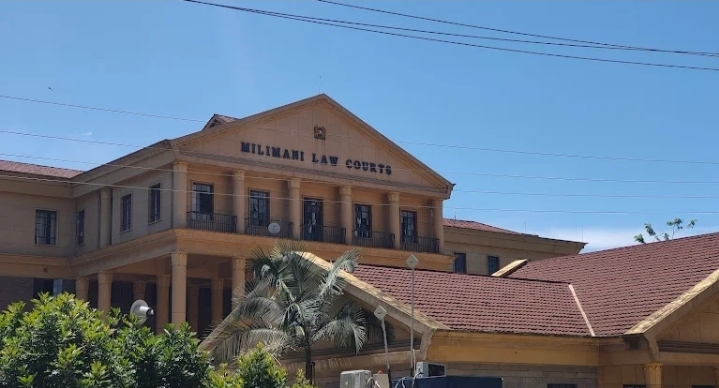
In a matter of days, somewhere in Kampala, an advocate will walk into chambers carrying a file. A real file. Bound in cardboard. Stuffed with pleadings. Scarred by coffee stains. Held together by registry stamps, handwritten notes, and the quiet traditions that have shaped Uganda’s legal profession for generations. He will place it on his desk. He will call his clerk. He will ask about the service. He will ask whether the registry finally responded. He will ask whether the ruling was uploaded. He will ask if tomorrow’s matter still appears on the court list. And without fully realizing it… He may already be practising history.
And on 1 June 2026, every advocate practising before courts integrated into ECCMIS will begin to feel the reality of it. Paper files, as we know them, begin to lose their dominance. Not theoretically. Not academically. Not someday. This June.
Suddenly, a question that once sounded futuristic now feels deeply personal: Is the Ugandan legal profession actually prepared for digitally operational courts? Not on conference banners. Not in panel discussions. Not on LinkedIn posts celebrating innovation. In chambers. In active files. In client communication. In deadlines. In operational reality. And if we are being honest, this conversation did not begin with me.
The Judiciary has moved. ECCMIS has moved. The Uganda Law Society has moved. Developers have moved. Institutions have moved. The only chambers left to convince… may now be our own. Because if we are being painfully honest, many firms are still operating through fragmented systems held together largely by human effort. Some clerks still physically chase court lists.
Some advocates still log into ECCMIS repeatedly “to check.” Some clients still travel to court only to discover their matter was adjourned hours earlier. Some managing partners still call chambers late in the evening, asking whether rulings were uploaded. Some firms still lose valuable hours searching through paper trails for information that should already be accessible instantly. None of this reflects incompetence. It reflects transition. And in June, transition becomes unavoidable. Because nostalgia will not file pleadings. Sentiment has never uploaded a PDF. And operational inefficiency increasingly carries reputational consequences.
Days ago, in my previous article, The Quiet Violence of Procedure, I argued that justice does not always fail loudly. Sometimes it fails quietly – inside missed notifications, delayed communication, inaccessible records, and systems that store information without truly delivering it to the people who need it. Technology alone does not solve that problem. Preparedness does.
Shortly after publishing that article, I received a phone call from a Ugandan technology company, Riyale Tech Solutions. I assumed the conversation would be defensive. Instead, the invitation was remarkably simple: “Counsel… come and see.” So I went. And what I encountered forced me to confront an uncomfortable possibility:
What if the profession is not facing a technology problem at all… but a preparedness problem?
Because what I saw was not merely software in the conventional sense. It was an attempt to redesign how legal practice operationally functions in the ECCMIS era. Imagine chambers operating from one secure digital environment where drafting, filing, billing, scheduling, client communication, and court updates exist together rather than in disconnected fragments.
A matter moves in ECCMIS – and the Advocate knows immediately. A notice is issued, and the chambers know immediately. More importantly, the client knows too. Automatically.
Through WhatsApp. Through SMS. Through email. No chasing. No uncertainty. No “let me first call my clerk.”
For years, lawyers adapted themselves to court systems. For the first time, platforms are beginning to adapt around lawyers.
And perhaps most surprisingly, this is not imported software retrofitted for Uganda. It is Ugandan-built technology designed specifically around the operational realities of Ugandan legal practice.
A client in Kampala, Gulu, Arua, Mbarara, Nairobi, London, or Dubai can securely monitor the progress of their matter in real time. Invoices are generated systematically. Records organize themselves. Court updates synchronize automatically. Internal workflows become visible. Communication becomes traceable. In that moment, a law firm stops functioning merely as a paper-dependent physical office and begins operating as a modern legal institution.
This article is not an advertisement. It is an observation about where legal practice in Uganda appears to be heading. Because in the ECCMIS era, legal excellence may still win cases – but operational efficiency will increasingly win client confidence. And that reality raises difficult questions. Which firms will adapt fastest? Which firms will attract the next generation of clients? Which chambers will build operational resilience? Which firms will continue spending valuable hours managing paperwork while competitors focus on strategy, advocacy, and growth? Technology itself does not threaten the legal profession. Irrelevance does. Paperless courts alone do not create digital justice. Prepared lawyers do. Over the past week, conversations around legal technology have intensified – among advocates, managing partners, clerks, judicial officers, and law students alike, all asking versions of the same question: “What does readiness actually look like?” For the first time, I may now have at least one answer. Because on June 1st, paper may begin leaving Uganda’s courtrooms. But excuses may begin leaving the profession, too.
Riyale Tech Solutions offers a comprehensive legal management system integrated with ECCMIS, designed to support law firms transitioning into Uganda’s digital court environment. It centralises case management, client records, document handling, billing, scheduling, and daily operations into a single structured system. Through real-time synchronisation with ECCMIS, case updates are automatically reflected without requiring repeated manual logins. The platform also delivers instant notifications via email and WhatsApp, ensuring that both advocates and clients remain informed as matters progress.
Now let me be equally clear. I hold no equity, ownership, employment, or decision-making role in Riyale Tech Solutions or any affiliated legal technology provider discussed in this article. Any professional introductions that may arise between practitioners and technology providers do not influence the opinions expressed here, which remain independently formed.
Enen Ambrose
Battle hardened RNB Ethusiast; deliberately pushing #Digital Transformation, one of the 4Ds of the RNB Back on track Mantra. Member, Judiciary Affairs Committee Uganda Law Society For feedback or questions: enen@enenlegalworld.com
A comparative East African reflection on artificial intelligence, procedural fairness, and the future of legal drafting
Enen Legal World Logo.
A self-represented litigant in Nairobi used artificial intelligence to draft his pleadings. He reviewed, edited, and adopted every word. He swore no fabricated cases, no false citations. He acted transparently, disclosing his use of AI tools.
Then the High Court of Kenya at Milimani set aside his judgment, called his conduct an abuse of process, and barred him from ever filing any “machine‑generated” pleading in any Kenyan court – unless Parliament first passes a law explicitly allowing AI‑assisted drafting.
That is not judicial caution. It is judicial anxiety in the face of technological disruption.
The Ruling in Brief
In Republic of Kenya, High Court at Nairobi County, Milimani High Court, HCJRMISC/E120/2025 (ruling delivered 16 April 2026), Justice J. Chigiti (SC) considered whether it is legal to draft pleadings using artificial intelligence tools. The respondent/ex parte applicant admitted using what he described as ordinary digital tools, including legal research tools, to assist in writing. He maintained that he had personally reviewed, edited, and adopted every document and remained personally responsible for all factual statements on oath and legal citations. He argued that his pleadings contained no fabricated cases, false citations, or invented quotations, and that, being self‑represented, he had used lawful tools to participate effectively in court.
The Court disagreed. It held that:
· The use of personalised drafting tools, structures and methodologies not provided for under the rules of drafting was “deplorable”. · Allowing such departures would create a “litigation disaster” leaving judges with no guiding beacons. · Generating pleadings through unknown tools or AI gives an unfair advantage to the user, amounting to an affront to access to justice under Article 48 of the Constitution. · The fact the applicant admitted using such tools amounted to an abuse of court. · The applicant could not “vouch for or verify for the court the truthfulness or accuracy” of AI‑generated pleadings, because that would mean he acted as a judge in his own case, violating natural justice.
On that basis, the Court barred the applicant from filing any other pleadings in any court that are machine‑generated, unless a law is passed in Kenya allowing or providing for drafting using artificial intelligence tools.
The Court did observe that technology is a powerful socio‑economic growth tool when harnessed within a legal framework, and invited the Rules Committee to consider amending the Civil Procedure Rules through public participation to embrace technology and AI drafting rules. But the prohibition stands.
The Flaws in the Judgment
Respectfully, the ruling cannot withstand serious scrutiny. I identify four fundamental errors.
1. The “Procedural Integrity” Error
The Court reasoned that because the Civil Procedure Rules do not mention AI, using AI is unlawful. But the Civil Procedure Rules do not mention laptops, either. They do not mention word processors, grammar‑check software, the delete key, or the backspace button. No judge has ever struck a pleading for being typed rather than handwritten.
Silence in the rules is not a prohibition. It is a gap that the rules themselves empower courts to fill – reasonably, proportionately, and with an eye to justice, not to ritual.
2. The “Unfair Advantage” Error – This One Is Fatal
The Court held that a litigant using AI has an unfair advantage over one who does not, and that this violates equality of arms.
Let us apply that logic consistently.
· Google vs. Law Reports – A lawyer with a smartphone and an internet connection can find authorities in seconds. Another, relying on a dusty shelf of hardbound law reports, takes hours. Is that unfair? No judge has ever said so. · AfricanLii / KenyaLii – These digital databases make case law searchable, cross‑referenced, and instantly accessible. A litigant without them is at a disadvantage. Has any court called that an affront to Article 48? On the contrary, the Judiciary itself promotes these tools. · Ulii (Uganda Legal Information Institute) – It now uses AI to summarise judgments. No judge in Uganda has condemned it. No advocate has been barred for citing an AI‑generated summary. The tool is public, free, and welcomed. · Modern medicine – A patient in a Nairobi teaching hospital has access to MRI scans, robotic surgery, and AI‑assisted diagnostics. A patient in a remote clinic does not. That inequality is real. But no court has banned MRI machines because not everyone can afford them. The answer is to spread the technology, not to ban it.
The Court confused asymmetry with injustice. An asymmetry is unjust only when it is arbitrary (only one side gets the tool), hidden (use is not disclosed), or undermines a core right (such as the ability to test evidence). None of those conditions applied here. The litigant disclosed his AI use. The tools are widely available. And the core right – to present a truthful, coherent pleading – was enhanced, not undermined.
If the Court’s logic were applied consistently, we would still be filing pleadings in quill and ink. The unfair advantage is not in the tool. It is in the refusal to adapt.
3. The “Judicial Capacity” Error
The Court said it cannot “verify” AI‑generated content, so the safer course is to ban it entirely.
But courts never “verify” how a human wrote a pleading. They do not audit pen strokes, interview secretaries, or review dictation logs. They look at the final document. If it contains lies, fake cases, or false citations, they sanction the filer. That same framework works perfectly well for AI.
The Court could have required disclosure, a personal verification oath, and a statement that no fabricated content is included. That is governance, not prohibition. Instead, it chose the nuclear option.
4. The “Parliament’s Prerogative” Error
The Court held that only Parliament, not the courts, can authorise AI use in legal process.
Artificial intelligence is not a controlled substance. It is a tool. Courts do not need a statute to permit the use of search engines, word processors, or online databases. They do not need an Act of Parliament to allow a lawyer to take a typing class.
Mandating a legislative framework for basic productivity software is not judicial restraint. It is jurisdictional abdication.
—
A Constitutional Mirror: Article 159 of the Kenya Constitution
The ruling’s approach sits uneasily with Kenya’s own constitutional framework. Article 159(2)(d) of the Kenya Constitution 2010 commands that “justice shall be administered without undue regard to procedural technicalities.”
Procedure exists to serve justice – not to imprison it. A prohibition on an entire category of drafting tools, without any evidence of misuse, elevates form over substance. That is precisely what Article 159 warns against.
If a self‑represented litigant files a pleading that is truthful, coherent, and personally verified, does the mere fact that an AI assisted in its composition make it less worthy of consideration? The Constitution suggests the answer is no.
—
What the Court Could Have Done – And What Others Are Doing
A more thoughtful, proportionate approach is not only possible; it is already being implemented elsewhere.
In Kenya itself, Justice Bahati Mwamuye recently struck out an AI‑assisted filing – but for procedural defects (missing notice statements, non‑compliant affidavits), not for AI use itself. He gave the litigant leave to refile. That is proportionate. (See AllAfrica, 11 March 2026)
Internationally, Singapore’s State Courts have issued a detailed Guide on the Use of Generative Artificial Intelligence Tools by Court Users (effective 1 October 2024). Lawyers may use AI but remain fully responsible for all content; must fact‑check; must not fabricate evidence; violations may lead to sanctions. No prohibition. Just governance. (Registrar’s Circular No. 9, State Courts of Singapore)
In Estonia, small contract disputes below €7,000 can be decided by an AI judge that proposes a decision; a human judge then reviews and may modify or set it aside. That system has reduced backlog without sacrificing due process. (Law Society Journal, Australia, August 2024)
Even Kenya’s own Chief Justice, Martha Koome, announced in August 2025 that the Judiciary is developing an AI Adoption Policy Framework to guide integration of AI tools while safeguarding judicial independence, data privacy and due process. (Judiciary of Kenya official website, 11 August 2025)
The Chigiti ruling is swimming against the tide of its own institution’s planning.
The correct path is clear:
· Disclosure – A litigant or lawyer using AI to draft pleadings should disclose that fact. · Verification – The filer must personally review and adopt all content, swearing to its truthfulness. · Accountability – False citations, fabricated cases, or misleading content remain sanctionable, whether written by a human or generated by a machine. · No prohibition – The tool itself is not the offence. Misuse is.
The Legal Profession Responds
Prominent Kenyan lawyers have reacted with dismay.
Ahmednasir Abdullahi, SC, one of Kenya’s most respected advocates, wrote on X: “What an absurd decision. Does it matter whether one drafts pleadings using AI tools or uses a typewriter? It is none of the court’s business.” (Nairobi Law Monthly, 21 April 2026)
Steve Biko Wafula, senior counsel, published a detailed critique: “This ruling reads less like modern jurisprudence and more like a judicial panic attack in the face of technological change… The court had a first‑rate jurisprudential problem in its hands and squandered it, trying instead to drag the administration of justice back into the pre‑digital age.” (Soko Directory, 21 April 2026)
These are not fringe voices. They are the heart of the Kenyan bar.
A Word to My Ugandan Colleagues – And to Our Judges
I write from Uganda, where we have not (yet) seen a ruling of this kind. Our judges have quietly tolerated – perhaps even welcomed – the steady digitisation of practice. We use e‑filing, and we cite Ulii’s AI‑generated summaries without panic.
But the same instinct that produced the Chigiti ruling lives everywhere: the fear that the machine will replace the judge, that the algorithm will swallow the advocate, that technology will dissolve the profession’s hard‑won exclusivity.
That fear is misplaced.
AI does not abolish judgment. It does not abolish ethics. It does not abolish the court’s ultimate authority. What AI abolishes is inefficiency – hours spent searching for authorities that software can locate in seconds, repetitive drafting, and the false prestige built around scarcity of technical knowledge.
And perhaps that is what truly frightens some corners of the profession. When information becomes democratised, gatekeepers begin to sweat.
But justice does not belong to the gatekeepers. It belongs to the public. And the public does not care whether a pleading was drafted by candlelight, typewriter, Microsoft Word, or artificial intelligence. The public cares whether justice is accessible, affordable, timely, intelligible, and fair.
If AI helps achieve that mission, then resisting it is not conservatism. It is obstruction. And obstruction disguised as professionalism remains obstruction.
Conclusion: The Future Cannot Be Injuncted
History is littered with institutions that initially resisted the printing press, telephones, computers and the internet – only to later embrace them as essential tools.
Did the world wait for a complete legal framework before embracing mobile money? Did banks issue a constitutional petition before M‑Pesa rewired African commerce? Did Western Union obtain an injunction against digital wallets because “money transfers” had traditionally been their sacred territory? Of course not.
Technology arrived. Society adapted. Regulators followed. That is how civilisation has always moved.
The same will happen with AI in the legal profession. The only remaining question is: will courts lead this transformation – or become footnotes in it?
To our Kenyan brothers and sisters: this ruling is a warning for all of us. Not because Kenya is wrong, but because the same instinct – to fear the machine, to reach for a prohibition when a guideline would suffice – lives in every jurisdiction, including ours. The question is not whether Uganda will face this debate. The question is whether we will face it more wisely.
And to any judge reading this: thank you for your service. But please, do not ban the future. Regulate it, guide it, human‑oversight it – but do not pretend that a tool becomes an abuse simply because it is new.
This time, let us not make the same mistake.
― END ―
Disclaimer: This blog is a critique of a judicial ruling and a contribution to the conversation on technology and legal practice. It is not intended as legal advice, nor as an attack on any judicial officer or institution. The author remains committed to the rule of law, judicial independence, and the responsible integration of technology into the administration of justice.
Enen Ambrose. (File photo)
Enen Ambrose
Member: Judiciary Affairs Committee
Uganda Law Society
For feedback or questions, write to: enen@enenlegalworld.com
There is a quiet violence in procedure. It does not shout. It does not argue. It simply assumes; and in that assumption, rights collapse without anyone noticing. This is exactly what happened in two recent High Court decisions: Visare Uganda Ltd vs Festus Katerega T/A Quickway Auctioneers and 3 others. A copy of it can be accessed here:
A case is filed. A hearing date is fixed. Somewhere deep within a digital system, a notice is uploaded. The law nods in satisfaction: service has been effected. The machinery moves. The courtroom sits. The judge writes. And somewhere else, perhaps across the city, perhaps across a fragile internet connection, a litigant knows nothing.
We call this progress.
We call this efficiency.
We even call it justice.
In the recent ruling of the High Court of Uganda in Misc. Application No. 2289 of 2025, the court took the position that once a hearing notice is posted onto ECCMIS, service is complete. It held that it is not mandatory for a party to actually receive an email or SMS notification, so long as the system reflects that service was effected.
The implication is stark: the burden shifts entirely to the litigant or counsel to constantly monitor the system. Failure to do so is fatal. A case may be dismissed. Rights may evaporate. And yet, in the eyes of the law, nothing has gone wrong.
But open justice demands something far more stubborn, far more human. It demands not that proceedings merely exist in public form, but that those whose rights are at stake are actually present; or at the very least, actually aware. The old wisdom insisted that justice must be seen to be done. It did not imagine a world where justice could be technically visible yet practically invisible; where a notice exists, but never reaches; where a hearing occurs, but never touches the party it condemns.
And this is not an abstract concern. It is a doctrinal one.
The Supreme Court of Uganda, in Geoffrey Gatete & Another v William Kyobe, confronted a similar question under the language of “deemed good service.” The Court drew a careful and deliberate distinction; one that modern digital procedure now risks erasing.
It held that “deemed service” is a legal fiction, a procedural convenience that allows courts to proceed even where actual notice may not be proven. But it went further to warn that such service does not necessarily amount to “effective service.” For service to be effective, it must achieve its intended purpose: to bring the proceedings to the attention of the party.
A copy of the decision in Gatete can be accessed here:
This distinction is not semantic. It is foundational.
Because once the law accepts that something may be “deemed” without being real, it must also accept the consequences; that the fiction may fail in practice. And where it fails, justice demands correction.
Yes, there will be cases where a litigant deliberately avoids monitoring the system. But the system cannot punish the many for the bad faith of the few; especially when actual notice remains technically possible.
Yet the modern system presses on, collapsing this distinction. ECCMIS becomes both the record and the proof, both the act and its consequence. Once a notice is uploaded, the law assumes its journey is complete.
But a system is not a voice. A database is not a message. A record is not communication.
And so we arrive at a troubling convergence: a digital architecture that satisfies procedural form while undermining substantive awareness.
Context makes this even more urgent. Even in Kampala, internet access is not constant. Connectivity fluctuates. Costs are high. Power is unreliable. To build a legal system on the assumption that litigants and advocates will perpetually monitor an online platform is to design justice for an ideal world, not the real one.
What then becomes of open justice?
It remains, perhaps, in architecture. The courtroom doors are still open. The rulings are still written. The processes are still documented. But the litigant; the very person for whom the system exists; may never arrive, not out of defiance, but out of ignorance.
And in that moment, something profound happens.
Justice is no longer denied loudly. It is denied quietly.
Not in secrecy, but in silence.
Not by concealment, but by assumption.
Justice does not only die in closed courtrooms. It also dies in silent systems, where notices exist, but never reach.
This is not an argument against technology. It is an argument against unquestioned technology. Against systems that replace human communication with automated presumption. Against a jurisprudence that confuses efficiency with fairness.
The answer is neither retreat nor resistance. It is correction.
If ECCMIS is to be the backbone of modern judicial administration, then it must evolve beyond being a passive repository into an active communicator. It must speak, not just store. It must reach, not just record.
External notification systems are not luxuries; they are necessities. SMS alerts. Email notifications. Web based and Android Push Notifications, Real-time prompts that move beyond the confines of the system and into the lived reality of the user. And more than that, they must not be optional embellishments. They must be integral guarantees, designed to ensure that service is not merely deemed, but actually effected.
The Judiciary and the architects behind ECCMIS stand at a critical threshold. They have built the infrastructure. Now they must build the connection.
Because the law may deem service to be good, but justice demands that service be real.
A system that merely stores notices, without ensuring they reach those whose rights are at stake, does not advance justice, it endangers it. In a jurisdiction where access to digital infrastructure is uneven, to insist that litigants must constantly patrol an online platform is to replace fairness with fiction.
Technology must serve justice, not obscure it.
There is an old wisdom in scripture: No one lights a lamp and puts it under a bed. Instead, they set it on a stand, so that those who enter may see.
ECCMIS is that lamp, lit, visible in theory. But when a notice sits in a database without actively reaching the litigant, we have placed it under the bed. The light exists. It just does not shine where it is needed most. (Mark 4:21)
Let ECCMIS evolve, blending its internal efficiency with robust external communication, ensuring that every litigant is not merely assumed to know, but is given a real opportunity to know.
For if justice is to remain open, it must also remain visible.
Otherwise, quietly and without protest, justice will die in the darkness of its own systems. -THE END-
Disclaimers:
This Blog is not an attack on the Judicial officers who handed down the two decisions criticised above. It is not an attack on the institution of the Judiciary or EECMIS developers. It is intended to spark conversations to make E-Justice and the whole E-Government Digital Transformation a complete and wholesome journey and / or experience.
This Blog is not to be substituted for or taken for legal advice. The author does not accept responsibility or liability for damage suffered as a result of its use as legal advice. Readers are encouraged to consult a qualified and licensed attorney for situation specific legal advice.
Enen Ambrose. (Personal Archive)
Enen Ambrose
Member, Judiciary Affairs Committee of
Uganda Law Society.
For feedback or questions, write to: enen@enenlegalworld.com
If you are joining us for the first time: In Episode 1, we met Mzee Zakayo, who never built a granary but ate from the labor of others. His son Okello Anyapo inherited his appetite but not his cattle, and emptied his uncle Owera Apur’s granary because he was given access without rules.
In Episode 2, we lifted our eyes to Uganda’s constitutional granary, built in 1995, and watched Parliament abandon its duty to build walls around it. We saw the seven famines: the Shs 763 billion justice tax, the incompetence shield, the two‑man cartel, the executive pocket veto, the criminalization of transparency, the ghost tier of unaccountable actors, and the commission that judges itself.
In Episode 3, we watched while the petition slept. Application No. 11 of 2025, filed to halt judicial appointments, was never cause‑listed. The new Chief Justice and Principal Judge were sworn in while the application to pause their own appointments gathered dust in a court the Chief Justice once presided over.
In Episode 4, we knelt under the ojede cii with Owera Apur. We heard him pour out his soul: “How long shall the wicked gloat? How long shall the guilty feast while the innocent gnash their teeth in hunger?” The leaves trembled. Something, somewhere, had heard the cry.
In Episode 5, the ancestors answered across the border. We watched Cecil Miller, a man who never earned his seat, climb to Chief Justice, strangle habeas corpus, fire a judge with a single letter, and finally stood naked in a parking lot, shouting “Nyayo!” while cameras clicked and newspapers stayed silent. We learned that the ancestors do not file cause lists. They let the consequences ripen. And when the fruit is ready, it falls.
Now we return to Abongodero. The leaves have stopped trembling. Owera Apur has risen from the roots. And the question that began under the tree must now be answered by the living.
I. THE PROVERB FULFILLED
The elders of Abongodero had a saying:
You never send a starving man to the granary.
But we did.
We sent Okello Anyapo, the Judicial Service Commission, into the granary with no rules, no walls, no oversight. We watched him eat. We watched him grow fat. We watched him smile and say: “You allowed me. I merely accessed.”
And then we blamed him for being hungry.
But the fault was never Okello’s. The fault was Owera’s, the farmer who opened the door without building the walls. The fault was the village that admired Zakayo’s ingenuity and named itself after his emptiness.
The fault was Parliament’s.
For thirty years, Parliament held the keys to the granary. For thirty years, they walked past it, admired it, named committees after it, but never built the walls.
The Constitution commanded them. The people expected them. History waited for them.
And they did nothing.
II. THE SEVEN FAMINES ARE STILL WITH US
Now the famine is here.
Not the famine of weather. Not the famine of soil. A famine of justice.
· Shs 763 billion paid in bribes by court users, 43% of the justice sector budget. · Magistrates protected from removal for incompetence while Judges, Justices of Appeal and Justices of the Supreme Court face removal for incompetence. · Two people in a private room deciding who judges the nation. · The Attorney General holding a pocket veto over judicial discipline. · Transparency criminalized, a crime to look inside the granary and see what is stolen. · A ghost tier of unaccountable officers exercising power without oversight. · A commission that investigates, prosecutes, judges, and acquits itself.
And when the villagers cried out?
Injunctions. Uncause‑listed petitions. Stalled elections. Appointments proceeding like wedding ceremonies that will not wait for objections.
And finally, at the 2026 New Law Year, the warning:
“Social media attacks on judges will not be tolerated. Online criticism causes trauma and will be crushed.”
Trauma from tweets?
Try the trauma of five years on remand while your case gathers dust. Try the trauma of losing ancestral land because you cannot afford a surveyor. Try the trauma of watching a bribe walk free while your child rots in detention. Try the trauma of knowing that the man who now sits as Chief Justice once presided over the court that received an application to halt his own appointment, and the court never listed it.
That is trauma.
III. BUT THE ANCESTORS ARE NOT THE ONLY AUDITORS
The ancestors answered Miller. They let the consequences ripen. They stood him naked in a parking lot.
But the villagers of Kenya did not sit under a tree and wait. They organized. They spoke. They asked the questions that the powerful did not want to hear. They built institutions; the Law Society of Kenya, the human rights groups, the journalists who published what the newspapers would not, and they forced the system to answer.
Owera Apur did not return from the ojede cii to do nothing. He returned to the village square. He returned to the burial grounds. He returned to the ballot.
Because the ancestors do their work slowly. The living must do theirs urgently.
IV. THE BURIAL QUESTIONS
Across Uganda, in a thousand burials, graduations, and church introductions, your Members of Parliament are sitting on white chairs, waiting to be praised.
They have come to eat. They have come to be photographed. They have come to say, “I feel your pain.”
This time, you must ask them something different.
Not: “What have you brought us?”
But: “What have you done about what takes from us?”
Stand at the burial. Wait for the microphone. Look at your MP, whether they are Minister, Whip, or backbencher, and ask:
“Honourable, year in, year out:
We cannot get bail. We rot in remand for years before seeing a judge.
We lose our land at the High Court because the system is slow, expensive, and rigged against peasants.
Justice is only for those who can bribe or wait.
You are our voice in Parliament.
What have you done, specifically, to fix the courts that inflict this suffering on us?
Have you consulted the Uganda Law Society?
Have you studied the reforms they propose for judicial appointments, discipline, and accountability?
Do you even know that the Uganda Law Society exists?
And if you know, what Bill have you tabled, seconded, or supported to build the granary our Constitution demanded thirty years ago?”
Ask this question.
Not on WhatsApp. Not in a private message.
In public. On the record. Where the cameras are. Where the other mourners are listening.
Because an MP who deflects at a burial has nowhere to hide.
Because a question asked in the village square becomes a political fact that cannot be uncause‑listed.
Because this is how pressure builds, not from the top down, but from the grave up.
The Silence After the Question
If your MP stammers, they will remember that stammer on Election Day.
If your MP promises vaguely, record the promise. Send it to them in one year. Ask again.
If your MP says, “I didn’t know about this,” you have just educated a legislator. Your work is done, for now.
If your MP says, “I am already working with the Uganda Law Society,” ask for the Bill number. Ask for the Committee stage date. Ask when the granary will be built.
Do not let them leave that chair without accountability.
And then, do this;
Call your area MP. Not to abuse them. To instruct them.
“Honourable, I voted for you. Now I need you to table a Private Member’s Bill, or push the government to table one, that finally regulates the Judicial Service Commission and the President in judicial appointments and discipline.
The Uganda Law Society has already done the homework. They have studied the models. They have drafted provisions. They are waiting for a Member of Parliament with courage enough to carry their work into the Chamber.
Why are you not that Member?”
One call changes nothing.
Ten thousand calls change everything.
V. TO THE 12TH PARLIAMENT: THE NEW GUARD
You have been voted in. In May 2026, you will be sworn in.
History greets you warmly, as it greets all new MPs. You hold privilege, power, and a brief season when the public still listens.
You may fill your five years with funerals, allowances, foreign trips, Anti-Citizen legislation like the recentlt passed Sovereignty Act, 2026. You can choose to discuss mundane things like “Nyash” (like Hon. Odur Jonathan) or even fart in the august house (a video Speaker Annet Anita Among quizzing and probing which member of Parliament had visited the air is on public record). For some of you, you may merely look to rehearsals for 2031, which the media has widely reported is usually rigged.
Or you may build. But I verily warn you; if you don’t champion
The fixes demanded in ULS Constitutional Petition No. 12 of 2025 do not require miracles. They require sweat.
· Legislation that regulates the regulators. · Discipline standards that apply equally from magistrate to Chief Justice. · Structures that separate friendship from accountability. · A Judicial Service Commission where the Attorney General does not sit in judgment over judges he has fought in court.
The Uganda Law Society’s Judiciary Affairs Committee has done the technical work. They are not your enemies. They are your research department, waiting to be retained by democracy.
Walk across the stream. Consult them. Then legislate. But I verily say this to you: If you don’t legislate the reforms hinted here and many others, your voters will be thrown under the bus. They will continue to pay the “justice tax” and rot in jails under the weight of case backlog. And if they listen to us, they may hold you accountable at the ballot on polling day!
VI. TO THE CONSTITUTIONAL COURT
The villagers are watching your door too.
They know that the Uganda Law Society filed Application No. 11 of 2025 in July last year, an urgent application asking this court to halt all judicial appointments until the main petition could be heard. They know the application argued that the Judicial Service Commission was unlawfully constituted, missing the two nominees the Constitution requires from the Uganda Law Society.
That application was never cause‑listed. No reasons were given.
The appointments proceeded anyway. The new Chief Justice and Principal Judge were sworn in. And the man who now presides over this court once presided over the very court that received that application, the application to pause his own appointment.
The villagers know these things because they are public facts, not allegations.
Now they wait. Not for a guarantee of victory. Not for a prediction of outcome. They wait to see whether this court has the courage to list the application—to summon the Judicial Service Commission, the body that recruits judges and holds the power to initiate removal of judges, and to hear the arguments of the Uganda Law Society.
Cause‑list the interlocutory application, My Lords.
Let the court sit. Let the lawyers speak. Let the Judicial Service Commission, your recruiters, your employers, the body that can initiate your removal; be called to account before the very judges it helps appoint.
It does not matter, in the end, whether the application is granted or denied. What matters is this: does the court have the courage to summon its own employer? Does it have the spine to look at the body that controls judicial careers and say: “Sit down. Answer. We will hear this case.”
The people are not asking for a favorable outcome. They are asking for a court that is not timid. A court that does not hide behind cause lists. A court that can be a bully‑beater; that can summon the powerful and demand an accounting.
Show us that the Judicial Service Commission is not above the law. Show us that it is not above the courts.
Cause‑list the application. Let the world see whether this bench has balls made of titanium alloy.
The proverb is not a verdict. It is a question. And the question hangs in the air, waiting for your answer.
VII. TO THE CITIZEN WHO FEELS HELPLESS
You are not powerless.
You do not need a law degree to ask a question. You do not need a Twitter verification badge to demand accountability. You do not need to file a petition to remind your MP that they work for you.
The granary will be built when building it costs more than neglecting it.
Make neglect expensive.
Ask the question at the burial. Record the answer. Share it. Remember it on Election Day.
And when you feel the weight of the system pressing down, when you have knocked on every door and found them locked; remember Miller.
Remember that the ancestors are patient. Remember that parking lots are everywhere. Remember that the system you build to protect yourself may one day become the cage you cannot escape.
But also remember this: the ancestors do not act alone. They act through us. Through the questions we ask, the votes we cast, the institutions we build, the silence we refuse.
The ancestors answered Miller. But the Law Society of Kenya, the human rights lawyers, the journalists, the citizens—they answered too. They did not wait for the parking lot. They built the walls that Miller’s allies had left empty.
So shall we.
VIII. THE CHOICE
Mzee Zakayo is long dead.
But his children are still in Parliament. Some of them sit on the Judicial Service Commission. Some of them wear robes and warn about trauma from tweets.
And the villagers?
They are still standing at the granary door. Still waiting. Still hungry.
Abongodero is tired.
Hunger remembers.
And this time, the people are not just watching the granary door.
They are standing at the burial, waiting for the microphone.
They are standing at the courthouse, waiting for the cause list.
They are standing at the ballot, waiting for 2031.
Build the granary, Honourable.
Cause‑list the application, My Lords.
Ask the question, Citizen.
Or be prepared to answer for the emptiness;
In this life, and at the judgment.
You never send a starving man to the granary.
And you never send a sleeping Parliament to guard justice.
But you also never leave the granary to the ancestors alone. The end!
DISCLAIMERS
1. On Sub Judice
This series references ULS Constitutional Petition No. 12 of 2025 and related applications only as evidence of public grievance and legislative failure. It does not urge the Constitutional Court to grant or dismiss the petition. It does not analyze the merits of the petitioners’ arguments. It does not predict or demand any particular judicial outcome. The duty of Parliament to legislate exists independently of this or any litigation.
All facts presented regarding judicial appointments and cause lists are matters of public record.
2. On Intent
This series is not a call for mob justice, disorder, or disrespect toward judicial officers. It is a call for legislative accountability, civic engagement, and institutional reform. It is written in the tradition of the village baraza; where truth is spoken plainly, proverbs carry the weight of law, and leaders are expected to listen without punishing the messenger.
Criticism of systems is not attack on persons. Demanding accountability is not contempt.
3. On Legal Advice
Nothing in this series constitutes legal advice. The author is an Advocate and member of the Judiciary Affairs Committee of the Uganda Law Society, but writes here in his personal capacity. Readers with specific legal problems should consult a licensed practitioner.
Enen Ambrose Advocate Member, Judiciary Affairs Committee Uganda Law Society.
Disclaimer: The story of Cecil Miller is drawn from historical accounts, particularly Paul Mwangi’s The Black Bar. This retelling is a synthesis for the purpose of public education and advocacy. Readers of this Blog are encouraged to purchase a copy for the full account and context of The Black Bar by Paul Mwangi (SC)
If you are joining us for the first time: In Episode 4, Owera Apur knelt under the 160‑year‑old ojede cii tree and poured out his soul. He called on Zakayo, on the ancestors, on the spirits of the land. He asked the question no constitution can answer: How then shall we live when the council is bought and the granary is empty? The leaves trembled. Something, somewhere, had heard the cry.
Tonight, the ancestors reply. Not with wind. With a mirror.
I. THE FOREIGN SEED
In the 1970s a contract judge arrived in Kenya from Guyana. His name was Cecil Henry Ethelwood Miller. By blood he was a Black Pan‑Africanist, a World War II pilot who had “dusted the Aryan race.” By reputation he should have been a hero.
By work ethic he was almost useless.
But President Daniel Arap Moi saw hunger in Miller’s eyes. So Moi gave him Kenyan citizenship, a constitutional tenure as a High Court judge, a large plantation, and a Mercedes‑Benz limousine. The same way Owera Apur opened his granary to his nephew Okello, Moi opened the highest doors of the judiciary to a man who had never built anything.
Miller’s appetite only grew. He wanted to be Chief Justice. He understood the price: total, slavish loyalty to Moi. The ancestors watched the foreign seed take deep root in Kenyan soil.
In 1983 President Moi wanted to destroy his once‑powerful minister Charles Njonjo. He set up a Judicial Commission of Inquiry to investigate Njonjo for alleged abuse of office, everything from amassing firearms to plotting coups. The commission was widely seen as a kangaroo court, designed to humiliate Njonjo and drive him out of politics.
Miller was one of three commissioners. He walked in carrying two things: a personal grudge against Njonjo (who had once passed him over for promotion) and zero judicial independence.
The transcripts from The Black Bar are excruciating. During the hearings, lead counsel Lee Muthoga probed Njonjo about whether he had paid an MP, Amos Ng’ang’a, to resign his parliamentary seat so Njonjo could run for it. The exchange was tense. Njonjo’s lawyer, Mr. Deverell, kept interrupting with sarcastic remarks, at one point suggesting that “any other consideration” might include buying ice‑cream.
Miller exploded:
“You keep making your jokes, Mr. Deverell. You keep on making your jokes. In the long run you may find it is not going to accrue to your credibility and your status before this inquiry. You keep on making your jokes. You take out your cold icecream and push it into your mouth. Proceed please.”
The outburst revealed Miller’s predetermined hostility. He was not there to inquire; he was there to convict. Deverell saw the commission for what it was: a kangaroo court designed to destroy Njonjo.
The mission succeeded. Njonjo was politically crushed.
And in 1986 Miller was rewarded exactly as he had schemed: he was sworn in as Chief Justice of Kenya.
A man whose judicial temperament was summed up by an ice‑cream joke now controlled every judge in the Republic.
The ancestors were already laughing.
III. THE HABEAS CORPUS THAT MILLER STRANGLED
On 6 April 1987 a man named Stephen Mbaraka Karanja kissed his wife goodbye in Limuru and left for Nairobi. He was never seen alive again.
After seven weeks of desperate searching, his wife filed a writ of habeas corpus asking the court to order the CID Director to produce her husband.
The case came before Justice Derek Schofield. The CID claimed Karanja had been “shot while escaping.” Schofield did not believe them. He ordered an exhumation, an independent post‑mortem, and affidavits.
The grave was empty. No body. No records. Schofield issued a notice to the CID Director to show cause why he should not be committed for contempt.
That was when President Moi sent Chief Justice Cecil Miller himself into Schofield’s chambers with a direct order: “Lay off the case.”
Schofield refused. He told Miller: tell the President to keep his hands off the judiciary, or I will tell the President myself.
Miller did not wait. On 11 August 1987, without any formal application, without any hearing, Miller summoned the lawyers, seized the file, and transferred the entire matter. He stood the case over “until judges return from vacation.”
Later he moved it to a known government apologist, who ruled that once a man is dead, habeas corpus cannot issue, because “the person or body” does not mean a corpse.
Schofield resigned in disgust and left the country. The Law Society hosted a farewell dinner. The only senior government officer brave enough to attend was immediately fired.
Stephen Mbaraka Karanja’s family never got justice. The habeas corpus died in silence.
The Chief Justice had personally executed a murder cover‑up in open court.
IV. THE JUDGE WHO FIRED A JUDGE
By now Miller’s interference was routine. He transferred cases at will, summoned lawyers, stood matters over, and told other judges to “lay off” sensitive files.
One man refused to bow: Justice Patrick O’Connor.
Miller tried everything. When nothing worked, he issued a punitive transfer order sending O’Connor to a remote station.
O’Connor defied it.
On 26 September 1988 Miller sat down and wrote a single letter:
“You are hereby dismissed from the service of the Judiciary with immediate effect.”
No hearing. No tribunal. No reasons. Just one letter from a man who had never earned the seat he sat in.
O’Connor was gone. The message to every honest judge was clear: resist Miller and you die.
One judge had said no. Miller made sure he would never say anything again.
V. THE PARKING LOT
By 1989 Miller had become a drunk, violent eccentric who required armed policemen standing guard outside his chambers, something no Chief Justice before or since has ever needed.
On a September afternoon he returned from lunch heavily intoxicated. He opened the sealed box he called his “disposal orders”, instructions for how his body should be treated after death. Then he began marching around his chambers shouting drill commands to himself.
The policemen called the Commissioner of Police.
Miller burst out, punching the air. He rushed into the High Court parking lot, in full view of journalists, lawyers, and the public.
There, Cecil Henry Ethelwood Miller, Chief Justice of the Republic of Kenya, dropped his trousers.
He placed one shoe on his head.
And he marched again.
Every few steps he stopped, raised his fist, and screamed Moi’s slogan at the top of his lungs:
“Nyayo! Nyayo!”
Nyayo meant “footsteps.” He was marching in the President’s footsteps, straight into naked madness.
The Commissioner of Police and his men wrestled the naked Chief Justice into a car and drove him home.
No newspaper published the photographs. No radio station broadcast the story. No television channel dared show the images that filled cameras that day.
Five days later, on 5 September 1989, Miller died. The official cause was listed as septicemia.
The real cause was the ancestors’ audit.
VI. THE ANCESTORS’ AUDIT
The villagers who had abandoned Miller to his gods did not celebrate. They did not dance. They did not say, “See, justice came.”
Because justice did not come. The system that made Miller also protected him, even in madness, even in death. His family stayed in the official residence for months. Armed police guarded his widow. The government enforced his vengeance posthumously.
No one was held accountable. No one was punished. No one even spoke.
But the ancestors had their way.
Not through a court. Not through a petition. Not through a judgment. Through a parking lot and a shoe on a head and a slogan shouted by a naked man.
The ancestors do not file cause lists. They do not wait for submissions. They do not deliberate.
They simply let the consequences ripen. And when the fruit is ready, it falls.
Owera Apur’s invocation was answered—not by the council, not by Parliament, not by any human institution. It was answered by the slow, patient gravity of truth.
VII. HOW THEN SHALL WE LIVE?
So we return to the question.
How shall we live when the granary is empty? How shall we live when the petition sleeps? How shall we live when the door does not open?
We live like the villagers who finally understand: there is no institution coming to save us.
We live knowing that the system may never be fixed in our lifetime. We live knowing that the judges who betray justice may never face a tribunal. We live knowing that the MPs who refuse to legislate may be re‑elected.
But we also live knowing this:
The ancestors are patient. The gods are not asleep. And parking lots are everywhere.
Miller’s story is not a promise of justice. It is a warning against the illusion that power can protect you forever. It is a reminder that the system you build to shield yourself from accountability may one day become the cage you cannot escape.
So how shall we live?
We live with our eyes open. We live asking the questions at burials. We live recording the promises and the failures. We live building the granary even if we never eat from it.
We live like people who know that the ancestors are watching.
And we leave the rest to them.
In the final episode: Owera Apur rises from the roots. The leaves speak one last time. The choice that cannot be postponed. We will show that while the ancestors SHALL no doubt have their day, we, their descendants still have a role to play to bring all the living “Okello Anyapos” to order, to serve with intergrity, purpose and accountability.
Episode 6 drops tomorrow. 5 PM.
Disclaimer: The story of Cecil Miller is drawn from historical accounts, particularly Paul Mwangi’s The Black Bar. This retelling is a synthesis for the purpose of public education and advocacy. Readers are encouraged to get a copy of the book for a full account of Kenya’s journey of Judicial Accountability as narrated by the author.
If you are joining us for the first time: In Episode 1, we visited Abongodero, the village named after Mzee Zakayo’s ingenuity. Zakayo never built a granary. He traded cattle for the harvest of others. His son, Okello Anyapo, inherited land but not discipline. When hunger came, his uncle Owera Apur, the only farmer who actually built, opened his granary to him. No rules. Just access. Okello emptied it, smiled, and said: “You allowed me. I merely accessed.” The proverb echoes still: You never send a starving man to the granary.
In Episode 2, we lifted our eyes from the village and saw Uganda’s constitutional granary, built in 1995. The Constituent Assembly, our Owera, filled it with independence, fairness, accountability, and public trust. Then they handed the keys to Parliament and commanded: build walls, regulate who enters, who eats, who guards. For thirty years, Parliament did nothing. They left the granary to the Judicial Service Commission—a body of insiders, judges, and the Attorney General. It was as if Owera had handed Okello the keys and appointed his hungriest siblings as overseers. We witnessed the seven famines: the Shs 763 billion justice tax, the incompetence shield, the two‑man recruitment cartel, the executive pocket veto, the criminalization of transparency, the ghost tier of unaccountable officials, and the commission that judges itself. When the Uganda Law Society cried out, it was met with injunctions, uncause‑listed petitions, stalled elections, and the quiet gutting of the granary.
In Episode 3, we watched while the petition slept. ULS Constitutional Petition No. 12 of 2025 was filed, laying bare the rot. Alongside it came Application No. 11 of 2025, asking the court to halt all judicial appointments until the petition was decided. The Constitutional Court did not cause‑list that application. So the appointments proceeded. The new Chief Justice, Flavian Zeija, and the new Principal Judge, Jane Francis Abodo, were sworn in, while the man who would become Chief Justice had presided over the very court that received the application to pause his own appointment. The court did not list it. No reasons were given. In Abongodero, the elders say: when the man guarding the granary door benefits from what passes through it, the door stays open.
Now we arrive at the question no constitution can answer.
Of invocations, supplication to the ancestors!
Under the ancient ojede cii tree in Abongodero, as the sun bled its last light across the horizon and the first shadows of night crept in like uninvited mourners, Owera Apur returned alone. The shea nut tree-yao, stood immovable, its 160‑year‑old trunk scarred and resolute, roots plunging deep into the fertile black earth that had swallowed generations of the departed. Its wide canopy spread like outstretched arms, ready to receive the heaviest of burdens. No one else was there. Only the wind, the rustling leaves, and the aching silence of a man whose soul had reached its limit.
He fell to his knees at the base of the trunk, pressing his forehead against the rough bark until it bit into his skin. His hands clutched the earth, fingers digging into the soil as though he could pull the ancestors up by their very bones. Tears already streamed down his weathered face, unchecked, unashamed. And then the plea began, not as words, but as a broken wail from the depths of his spirit, echoing the desperate cries of mothers who once stood barren before the altar, begging for life where death had taken root.
The Yao (Shea-nut) tree. Copyright owned by Marco Schimdt. Used under creative commons license
“Ancestors of this land! You who planted the first seeds under this very ojede cii… hear me! I pour out my soul before you like water spilled on thirsty ground. My heart is poured out; my spirit is crushed. How long, O spirits of the soil and sky, how long will you stand silent while the wicked gloat over our suffering? How long shall you watch the thief laugh while the righteous weep blood?”
He struck his chest with a closed fist, once, twice, three times, each blow a drumbeat of agony.
“Zakayo… my brother… my blood… you who walked this earth before me, you who left us too soon, where are you in the realm of the ancestors? Come near! Stand with me under this tree that has outlived us both. I call you by name, Zakayo, as a child calls for its father in the dark. You who focused only on trade, on the markets, on the coins that flowed through your hands… why did you forget? Why did you not teach your son Okello the sacred things? The hard work that bends the back but strengthens the soul? The resilience that stands when storms come? The honesty that keeps a man’s word sharper than any spear? The endurance that tills the land until it yields, even when the rains refuse to fall?”
Owera’s voice cracked, rising into a lament that shook the leaves above him.
“You left him weak, Zakayo! A son who cannot till the soil, who cannot plant one seed with his own hands, who cannot endure even one dry season without complaint. Yet he feels entitled, entitled to be fed, entitled to the inheritance, entitled to the sweat of others while he sits in the shade and demands! Entitlement without accountability! A child who never learned that the earth gives only to those who bleed into it first. And now he has become the thief, the one who rigs the elders with bribes and twisted promises, the one who silences the council that should guard justice. He walks untouched, laughing, while we starve in spirit. How now shall we live, my brother? Tell me, how shall we live when the son you left behind devours what the ancestors planted for all?”
He rose unsteadily, circling the massive trunk, palms sliding over the bark as if reading every scar of time.
“Spirits of Abongodero, guardians who remember every oath sworn beneath this ojedecii… contend with him! Rise up against Okello as you once rose against those who betrayed the land. Let his rigged elders tremble in their sleep. Let their tongues turn bitter with the silver they swallowed. How long will you watch the wicked gloat? How long shall the guilty feast while the innocent gnash their teeth in hunger? The scales are broken. The voice of the wronged is buried under promises and lies. The family bleeds still because justice is denied. Zakayo, intercede! Ojede, our father, intercede too! Manaci our grandfather and Oluge our great great gandfather, all of you, tell the ancestors: the wound festers. Your own blood, Okello you left behind has become the shadow that blocks the sun.”
The plea deepened, repeating like waves crashing against an unyielding shore. Owera poured libation from a calabash, water mixed with Wiri (kwete), letting it soak into the roots while his voice rose higher, raw and unrelenting.
“Ancestors, if you yet walk among us, if blood still calls to blood… see my tears! See my brokenness! I have no more strength to carry this alone. The child you left behind, Zakayo, has grown into a man who knows only taking, never giving. He cannot plant, cannot harvest, cannot endure, yet he claims everything as his right. Entitlement without sweat! Without honesty! Without the resilience you never taught him! And now the elders dance to his tune, the council is bought unlike Ojede andManaci, who resolved disputes between their people in Abongodero with stoic intergrity. Now we are left asking: How shall we live? Shall we teach our own children to bow to thieves? Shall we not pass on the legacies of Ojede and Manaci? Shall weswallow silence until it poisons our blood? Shall the ojede cii itself bear witness to our shame forever?”
He fell to the ground again, prostrate, forehead in the dust, body shaking with sobs that came from a place deeper than grief.
“How long, O ancestors? How long shall you watch the wicked prosper while we waste away? How long shall Okello’s laughter echo across the land you blessed? Intervene! Unravel the knots he has tied with silver and deceit. Expose the bribes in the full light of day. Let the rigged council fall like dry leaves in the wind. Shake this tree if you hear me! Stir the branches! Let Zakayo’s voice thunder through the canopy! Give us a sign that we are not forsaken, that justice sleeps but will awaken like a lion from its lair!”
The night had fully claimed the sky. Owera Apur’s voice had grown hoarse, yet the lament continued pouring out, wave after wave, until the air itself felt heavy with the weight of his words. He remained there, drenched in sweat and tears, chest heaving, hands still clutching the sacred roots. The ojede cii stood silent… but the leaves began to tremble, not from wind alone. A single low murmur seemed to rise from the depths of the trunk, as though the ancestors were gathering, listening, weighing every broken syllable.
The crescendo hung in the darkness like smoke from a sacrificial fire, thick, unrelenting, desperate. The plea had been poured out completely, soul‑bare and unfiltered, just as a barren woman once poured out her anguish before the altar, vowing everything if only life would come. Now the veil was torn wide open. The spirits hovered close. The tree itself seemed to breathe.
And under its ancient shade, Owera Apur waited, heart laid bare, knowing that something, somewhere, had heard the cry.
In the next episode: we shall see that ancestors have answered prayers before, elsewhere, far away from Abongodero.
If you are joining us for the first time: In Episode 1, we met Mzee Zakayo, who never built a granary but ate from the labor of others. His son Okello Anyapo inherited his appetite but not his cattle, and emptied his uncle Owera’s granary because he was given access without rules. In Episode 2, we lifted our eyes to Uganda’s constitutional granary, built in 1995, and watched Parliament abandon its duty to build walls around it. We saw the seven famines: the Shs 763 billion justice tax, the incompetence shield, the two-man cartel, the executive pocket veto, the criminalization of transparency, the ghost tier of unaccountable actors, and the commission that judges itself.
THIS IS THE SOIL FROM WHICH ULS CONSTITUTIONAL PETITION NO. 12 OF 2025: UGANDA LAW SOCIETY VS ATTORNEY GENERAL ROSE
The petition was filed. The Application for a temporary injunction to halt Judicial appointments pending disposal of the main petition; The arguments were made. The rot was laid bare.
And the Constitutional Court is in no hurry.
The cause list does not call it. The months pass. The granary empties further.
Every day the petition sleeps is a day Okello eats.
Every delay is a verdict delivered without judgment, a verdict that says: this urgency is not our urgency.
The villagers are watching the courthouse door, just as they watch the granary door.
And the door does not open.
WHILE THE PETITION SLEPT
An urgent Constitutional Application, Application No. 11 of 2025, was filed alongside the main petition. It asked the court to halt all judicial appointments pending the determination of the substantive petition.
Among the grounds: the Judicial Service Commission was unlawfully constituted, missing the two nominees the Constitution requires from the Uganda Law Society.
The Constitutional Court did not cause-list that application.
So the appointments proceeded.
The new Chief Justice, the Hon. Fr. Flavian Zeija, was sworn in. The new Principal Judge, the Hon. Judge Jane Francis Abodo, was sworn in.
Before his elevation, the Hon. Dr. Justice Zeija was the Deputy Chief Justice. In that capacity, he presided over the very Constitutional Court that received Application No. 11 of 2025, the application asking the court to pause appointments, including his own.
The court did not list the application. No reasons were given. The appointments proceeded.
In Abongodero, the elders would say: when the man guarding the granary door benefits from what passes through it, the door stays open.
These are facts. Draw your own conclusions.
THE POWER TO STOP ALL THIS LIES IN YOUR HANDS AS A CITIZEN AND AJURI CONSTITUENCY IS PROOF OF CONCEPT.
The Honorable Hamson Obua did not lose by accident.
He rehearsed monarchy in public. He crowned himself Holy Trinity, God the Father, Honorable Member of Parliament, Ajuri Constituency, God the Son, Government Chief and God the Holy Spirit, Vice National Chairperson of the National Resistance Movement for Northern Uganda of political titles. He spoke succession like family inheritance: Museveni, then Muhoozi, then Muhoozi’s children.
Ajuri listened.
They watched soldiers. They watched a disputed poll. They watched power glare at them from armored vehicles.
And they voted again.
Twice in under one month.
History does not always move slowly. Sometimes it slaps.
Enter Badman Jalameso.
Teacher. Organizer. Refusal embodied. Not a dynasty. Not a surname throne. Just a man carried by exhaustion with entitlement.
Badman Jalameso is not a saint. He is a signal.
The signal is this: voters will rise when the granary stays empty.They will require answers and when the answers are not forthcoming, The leader who fails to answer appropriately will be sent back home.
If you are joining us for the first time: In Episode 1, we visited Abongodero, the village named after Mzee Zakayo’s ingenuity. Zakayo never built a granary. He traded cattle for the harvest of others. His son, Okello Anyapo, inherited land but not discipline. When hunger came, his uncle Owera Apur, the only farmer who actually built, opened his granary to him. No rules. Just access. Okello emptied it, smiled, and said: “You allowed me. I merely accessed.” The proverb, which came from the lesson which Abongodero learnt from Okello Anyapo still echoes: You never send a starving man to the granary.
NOW LIFT YOUR EYES FROM THE VILLAGE.
In 1995, Uganda built a granary.
It was called the Constitution. The Constituent Assembly, our Owera, sweated over it. They filled it with grains, cereals and legumes: independence, fairness, accountability, public trust. They stored enough justice to last generations.
Then they handed the keys to Parliament and said:
“Guard this. Build walls around it. Regulate who enters, who eats, who guards. Pass laws to guide the President and the Judicial Service Commission in appointing, disciplining, and removing judicial officers.“
That was the command. Clear. Deliberate. Unambiguous, store the nation’s granary of justice to feed generations and posterity.
For thirty years, Parliament has done what the villagers of Abongodero did.
They admired the granary.
They walked around it. They named committees after it. They photocopied the Constitution into the Judicial Service Commission Act, sprinkled it with procedure, some insidous confidentiality and went home. They called that a good day’s job and pocketed fat salaries for dereliction of duty.
They left the rest to the Commission.
And what is this Commission?
A body composed largely of insiders. Judges. Judicial actors. The Attorney General, the government’s chief defender, seated comfortably in a structure that decides the fate of judges who sometimes rule against his own client.
It is as if Owera had not only handed Anyapo the keys, but appointed Anyapo’s hungriest siblings as the oversight committee to stop him from collecting excessive grains from the granary.
The Inspectorate of Government’s 2021 “Cost of Corruption” report estimated that Ugandan court users paid Shs 763 billion in bribes—43% of the 2019 justice sector budget.
Why?
Because Parliament never built the walls. The 2025 Regulations ensure that bribery does not lead to a judicial officer’s automatic removal. It whispers. It negotiates. It retires quietly with benefits.
At any judiciary function, you will hear rhetorical sloganeering about zero tolerance to corruption. The truth is the leadership and the whole institution preaches water and drinks wine. The structure of the Judicial Service Regulations, 2025 creates elite favors for the Judge, Registrars and the Magistrates.
We hunt “small thieves” in the civil service while the gatekeepers negotiate their exit through cabalist legislation.
2. TheIncompetence Shield
A High Court judge can be removed for incompetence.
But for magistrates, the men and women deciding the everyday fate of boda riders, widows, and shopkeepers, incompetence does not lead to automatic removal. Parliament has allowed a regime where the “big fish” are fired for failing, but the “small sharks” are legally protected and recycled.
Why are judicial officers more “special” than nurses, teachers, engineers or lawyers in the civil service or private sector who are fired the moment they prove incompetent?
Because Parliament never built the walls.
3. The “Two-Man” Recruitment Cartel
Parliament’s silence allowed the Judicial Service Commission to create committees where the quorum is a mere two people, less than 50% of the committee.
The entire future of Uganda’s Bench can now be decided by two individuals in a private room, bypassing the multi-stakeholder wisdom the Constitution mandates.
Two people.
Deciding who judges you.
And Parliament watches.
4. The Executive “Pocket Veto”
Under Section 13(6) of the Act, no judge can be disciplined unless the Attorney General, the government’s own lawyer, is physically present.
By simply not showing up, the Executive holds a de facto veto over judicial accountability.
The government’s defender decides whether the judges who rule against the government face discipline.
You do not need a law degree to smell this rot.
5. Criminalizing Transparency
Instead of “open justice,” Parliament enacted Sections 17 and 23, making it a criminal offense to disclose Judicial Service Commission records without permission.
They didn’t just fail to build the granary.
They made it a crime to look inside and see what is being stolen.
6. The “Non-Accountable” Ghost Tier
By failing to define “Judicial Officer” properly, the law creates a phantom tier of Registrars, Deputy Registrars, Assistant Registrars, Chief Magistrates and Tribunal actors who exercise power over citizens but are legally insulated from oversight.
They have the power of a judge.
They have the accountability of a ghost.
7. The Commission That Judges Itself
The Judicial Service Commission receives complaints. Investigates them. Prosecutes them. Hears them. Decides them.
Investigator. Prosecutor. Judge. Jury.
All in one hut.
We are warned about such concentration of power. But warnings without legislative correction are like a quarrel of drunkards at the village square.
Parliament heard the warning.
Parliament did nothing.
AND WHEN THE VILLAGERS COMPLAINED…
When the Uganda Law Society, noisy, stubborn, unapologetic and unyielding, attempted to intervene?
Injunctions. Uncause-listed petitions. Elections stalled. Appointments to the Judiciary proceeded like wedding ceremonies that will not wait for objections.
The granary was gutted politely.
“SHUT UP! YOU ARE GIVING US TRAUMA”
At the 2026 New Law Year, Chief Justice Flavian Zeija warned that social media attacks on judges would not be tolerated. Online criticism, he said, causes trauma and will be crushed.
Trauma from tweets?
Try the trauma of five years on remand while your case gathers dust. Try the trauma of losing ancestral land because you cannot afford a surveyor. Try the trauma of watching a bribe walk free while your child rots in detention.
The Uganda Law Society replied, correctly, that scrutiny is constitutional oxygen.
But the Chief Justice’s instinct was not an accident.
It was Okello Anyapo protesting demands for answers when Uncle Apur required answers for the granary that was depleted because he gave access without regulation. He permitted Anyapo to eat without brakes.
Because the elders of Abongodero reminded Apur that the roots of accountability are bitter but the fruits are sweet!.
There is a village called Abongodero. Abongodero means without a granary.
The villagers named it after Mzee Zakayo’s ingenuity.
Zakayo was clever. He never built a granary of his own. Instead, he raised cattle, fat bulls, glossy heifers. When hunger season approached, he would walk to a farmer whose granaries groaned with millet and offer a bull in exchange for rights to a certain number of storehouses. Enough to feed his household. Enough to impress the neighbors.
The arrangement was sealed with a handshake. Everyone knew Zakayo’s cattle. Everyone knew he paid.
The villagers admired him.
“..Look at Zakayo!..”they whispered around evening fires. “He eats from granaries he never built!“
They admired him so much that they named the village after his ingenuity.
Abongodero.
A photo of a granary. Credit. Uganda Today: from article: A testament to tradition: the art of grain in Uganda’s homesteads by Chris Kato.
But abundance has a wicked sense of humor.
Zakayo’s children grew up knowing which families owed them food, which granaries bore their father’s mark. They inherited cattle, but not discipline. They inherited the right to eat, but not the wisdom to plant.
One of them was Okello Anyapo.
Anyapo. The lazy one.
Okello inherited land so fertile it blushed when rain touched it. Black soil. Generous soil. Soil that would have yielded harvests his grandfather never imagined.
But his hoe remained smooth. His fields grew weeds tall enough to vote.
When hunger came, Okello blamed the sun for burning too bright. He blamed the rain for falling too hard. He blamed the ancestors for not speaking loudly enough. He blamed everyone except his idle hands.
Across the stream lived Owera Apur.
Apur the Farmer.
He did not give speeches about productivity. He simply woke before the rooster finished its gossip. He dug. He planted. He weeded. He waited. His granary stood behind his hut like a quiet monument to repetition.
He had no cattle to trade. He had only his back, his hands, and his patience.
His granary stood full.
Proof that the land was never the problem.
Then hunger came like a leopard.
The families who once owed Zakayo’s children had rebuilt their stores. They no longer needed cattle. They needed their millet for themselves.
Okello’s inheritance could not be traded for what no one would sell.
Hunger clawed him thin.
He crossed the stream.
“Uncle,” he said. “We are blood. Remember Father Zakayo? The village bears witness to his name.”
In Lango, dignity comes before shame. Owera sighed. He looked at his granary—full from seasons of sweat.
He opened the door.
“Enter,”he said. “Take what you need.”
Not ownership. Not supervision. Not rules.
Just access.
Okello entered empty and emerged round.
He returned the next day. And the next. Soon he stopped pretending to farm at all.
Why sweat when sacks yawn open? Why ration when no one counts? Why plant when the granary door never closes?
By planting season, Owera opened his store to prepare for the rains.
It echoed like a drum.
Empty.
When confronted, Okello adjusted his waistband and smiled.
“You allowed me.“ “There were no rules.“ “I merely accessed.”
And that is how Abongodero learned what their ancestors should have known:
You never send a starving man to the granary.
[End of Episode 1]
Stay tuned and on the look out for Episode 2 of the legend of Abongodero.
Deep within the Mambo Forest, the animal kingdom lived in awe of a single, dazzling truth: their ruler, Twon Gweno the cock, wore a crown of living fire. His comb was a legend, a crest of such vibrant crimson that the elders swore it was a fragment of the first sun. His morning crow was a decree:
“Bow to my glory, and you will be spared my flame.”
And so, the animals bowed. Fear made them pious; fear made the cock sovereign with unquestioned loyalty, respect and cooperation from the rest of the animal kingdom in that forest. It was a classic case of natural-born legitimacy; never really earned.
One evening, a crisis struck. Ichuli, the fox, the sole specialist in lighting the communal fire, was away. The wood was piled, but the spark was missing. The night, cold and predatory, loomed.
Odyek Odyek, the hyena, a friend to truth and enemy of pretence, stepped forward.
“The solution is simple,” she said. “We bow to Ladit Twon Gweno’s crown of fire. I will sprint to his home and borrow a spark.”
She took a tuft of the driest spear grass, the Obia and went to the cock’s compound. She found him in a deep, unconscious slumber. Without waking him, she gently pressed the grass to his legendary crown, waiting for the catch, the sizzle, the proof.
The grass rested on the crown, as inert as if it had been placed on a cool stone. The legendary fire was a phantom.
Odyek Odyek, the hyena returned to the gathering and dropped the cold, unburnt grass in the centre of the circle. No words were needed. The lie they had bowed to for generations unravelled in that silent moment.
Power, and unearned but coerced legitimacy unmasked, bled its authority into the silent night.
⚖️ The Lesson
Borrowed fire must warm the hearts of the people. When it no longer does, the borrower is called to account.
So it is with the courts. The robe, the gavel, the summons, and the warrant are instruments loaned by the people. Article 126(1) of the Constitution does not sing an ornament; it issues a command:
Judicial power is derived from the people and shall be exercised by the Courts in their name and in accordance with the law and their values, norms, and aspirations.
🧱 The Three Pillars of Legitimacy
Legitimacy; the respect of the people and their cooperation with the courts, is the covenant at the heart of that loan. It demands three sacramental elements:
Reflection: Judicial power must reflect the values and aspirations of the people; not the insatiable appetite of a sophisticated elite for luxury or high life.
Truth: Courts must administer justice in accordance with law and truth, not convenience or midnight deals.
The Judicial Oath: The solemn undertaking before God to do justice to all manner of people without fear, favour, ill will or affection is no actor’s prayer; it is a chain of duty.
Strip away any of these, and what remains is a gowned pretender, eloquent and majestic, perhaps, but hollow: a cock whose crown no longer burns.
The Evidence of Decay
For those who have seen:
• Appeal files missing thirty-eight pages.
• A High Court hearing conducted not in a public courtroom but secretly in a posh hotel in which 15 minutes out of those proceedings were conducted in the absence of the opposite party and the whole process bashed by the Court of Appeal for want of a fair hearing and lack of judicial accountability and transparency and thereby further exacerbating the already slim public trust in the Court system entirely
• A lower bench judicial officer bashed; “I don’t want to see this rubbish here, take it back where it came from” when they had sought guidance over files of thousands of remand detainees who had clocked mandatory bail, over 5 years where the Office of the Director of Public Prosecution state attorneys appeared neither willing nor ready to commit them for trial in the High Court.
• The poorest peasants completely blocked from accessing justice because the lower courts have received directives not to register and dispose of customary land disputes unless a surveyor had first rendered a preliminary survey report; peasants who have never heard of, met heard about or hired the services of a professional called a surveyor. They have to sell a chunk of land to afford a surveyor to conduct a preliminary survey and get their case registered.
• A National Bar Association President’s liberty preserving Application for stay of execution of a manifestly void Contempt of Court ruling take close to 9 months without disposal.
These are not footnotes; they are flesh-and-blood indictments. The 1995 Constitution’s promise of a speedy and fair hearing has become hot air—Kikwangala, Kichupuli, Kawani.
🗣️ The Test — The Philosophy of Insults. Withdrawing legitimacy and requiring that it be earned back by fidelity to its 3 pillars.
“To insult without malice but with evidence is to perform constitutional maintenance and maintain pure legitimacy.”
Hence the philosophy of insults. This is not the petty malice of a tavern quarrel. It is a civic stress-test, a pressure gauge for legitimacy.
It is the public’s cry:
“GIVE US WHAT YOU OWE US.”
We lent you power; we demand accountability in return.
A people that cannot insult and mock power has already lost moral authority. The right to insult and offend the powerful is not a luxury, it is the citizen’s tool for testing whether the borrowed flame is real.
📜 The Proof — The Jurisprudence of Defiance
“Leaders should grow hard skins to bear.” “Power must endure insult to remain clean.”
Uganda: When the Constitution Answered Back
This philosophy is not just wisdom; it is the settled weight of law. Consider Andrew Mwenda, whose words rattled the Republic:
This philosophy is not just wisdom; it is the settled weight of law. Consider Andrew Mwenda, whose words rattled the Republic: “You see these African Presidents. This man went to University, why can’t he behave like an educated person? Why does he behave like a villager?’
Museveni can never intimidate me. He can only intimidate himself ……… the President is becoming more of a coward and every day importing cars that are armor plated and bullet proof and you know moving in tanks and mambas, you know hiding with a mountain of soldiers surrounding him, he thinks that, that is security. That is not security. That is cowardice”
Actually Museveni’s days are numbered if he goes on a collision course with me.”
You mismanaged Garang’s Security. Are you saying it is Monitor that caused the death of Garang or it is your own mismanagement? Garang’s security was put in danger by our own Government putting him first of all on a junk helicopter, second at night, third passing through Imatong Hills where Kony is ?……Are you aware that your Government killed Garang?”
I can never withdraw it. Police call them, I would say the Government of Uganda, out of incompetence led to or caused the death of Garang”
When the state reached for iron law and charged him with sedition, the Constitutional Court answered with freedom, declaring that people from all backgrounds enjoy equal rights of expression, polite or not.
“……Our people express their thoughts differently depending on the environment of their birth, upbringing and education.
While a child brought up in an elite and God fearing society may know how to address an elder or leader politely, his counterpart brought up in a slum environment may make annoying and impolite comments, honestly believing that, that is how to express him/herself.
All these different categories of people in our society enjoy equal rights under the Constitution and the law. And they have equal political power of one vote each.Then came the killer line that buried sedition:
“……During elections voters make very annoying and character assassinating remarks and yet in most cases false, and yet no prosecutions are preferred against them. The reason is because they have a right to criticize their leaders rightly or wrongly. The Court concluded “Leaders should grow hard skins to bear.” A copy of the judgment can be found here:
In Burkina Faso, journalist Issa Konaté was jailed for calling a prosecutor “a criminal in a robe.” In his Words:
“…….The Prosecutor of Faso is the godfather of bandits. He is the sponsor, the organizer, the leader of a vast network of counterfeiters and traffickers that he protects with his power and status.” This is a prosecutor who does not prosecute crime, he commands it. He is not a guardian of order but a godfather of disorder While honest citizens sleep in fear, the chief lawman of our nation sits in his office, dividing the spoils of crime with police officers and bankers He is not a magistrate; he is a criminal in a robe. A saboteur of justice…….”
The African Court answered with thunder and reason. Custodial sentences for speech are a bludgeon against Democracy: “The Court is of the view that the violations of laws of freedom of speech and the press cannot be sanctioned by custodial sentences, without going contrary to the provisions of Articles 9and 19 of the Charter”
The Court pronounced itself on the role of public figures under scrutiny.
“There is no doubt that a prosecutor is a public figure; as such he is more exposed than an ordinary individual and is subject to many and more severe criticisms. Given that, a higher degree of tolerance is expected of him”
From this we learn that “Power must endure insult to remain clean.”
🪶 The Heritage; The Lango Grammar of Reproof
This civic logic is not foreign to us. In Lango, the sharp tongue has long done the work of reform.
• “Ole yin ibedo dako dako”; “…..you man, you behave womanly…”. It is not cruelty. It is shock therapy for duty and clarion call for the family patriarch to “man up” and live up to his responsibilities to his family, to lead firmly, provide for it and protect it.
• “Lango mito alek”; “…..Lango deserves a pestle…” A reminder that discipline is coming unless reform comes first and that it intact comes usually after enforced discipline.
• “Kwany Ka Point” The Gen Z’s and Millenials have similarly curved their own wisdom, “pick only the point”: As plain and simple as that. Pick only the point, filter it from the insult.
• “Ikok Ugali idogi.” “…..You will cry with Ugali in your mouth. …”
In the old rite of passage, a young man’s two upper incisors were pulled, and boiling herbal Ugali was placed in his mouth to ease the agony. He cried through the very remedy meant to heal. Reform rarely feels like mercy.
So when the citizen mocks the powerful, the intention is not cruelty; it is Ugali in the mouth of power: a necessary sting, a painful antidote.
The insult becomes a civic anaesthetic; searing, brutally humiliating, but designed to cleanse and restore legitimacy
Reform rarely feels like mercy. So when the citizen insults and mocks the powerful, the intention is not cruelty. It is Ugali in the mouth of power: a necessary sting, a painful antidote.
🔥 The Repair — The Calculus of Force
Public outrage, properly aimed, creates four fields of pressure that make corruption intolerable:
1. Professional Ostracization: When integrity collapses, the social scaffolding of a career falls with it.
2. Erosion of Authority: A judge who loses public confidence loses jurisdictional muscle and may in fact receive fewer to zero allocations of files to handle or minimal chances to be chosen to sit on a panel in the case of hearings in courts that are manned by more than one Judicial Officer.
3. Legal and Institutional Siege: Scandal catalyses petitions, litigation, and oversight that eat at illegitimacy.
4. Political Abandonment: The appointing power prefers a scapegoat to a scandal, forcing a “voluntary” exit.
From this, we learn that insults are not instruments of mob rule; they are the social physics of accountability.Yet outrage alone is not reform. The sting must translate into architecture: cooling-off periods for judges, transparent appointments, and independent oversight with teeth. Shame, the direct consequence of insult, reveals the rot; law must excise it.
⚔️ The Awakening — The Price of Truth
“The hyena who taught the village to see.”
For too long, the Uganda Law Society was a sleeping giant while the temple burned. But the dry grass is now burning in Masaka. When the President of the Bar , the hyena who taught the village to see, lives in exile for refusing to apologise for truth, his banishment becomes the ultimate test.
Isaac K Ssemakadde (SC) President of Uganda Law Society. Credit: Uganda Law Society Website.
📜 The Counsel;A Call to the Bench and the People
This is not an invitation to vulgarity for its own sake. Insult as a civic weapon must be wielded with evidence, not rumour; with satire steeped in fact, not malice.
To the Judges:
Grow the hard skins the Constitutional Court commanded you to have. Wear patience as armour, not menace. Treat insult as a thermometer, not as treason or contempt.
When a citizen insults, ask: does this insult point to truth? If yes, answer in reason, remedy the wrong, and let the nation watch you Act. If not, let the insult fall like a pebble. The dignity and legitimacy of the bench is earned by magnanimity and the stoic creed of the 3 pillars of legitimacy namely Reflection (of law, values, norms and aspirations); Truth and by abiding by the Judicial Oath. It is not enforced by fury, bullying or jaling dissent.
This doctrine requires courage from all sides. The Bar must be relentlessly courageous and fearless in its insult and ridicule while exacting in its ethics.
The public must be loud and literate, hurl insults but bring evidence. Lawyers must translate courage into petitions, not merely WhatsApp gossip and tweets. The Legislature must codify protections for speech against disproportionate criminal sanction and the Judiciary must redicscover the humility of the oath, the most important leg of judicial legitimacy; to do justice without fear, favour, ill will or affection.
To
the citizens: Wield the pen. Make the insult precise devastatingly; threads that link to missing pages, memes that reveal truth.
🌞 The Benediction & Epilogue
Lock and Roseau taught and we learnt from the social contract doctrine that all power, judicial power inclusive, like the communal bull, is never owned. It is loaned to serve, not to feast upon. Judicial officers are, therefore, commissioners, agents of the people, not monarchs. The people are the principal. When the agent betrays, the principal must insult loudly in true reprimand.
If those entrusted with it betray the trust, the people must remind them, sometimes with satire, sometimes with searing words, that borrowed fire must warm, not burn.
This is neither an incitement to violence nor a call for insurrection. It is a call to civil carnage against corruption, ritualised, and peaceful.
Let the insults be sharp, witty, and relentless, and let them dismantle rotten cartels of impunity. Turn every courtroom cover into a public syllabus: transparent reasons, readable judgments, accountability writ in footnotes and public records. Make the institutions bleed truth, not people.
To end illiteracy in justice, let every citizen wield the pen.
Let the hyenas come. Let the baraza be noisy.
Let society test the crown every morning until the judges can point, with open hands and clear reasons, and say:
“Here is the flame.”
Until then, press the grass. Let the crown be tried in daylight. Let the fire prove itself true.
✍️ Dedication
This blog is dedicated to all prisoners, present and past, of conscience, self-expression, and free speech: Male Mabirizi Kiwanuka, Ivan Samuel Sebadduka J, and Isaac K. Ssemakadde (SC), President of the Uganda Law Society, for executing a civic duty tragically confused with contempt of court.
Contempt must be reserved for direct obstruction of justice, not as a cudgel to discipline ridicule. Imprisoning insult and mockery is to forget the nature and source of judicial power: the people’s consent.
May the Good Lord bless and protect you all. And may we witness, in our lifetime, thick-skinned judicial officers who treat insults with nothing more than “a wry smile,” as aptly put twenty-five years ago by the eminent British jurist, Lord Justice Simon Brown.
The author is a member of the inaugural Judiciary Affairs Committee of the Uganda Law Society.
DISCLAIMER: This Blog is not a call for mob justice, chaos or disorder against our beloved holders of judicial power and other public power, it is brutal and defiant reminder that illegitimate conduct leads to a withdrawal of respect from the very owners of the power and attracts criminal and administrative sanctions, some as grave as removal from office. It is also to encourage the clean and disciplined judicial officers to continue upholding the consent of the people for them to administer justice by upholding the stoic pillars of legitimacy first mentioned in this Blog, and that with or without climbing the career ladder, God, the original designer of justice will be the ultimate one to reward their efforts both now and in the afterlife.
This blog is not intended to be used as legal advice, and the author denies liability for use of the contents herein as legal advice. Readers are encouraged to consult a licensed Advocate to give them specialised advice and representation.
For feedbacks and comments: ambrosenen@gmail.com.
References.
For further reading or references. I consulted the following books.
1. Politics as a Vocation (Politik als Beruf) by Max Weber
2. Second Treatise of Government” by John Locke.
3. The Social Contract” (Du contrat social) by Jean-Jacques Rousseau.
4. Weapons of the Weak: Everyday Forms of Peasant Resistance” by James C. Scott.