Category: Artificial intelligence

  • A Paperless Judiciary: Why Aren’t We Ready?

    A Paperless Judiciary: Why Aren’t We Ready?

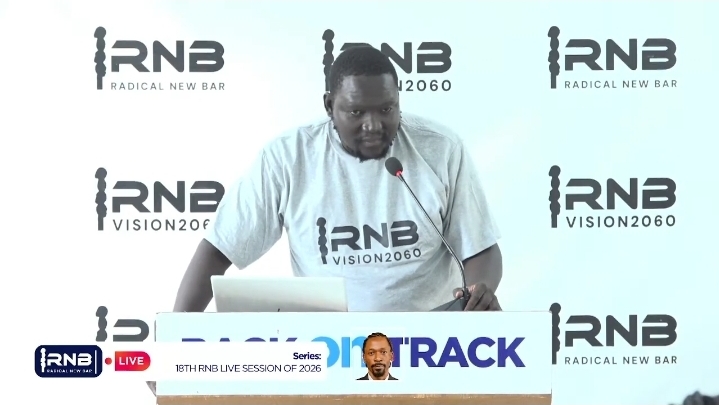
    A speech I presentd at the 18th RNB Live on 4th June, 2026 at ULS House, Kampala

    Paperless Judiciary: Why Aren’t We Ready?

    A speech presented by Enen Ambrose, blogger at www.enenlegalworld.com at the 18th RNB Live on 4th June, 2026 at ULS House, Kampala

    The President of the Uganda Law Society, Isaac K. Ssemakadde SC, the Most Perpendicular Vice President, Anthony Asiimwe, my Northern Uganda Representative to the ULS Governing Council, Egaru Emmanuel Omiat, who I believe is following this discussion online,the General Secretary Salim Babu, together with fellow members of the ULS RNB Governing Council — whom I prefer to call the ULS RNB High Command — the highly distinguished members of the medical fraternity present with us today, colleagues, fellow officers of the court, distinguished guests, and fellow citizens both here in the hall and watching us online:

    I was invited to speak in my capacity as a blogger at www.enenlegalworld.com on the theme: A Fully Paperless Judiciary — Why Aren’t We Ready?

    I stand before you today with deep humility and sincere concern. As a technology enthusiast who believes that technology must facilitate access to justice rather than impede it, I have witnessed firsthand the challenges that arise when we rush into a fully paperless system without adequately preparing the people it is meant to serve.

    What I have observed is not mere technical inconvenience. It is something far more serious — a subtle but damaging form of harm which I prefer to call “the quiet violence of procedure” being done to the very people we are sworn to serve.

     Part I: The Quiet Crisis

    This is not the violence of guns or angry mobs. It is the quiet, daily violence of a system that pretends everything is working when it clearly isn’t.

    Just three days ago, on 1st June 2026, the Judiciary’s deadline for crossing into full paperless operations came and went. Yet the Judiciary’s ICT Director confirmed that the system will only be rolled out to 49 courts — just 20% of the total.

    Imagine a magistrate who cannot access a bail application because the network has failed. The system coldly declares “the file is not before court.” Yet the accused — whether a poor market vendor, a struggling farmer, or a respected professional — stands right there in the dock.

    When this recently happened to an advocate, that person was remanded to Luzira Prison.

    We have always been told that justice delayed is justice denied. But what do we call justice that has simply disappeared from the screen?

    We are rushing into a paperless judiciary while many citizens, and even many lawyers, still cannot navigate it. If a poor person cannot understand their case without a single sheet of paper, have we really advanced, or have we simply replaced one barrier with a more expensive, more frustrating one?

     Part II: The Evidence on the Ground

    My concerns are not theoretical. A recent survey by the PM Digital Law Hub revealed worrying numbers:

    – 87% of judicial officers and advocates have experienced frequent system disruptions. 

    – 78% say technical support is unreliable. 

    – 67% were not confident we would be ready for the June 1st deadline. 

    – 59% have received no formal training at all.

    Let me give you a picture of what these numbers mean. My firm once sent a bright, confident legal assistant to the Gulu branch of the Uganda Registration Services Bureau. His task was to certify company records we needed as evidence in court. He knew the registry. He knew the clerk. He was polished and fully prepared.

    But when he arrived, the physical counter was still there — yet the records had already moved online. The staff of URSB turned him back empty-handed. That day, we had no choice but to force ourselves to adapt to the new technology.

    That, colleagues, is exactly where many of us are today with ECCMIS. We are still walking the old path, trusting the old counters, while the world has moved on.

    Let me tell you another story — one that has not happened yet, but will happen if we are not careful. I want you to meet a lawyer. She is experienced. She has practised for fifteen years. One afternoon, she receives an urgent call. A client is about to be evicted. A temporary injunction must be filed before 5:00 p.m. She knows the High Court Registry well. She has done this a hundred times. But when she arrives, the counters are gone. The clerks point to a sign: “All filings electronic. Use ECCMIS. No paper accepted.” She does not have her laptop. The courthouse Wi‑Fi is down. Her phone battery is low. She tries to log in — she has forgotten her password. She calls her clerk. No answer. The clock shows 4:47 p.m. Her client will be evicted tomorrow. And there is nothing she can do. Colleagues, come July 2026, if the paperless mandate is fully enforced without the changes we are demanding, this will happen. I guarantee it. Our lady lawyer will stand in that registry, fully unarmed and disempowered. In that moment, like our legal assistant at URSB, she will learn the hard way: how she was trained for the profession is no longer relevant. She must upgrade her digital skills — or risk being rendered irrelevant.

    In 2026, we still have judicial officers reaching for the Civil Procedure Rules of 1929 to determine the validity of a summons delivered through a WhatsApp message, while the entire body of laws enacted to facilitate the digital transformation of the Judiciary gathers dust.

    Without a clear Practice Direction from the Chief Justice, and without digital competence forming part of performance evaluation, even this limited rollout to only 49 courts risks a spectacular failure.

     Part III: The Human Cost

    The Nocturnal Lawyer

    Our advocates are now working at 2:00 a.m. not because they are dedicated, but because the system is too slow and congested during the day. We have, in effect, outsourced government server problems to the sleep and mental health of lawyers.

    This is not digital transformation. It is like constructing a magnificent house without laying a proper foundation — impressive on the surface, but unsustainable and harmful to those who must live in it.

    A new digital underclass

    As Advocate Madira Jimmy from Arua warned me, many lawyers in the North risk being reduced to “local assistants” for Kampala-based lawyers who have better internet and support.

    The same law degree, the same oath, but a completely different playing field. This is creating a dangerous hierarchy inside our own profession.

    The Vanishing File

    Under the old physical system, a file could be traced. Today, an urgent application can simply “disappear” in the ECCMIS system.

    A judicial officer who does not wish to attend to a matter no longer needs to hide a physical file. They can simply say, “The system shows nothing.” And who can argue with a screen they cannot see?

    We recently experienced this when the Uganda Law Society filed an urgent Human Rights Application concerning the Ggaba trial. That application was effectively not attended to.

    In my humble view, this incident points not only to a potential case of misconduct against the concerned judicial officers, but more importantly, to a deeper and disturbing lack of accountability in our digital justice system.

    If this can be done to the Uganda Law Society itself, one wonders: who else is suffering the same fate — ordinary citizens who have no voice and no remedy at all?

    Part IV: What We Must Do

    I am not here to condemn the Bar or the Bench, nor am I here as a doomsayer. My critique is directed across the board — at all of us who have a role to play in the successful adoption of digital transformation in the administration of justice.

    1. Mandate Offline Functionality — Every court computer must be able to pre-cache daily files and work when the network fails. Our banking, email apps, file backup systems like Google Drive already do this.
    1. Mandatory Training — No more “learning on the job.” Every judicial officer, clerk, and advocate must undergo verifiable digital training.
    1. Recognise Modern Communication — Issue a Practice Direction accepting service via WhatsApp and SMS to verified numbers. The court can always set aside service where injustice is shown.
    1. True Hybrid System — Do not treat paper as the enemy. A genuine hybrid approach beyond the current 20% rollout is wisdom, not weakness.
    1. Citizen-Centred Design — The system must work for the widow in Amudat who has never opened a PDF.
    1. Cultivate a Transformed Legal Culture — Digital transformation without a corresponding culture of accountability and citizen-centred justice is merely digitising the old bad manners. We must deliberately build a new legal culture where technology serves justice rather than concealing injustice.
    2. Embrace Technology at Individual and Institutional Level — We must consciously cultivate a new culture of embracing technology at both personal and institutional levels. A lawyer who boasts that they never read their emails or deliberately switches off their WhatsApp blue ticks is no different from a judicial officer who conveniently claims “the system shows nothing.” True digital transformation demands personal responsibility from all of us.

     Part V: A Call to Action

    To my fellow advocates: We must continue having honest and regular conversations about digital transformation and the development of a new digital legal culture. Our shared goal is to ensure that technology truly enhances access to justice for all. Let us speak up constructively, with one voice, for the good of our clients and the future of our profession.

    To judicial officers: My clarion call to you today is this — many of you are working under very difficult conditions. Let us join hands and fight together for better tools, better infrastructure, and better support.

    As the ancient proverb teaches us — and I have merely adapted it here — “the roots of accountability are bitter, but the fruits are sweet.” (A variation of Aristotle’s famous saying on education). Let us therefore courageously cultivate, at both personal and institutional levels, a new legal culture of accountability and genuine digital transformation.

    To the people of Uganda: Walk with us. The widow in Amudat — who has never opened a PDF — the accused in Luzira, whose bail application vanished from a screen, and the nocturnal lawyer, awake at 2am fighting a congested server — they need us to get this right.

    The spirit is willing. Let us now strengthen the flesh of this system.

    Thank you.

    I remain Enen Ambrose of Enen Legal World, a legal literacy blog which you can find at www.enenlegalworld.com and I say this for God and My Country.

    ENEN AMBROSE

    www.enenlegalworld.com

    A copy of the speech can be found here:

    JOIN THE UNDERGROUND AND FUEL THE MOVEMENT

    We have created a dedicated fans WhatsApp Channel. Don’t miss the latest updates, get early bird access to our latest blog posts and more, so much more. Click the following link to follow the Channel: https://whatsapp.com/channel/0029Vb9BQqw5a246bWVsLl3j

    Independent institutional critique and advocacy for a radical overhaul of legal culture require time, deep research, and uncompromised independence. If these narratives bring value to your legal journey or challenge your perspective, please visit our HOME PAGE to see how you can support this platform directly and keep the critique fierce and relentless.

    Enen Ambrose. Advocate

    Member, Judiciary Affairs Committee,

    Uganda Law Society

    & Founder–Enen Legal World

  • Uganda’s Courts Are Going Paperless. The Only Question Left Is… Are You?

    Uganda’s Courts Are Going Paperless. The Only Question Left Is… Are You?

    Enen Legal World Logo


    In a matter of days, somewhere in Kampala, an advocate will walk into chambers carrying a file.
    A real file.
    Bound in cardboard.
    Stuffed with pleadings.
    Scarred by coffee stains.
    Held together by registry stamps, handwritten notes, and the quiet traditions that have shaped Uganda’s legal profession for generations.
    He will place it on his desk.
    He will call his clerk.
    He will ask about the service.
    He will ask whether the registry finally responded.
    He will ask whether the ruling was uploaded.
    He will ask if tomorrow’s matter still appears on the court list.
    And without fully realizing it…
    He may already be practising history.

    Because on 17 February 2026, Uganda’s Chief Justice signed an administrative circular that quietly accelerated what many had long assumed was still years away.

    And on 1 June 2026, every advocate practising before courts integrated into ECCMIS will begin to feel the reality of it.
    Paper files, as we know them, begin to lose their dominance.
    Not theoretically.
    Not academically.
    Not someday.
    This June.

    Suddenly, a question that once sounded futuristic now feels deeply personal:
    Is the Ugandan legal profession actually prepared for digitally operational courts?
    Not on conference banners.
    Not in panel discussions.
    Not on LinkedIn posts celebrating innovation.
    In chambers.
    In active files.
    In client communication.
    In deadlines.
    In operational reality.
    And if we are being honest, this conversation did not begin with me.

    The Judiciary has moved.
    ECCMIS has moved.
    The Uganda Law Society has moved.
    Developers have moved.
    Institutions have moved.
    The only chambers left to convince… may now be our own.
    Because if we are being painfully honest, many firms are still operating through fragmented systems held together largely by human effort.
    Some clerks still physically chase court lists.

    Some advocates still log into ECCMIS repeatedly “to check.”
    Some clients still travel to court only to discover their matter was adjourned hours earlier.
    Some managing partners still call chambers late in the evening, asking whether rulings were uploaded.
    Some firms still lose valuable hours searching through paper trails for information that should already be accessible instantly.
    None of this reflects incompetence.
    It reflects transition.
    And in June, transition becomes unavoidable.
    Because nostalgia will not file pleadings.
    Sentiment has never uploaded a PDF.
    And operational inefficiency increasingly carries reputational consequences.

    Days ago, in my previous article, The Quiet Violence of Procedure, I argued that justice does not always fail loudly. Sometimes it fails quietly – inside missed notifications, delayed communication, inaccessible records, and systems that store information without truly delivering it to the people who need it.
    Technology alone does not solve that problem.
    Preparedness does.

    Shortly after publishing that article, I received a phone call from a Ugandan technology company, Riyale Tech Solutions. I assumed the conversation would be defensive. Instead, the invitation was remarkably simple:
    “Counsel… come and see.”
    So I went.
    And what I encountered forced me to confront an uncomfortable possibility:

    What if the profession is not facing a technology problem at all… but a preparedness problem?

    Because what I saw was not merely software in the conventional sense. It was an attempt to redesign how legal practice operationally functions in the ECCMIS era.
    Imagine chambers operating from one secure digital environment where drafting, filing, billing, scheduling, client communication, and court updates exist together rather than in disconnected fragments.

    A matter moves in ECCMIS – and the Advocate knows immediately.
    A notice is issued, and the chambers know immediately.
    More importantly, the client knows too.
    Automatically.

    Through WhatsApp.
    Through SMS.
    Through email.
    No chasing.
    No uncertainty.
    No “let me first call my clerk.”

    For years, lawyers adapted themselves to court systems.
    For the first time, platforms are beginning to adapt around lawyers.

    And perhaps most surprisingly, this is not imported software retrofitted for Uganda. It is Ugandan-built technology designed specifically around the operational realities of Ugandan legal practice.

    A client in Kampala, Gulu, Arua, Mbarara, Nairobi, London, or Dubai can securely monitor the progress of their matter in real time.
    Invoices are generated systematically.
    Records organize themselves.
    Court updates synchronize automatically.
    Internal workflows become visible.
    Communication becomes traceable.
    In that moment, a law firm stops functioning merely as a paper-dependent physical office and begins operating as a modern legal institution.

    This article is not an advertisement.
    It is an observation about where legal practice in Uganda appears to be heading.
    Because in the ECCMIS era, legal excellence may still win cases – but operational efficiency will increasingly win client confidence.
    And that reality raises difficult questions.
    Which firms will adapt fastest?
    Which firms will attract the next generation of clients?
    Which chambers will build operational resilience?
    Which firms will continue spending valuable hours managing paperwork while competitors focus on strategy, advocacy, and growth?
    Technology itself does not threaten the legal profession.
    Irrelevance does.
    Paperless courts alone do not create digital justice.
    Prepared lawyers do.
    Over the past week, conversations around legal technology have intensified – among advocates, managing partners, clerks, judicial officers, and law students alike, all asking versions of the same question:
    “What does readiness actually look like?”
    For the first time, I may now have at least one answer.
    Because on June 1st, paper may begin leaving Uganda’s courtrooms.
    But excuses may begin leaving the profession, too.

    Riyale Tech Solutions offers a comprehensive legal management system integrated with ECCMIS, designed to support law firms transitioning into Uganda’s digital court environment. It centralises case management, client records, document handling, billing, scheduling, and daily operations into a single structured system.
    Through real-time synchronisation with ECCMIS, case updates are automatically reflected without requiring repeated manual logins.
    The platform also delivers instant notifications via email and WhatsApp, ensuring that both advocates and clients remain informed as matters progress.

    Now let me be equally clear. I hold no equity, ownership, employment, or decision-making role in Riyale Tech Solutions or any affiliated legal technology provider discussed in this article.
    Any professional introductions that may arise between practitioners and technology providers do not influence the opinions expressed here, which remain independently formed.

    Enen Ambrose

    Battle hardened RNB Ethusiast; deliberately pushing #Digital Transformation, one of the 4Ds of the RNB Back on track Mantra.
    Member, Judiciary Affairs Committee
    Uganda Law Society
    For feedback or questions:
    enen@enenlegalworld.com

  • When Courts Confuse Asymmetry with Injustice: Kenya’s AI Ruling and the Fear of the Machine

    When Courts Confuse Asymmetry with Injustice: Kenya’s AI Ruling and the Fear of the Machine

    A comparative East African reflection on artificial intelligence, procedural fairness, and the future of legal drafting

    Enen Legal World Logo.


    A self-represented litigant in Nairobi used artificial intelligence to draft his pleadings. He reviewed, edited, and adopted every word. He swore no fabricated cases, no false citations. He acted transparently, disclosing his use of AI tools.

    Then the High Court of Kenya at Milimani set aside his judgment, called his conduct an abuse of process, and barred him from ever filing any “machine‑generated” pleading in any Kenyan court – unless Parliament first passes a law explicitly allowing AI‑assisted drafting.

    That is not judicial caution. It is judicial anxiety in the face of technological disruption.

    The Ruling in Brief

    In Republic of Kenya, High Court at Nairobi County, Milimani High Court, HCJRMISC/E120/2025 (ruling delivered 16 April 2026), Justice J. Chigiti (SC) considered whether it is legal to draft pleadings using artificial intelligence tools. The respondent/ex parte applicant admitted using what he described as ordinary digital tools, including legal research tools, to assist in writing. He maintained that he had personally reviewed, edited, and adopted every document and remained personally responsible for all factual statements on oath and legal citations. He argued that his pleadings contained no fabricated cases, false citations, or invented quotations, and that, being self‑represented, he had used lawful tools to participate effectively in court.

    The Court disagreed. It held that:

    · The use of personalised drafting tools, structures and methodologies not provided for under the rules of drafting was “deplorable”.
    · Allowing such departures would create a “litigation disaster” leaving judges with no guiding beacons.
    · Generating pleadings through unknown tools or AI gives an unfair advantage to the user, amounting to an affront to access to justice under Article 48 of the Constitution.
    · The fact the applicant admitted using such tools amounted to an abuse of court.
    · The applicant could not “vouch for or verify for the court the truthfulness or accuracy” of AI‑generated pleadings, because that would mean he acted as a judge in his own case, violating natural justice.

    On that basis, the Court barred the applicant from filing any other pleadings in any court that are machine‑generated, unless a law is passed in Kenya allowing or providing for drafting using artificial intelligence tools.

    The Court did observe that technology is a powerful socio‑economic growth tool when harnessed within a legal framework, and invited the Rules Committee to consider amending the Civil Procedure Rules through public participation to embrace technology and AI drafting rules. But the prohibition stands.


    The Flaws in the Judgment

    Respectfully, the ruling cannot withstand serious scrutiny. I identify four fundamental errors.

    1. The “Procedural Integrity” Error

    The Court reasoned that because the Civil Procedure Rules do not mention AI, using AI is unlawful. But the Civil Procedure Rules do not mention laptops, either. They do not mention word processors, grammar‑check software, the delete key, or the backspace button. No judge has ever struck a pleading for being typed rather than handwritten.

    Silence in the rules is not a prohibition. It is a gap that the rules themselves empower courts to fill – reasonably, proportionately, and with an eye to justice, not to ritual.

    2. The “Unfair Advantage” Error – This One Is Fatal

    The Court held that a litigant using AI has an unfair advantage over one who does not, and that this violates equality of arms.

    Let us apply that logic consistently.

    · Google vs. Law Reports – A lawyer with a smartphone and an internet connection can find authorities in seconds. Another, relying on a dusty shelf of hardbound law reports, takes hours. Is that unfair? No judge has ever said so.
    · AfricanLii / KenyaLii – These digital databases make case law searchable, cross‑referenced, and instantly accessible. A litigant without them is at a disadvantage. Has any court called that an affront to Article 48? On the contrary, the Judiciary itself promotes these tools.
    · Ulii (Uganda Legal Information Institute) – It now uses AI to summarise judgments. No judge in Uganda has condemned it. No advocate has been barred for citing an AI‑generated summary. The tool is public, free, and welcomed.
    · Modern medicine – A patient in a Nairobi teaching hospital has access to MRI scans, robotic surgery, and AI‑assisted diagnostics. A patient in a remote clinic does not. That inequality is real. But no court has banned MRI machines because not everyone can afford them. The answer is to spread the technology, not to ban it.

    The Court confused asymmetry with injustice. An asymmetry is unjust only when it is arbitrary (only one side gets the tool), hidden (use is not disclosed), or undermines a core right (such as the ability to test evidence). None of those conditions applied here. The litigant disclosed his AI use. The tools are widely available. And the core right – to present a truthful, coherent pleading – was enhanced, not undermined.

    If the Court’s logic were applied consistently, we would still be filing pleadings in quill and ink. The unfair advantage is not in the tool. It is in the refusal to adapt.

    3. The “Judicial Capacity” Error

    The Court said it cannot “verify” AI‑generated content, so the safer course is to ban it entirely.

    But courts never “verify” how a human wrote a pleading. They do not audit pen strokes, interview secretaries, or review dictation logs. They look at the final document. If it contains lies, fake cases, or false citations, they sanction the filer. That same framework works perfectly well for AI.

    The Court could have required disclosure, a personal verification oath, and a statement that no fabricated content is included. That is governance, not prohibition. Instead, it chose the nuclear option.

    4. The “Parliament’s Prerogative” Error

    The Court held that only Parliament, not the courts, can authorise AI use in legal process.

    Artificial intelligence is not a controlled substance. It is a tool. Courts do not need a statute to permit the use of search engines, word processors, or online databases. They do not need an Act of Parliament to allow a lawyer to take a typing class.

    Mandating a legislative framework for basic productivity software is not judicial restraint. It is jurisdictional abdication.


    A Constitutional Mirror: Article 159 of the Kenya Constitution

    The ruling’s approach sits uneasily with Kenya’s own constitutional framework. Article 159(2)(d) of the Kenya Constitution 2010 commands that “justice shall be administered without undue regard to procedural technicalities.”

    Procedure exists to serve justice – not to imprison it. A prohibition on an entire category of drafting tools, without any evidence of misuse, elevates form over substance. That is precisely what Article 159 warns against.

    If a self‑represented litigant files a pleading that is truthful, coherent, and personally verified, does the mere fact that an AI assisted in its composition make it less worthy of consideration? The Constitution suggests the answer is no.


    What the Court Could Have Done – And What Others Are Doing

    A more thoughtful, proportionate approach is not only possible; it is already being implemented elsewhere.

    In Kenya itself, Justice Bahati Mwamuye recently struck out an AI‑assisted filing – but for procedural defects (missing notice statements, non‑compliant affidavits), not for AI use itself. He gave the litigant leave to refile. That is proportionate. (See AllAfrica, 11 March 2026)

    Internationally, Singapore’s State Courts have issued a detailed Guide on the Use of Generative Artificial Intelligence Tools by Court Users (effective 1 October 2024). Lawyers may use AI but remain fully responsible for all content; must fact‑check; must not fabricate evidence; violations may lead to sanctions. No prohibition. Just governance. (Registrar’s Circular No. 9, State Courts of Singapore)

    In Estonia, small contract disputes below €7,000 can be decided by an AI judge that proposes a decision; a human judge then reviews and may modify or set it aside. That system has reduced backlog without sacrificing due process. (Law Society Journal, Australia, August 2024)

    Even Kenya’s own Chief Justice, Martha Koome, announced in August 2025 that the Judiciary is developing an AI Adoption Policy Framework to guide integration of AI tools while safeguarding judicial independence, data privacy and due process. (Judiciary of Kenya official website, 11 August 2025)

    The Chigiti ruling is swimming against the tide of its own institution’s planning.

    The correct path is clear:

    · Disclosure – A litigant or lawyer using AI to draft pleadings should disclose that fact.
    · Verification – The filer must personally review and adopt all content, swearing to its truthfulness.
    · Accountability – False citations, fabricated cases, or misleading content remain sanctionable, whether written by a human or generated by a machine.
    · No prohibition – The tool itself is not the offence. Misuse is.

    The Legal Profession Responds

    Prominent Kenyan lawyers have reacted with dismay.

    Ahmednasir Abdullahi, SC, one of Kenya’s most respected advocates, wrote on X: “What an absurd decision. Does it matter whether one drafts pleadings using AI tools or uses a typewriter? It is none of the court’s business.” (Nairobi Law Monthly, 21 April 2026)

    Steve Biko Wafula, senior counsel, published a detailed critique: “This ruling reads less like modern jurisprudence and more like a judicial panic attack in the face of technological change… The court had a first‑rate jurisprudential problem in its hands and squandered it, trying instead to drag the administration of justice back into the pre‑digital age.” (Soko Directory, 21 April 2026)

    These are not fringe voices. They are the heart of the Kenyan bar.

    A Word to My Ugandan Colleagues – And to Our Judges

    I write from Uganda, where we have not (yet) seen a ruling of this kind. Our judges have quietly tolerated – perhaps even welcomed – the steady digitisation of practice. We use e‑filing, and we cite Ulii’s AI‑generated summaries without panic.

    But the same instinct that produced the Chigiti ruling lives everywhere: the fear that the machine will replace the judge, that the algorithm will swallow the advocate, that technology will dissolve the profession’s hard‑won exclusivity.

    That fear is misplaced.

    AI does not abolish judgment. It does not abolish ethics. It does not abolish the court’s ultimate authority. What AI abolishes is inefficiency – hours spent searching for authorities that software can locate in seconds, repetitive drafting, and the false prestige built around scarcity of technical knowledge.

    And perhaps that is what truly frightens some corners of the profession. When information becomes democratised, gatekeepers begin to sweat.

    But justice does not belong to the gatekeepers. It belongs to the public. And the public does not care whether a pleading was drafted by candlelight, typewriter, Microsoft Word, or artificial intelligence. The public cares whether justice is accessible, affordable, timely, intelligible, and fair.

    If AI helps achieve that mission, then resisting it is not conservatism. It is obstruction. And obstruction disguised as professionalism remains obstruction.

    Conclusion: The Future Cannot Be Injuncted

    History is littered with institutions that initially resisted the printing press, telephones, computers and the internet – only to later embrace them as essential tools.

    Did the world wait for a complete legal framework before embracing mobile money? Did banks issue a constitutional petition before M‑Pesa rewired African commerce? Did Western Union obtain an injunction against digital wallets because “money transfers” had traditionally been their sacred territory? Of course not.

    Technology arrived. Society adapted. Regulators followed. That is how civilisation has always moved.

    The same will happen with AI in the legal profession. The only remaining question is: will courts lead this transformation – or become footnotes in it?

    To our Kenyan brothers and sisters: this ruling is a warning for all of us. Not because Kenya is wrong, but because the same instinct – to fear the machine, to reach for a prohibition when a guideline would suffice – lives in every jurisdiction, including ours. The question is not whether Uganda will face this debate. The question is whether we will face it more wisely.

    And to any judge reading this: thank you for your service. But please, do not ban the future. Regulate it, guide it, human‑oversight it – but do not pretend that a tool becomes an abuse simply because it is new.

    This time, let us not make the same mistake.

    ― END ―

    Disclaimer: This blog is a critique of a judicial ruling and a contribution to the conversation on technology and legal practice. It is not intended as legal advice, nor as an attack on any judicial officer or institution. The author remains committed to the rule of law, judicial independence, and the responsible integration of technology into the administration of justice.

    Enen Ambrose.  (File photo)


    Enen Ambrose

    Member: Judiciary Affairs Committee

    Uganda Law Society

    For feedback or questions, write to: enen@enenlegalworld.com