Tag: Judiciary

  • ULS and UPC Under Siege: How Ssemakadde and Akena Are Battling the Slow Poison of Capture

    ULS and UPC Under Siege: How Ssemakadde and Akena Are Battling the Slow Poison of Capture


    Dusk cloaks a Ugandan village, the stew pot simmering under a mango tree, its steam weaving kin. Semaka, iron-fisted head of the home, strides in, his name a tremor, his spoon, greedy as a warlord’s blade, clinks against the pot, counting the meat, each jab a betrayal of trust. Jucupanti, rooted like a termite hill, stands as justice, her eyes kind yet fierce, her heart a scale balancing truth, her serenity Uganda’s beating root. Semaka’s meddling scars her, but her sons, barefoot, smoke-eyed fists like granite, rise to thrash the tyrant defiling their mother’s pot.
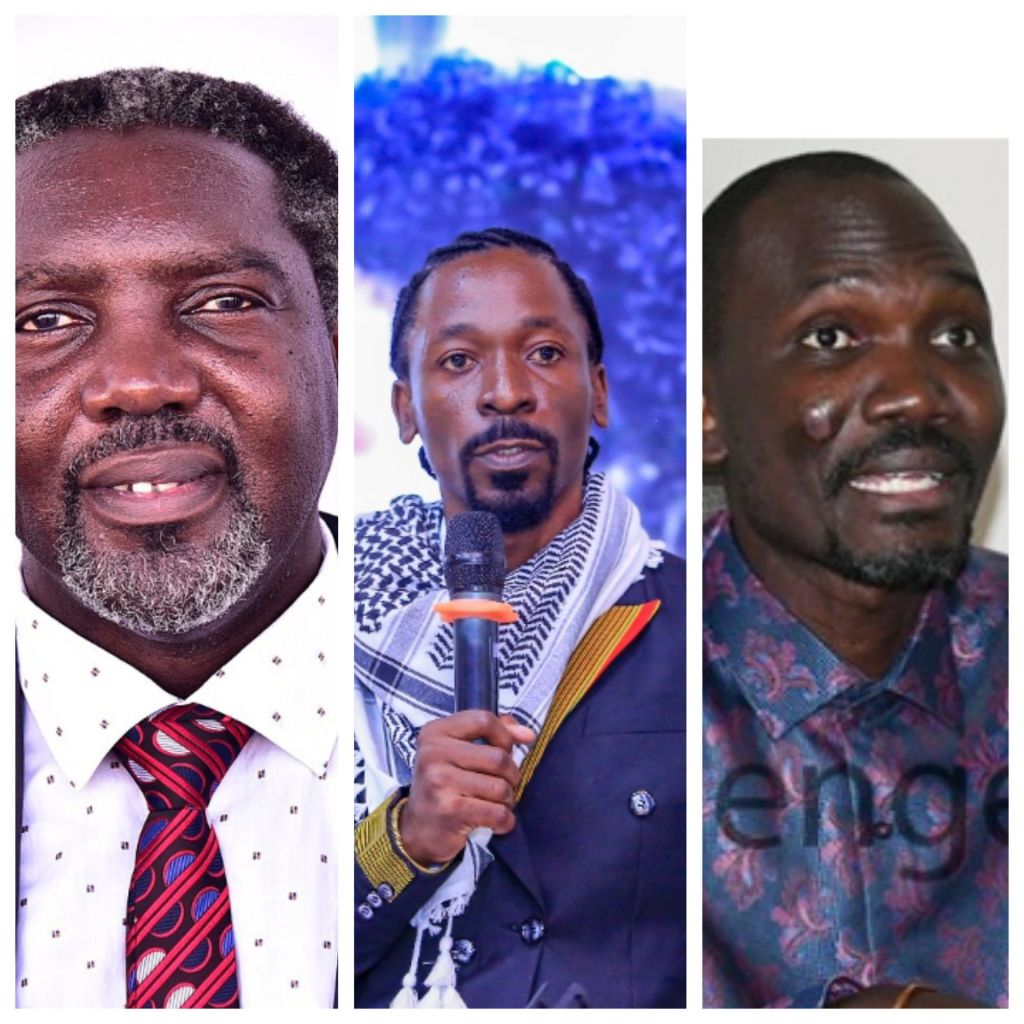
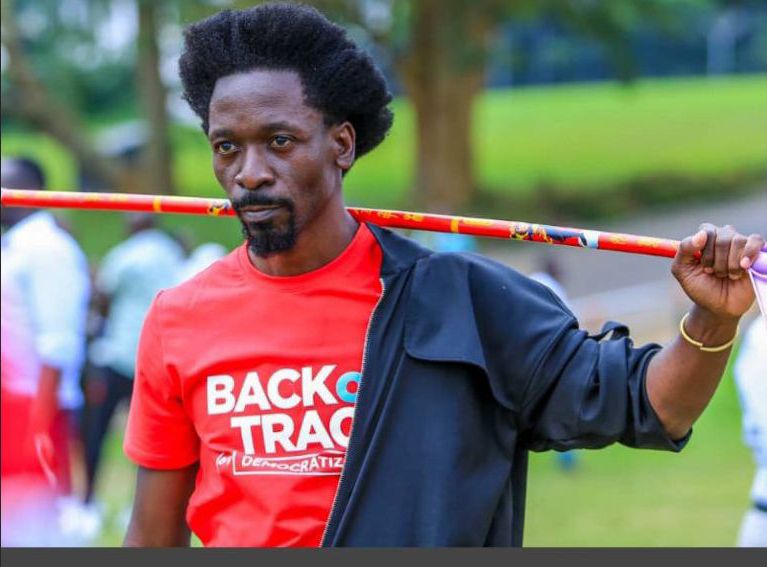
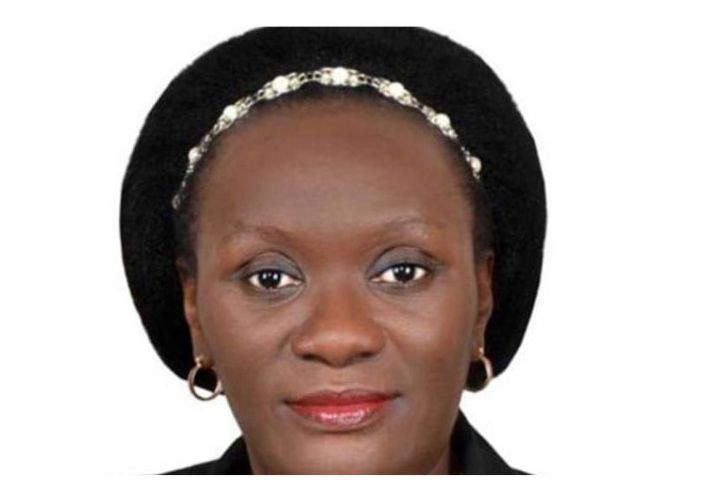
    Jimmy James Micheal Akena, Isaac Ssemakadde, and Denis Enap


    This is Uganda’s fight. The state is Semaka, its institutions, the pot, autonomy, the meat. Every clink is a power grab, every glance a wound to democracy’s soul. The sons, Uganda Law Society (ULS), Uganda Peoples Congress (UPC), the people, are its watchdogs, their fury blazing in courtrooms, civil society, public town halls and digital shadows. Institutional autonomy, the heart of democracy, pulses in their defiance, guarding Jucupanti’s pot against Semaka’s claw.


    A Kampala courtroom crackles with treachery. Semaka’s chopping sticks yanked four critical ULS appeals from the Court of Appeal’s cause list for 10th July 2025. Semaka’s style and chopping sticks have no respect for decisional autonomy of the empanelled coram designated to hear those very appeals and the fact that causelisting them was already a Judicial Act which could not be reversed in a casual manner, administratively.

    The affected Appeals were:

    1. Civil Appeal No. 98 of 2025 ULS & Anor v Mugisha Hashim & 2 Ors.,

    2. Civil Appeal No. 99 of 2025 ULS & Anor v Phoena Nabasa Wall,

    3. Civil Appeal No. 102 of 2025 Isaac Ssemakadde v Mugisha Hashim, and;

    4. Civil Appeal No. 111 of 2025 ULS v Brian Kirima—chaining ULS’s nomination to the Judicial Service Commission, its President Isaac Ssemakadde’s liberty, and its democratic governance. On June 30, 2025, the Registrar de-cause-listed these appeals, citing non-mandatory conferencing, followed by indefinite delays on July 3. On July 7, the Deputy Chief Justice admitted directing the move, cloaking it in Article 21(1)’s equality while alleging baseless lobbying by ULS and prioritizing decade-old appeals. This is judicial capture—Semaka’s spoon stealing the meat, shielding Hon. Justice Musa Ssekaana’s rulings (himself now a Justice of Appeal) and defying Articles 28(1) (fair hearing), 128(1)-(2) (judicial independence), and 126(1) (public interest). The cases of the State of Utta Pradesh vs. Anup Singh and  Carltona Ltd vs Commissioner of Works [1943]2 ALLER  560 all stand shoulder to shoulder with the Uganda Law Society, buttressing its push back to protest the decause lisitng of the ULS Appeals as an erosion of the decisional autonomy and independence of the three justices before whom the appeals were scheduled to be heard. Of course, the ULS stood unbowed in its fight to yank Semaka’s schemes.

    What followed was three days of digital town halls on X, hosted by Alfred Muyaka, ULS Head of Communications Adam Nuwamanya, and the indomitable Leonard Egesa slamming the Judiciary for institutional capture of the ULS. The stakes were so high. In between the spaces were frantic legal and diplomatic efforts to restore the ULS Appeals to the cause list and when it became clear that the Deputy Chief Justice had refused to relent as he had earlier communicated, the ULS hurled, like a rocket launcher, an official boycott of the Hon. Chief Justice, Alfonse Owiny-Dollo’s thanksgiving prayer and feast in Patongo, Agago District.

    Ssemakadde’s voice, sharp as a spear, carved 17 truths, three of which yours truly brings to you in surmised form from The Observer (July 23, 2025): Patongo’s gifts—Shs 5m from an acting judge, Shs 3m from the Principal Judge—spit on the Leadership Code Act’s Shs 200,000 cap, (Sections 12(3) with a duty to report gifts in excess of the threshold to the Inspector General of Government (Section 12(4) and a duty to deposit the excess into the Consolidated fund, (Section 12(7))breeding corruption’s rot. The NRM National chairperson’s triumphalist presence (President Yoweri Tibahaburwa Museveni) while throwing jibes at the Democratic Party’s President and Minister of Justice and Constitutional Affairs Minister, Hon Nobert Mao for the destruction of the Democratic Party  and cloaked in secret donations, risks political capture, defying judicial neutrality (Principles 2.2, 4.4, 4.6, Judicial Conduct Code). The tax-fueled feast mocked Ugandans begging for justice in crumbling courts, crowning the judiciary elitist, not just.

    Ssemakadde’s roar is a son’s fist for Jucupanti’s honor, a war cry to seize the judiciary’s soul.
    The cry drifts to Kampala’s heart, where Uganda House, relic of Obote’s dreams, hums with defiance. Jimmy Akena, heir to that fire, sits, his face lit by a laptop’s glow. On July 26, 2025, police churn Kamdini’s dust, chasing a UPC National Delegates Conference that’s a ghost. The day before, Semaka’s shadow, wielding external forces bent on judicial capture, snatched an ex parte interim order—Joseph Pinytek Ochieno v Uganda People’s Congress and Jimmy Akena (Miscellaneous Application, unreported, 2025)—to halt it. Signed on a Saturday, it’s a phantom—ECCMIS, Uganda’s Electronic Court Case Management system, sleeps on weekends, servers dark as Technicians do routine maintenance, the interim order therefore unserved, a chief’s shout lost to the wind. Akena’s smirk splits the silence, fingers dancing on keys. In a Zoom call, ablaze with democratic will, 700 plus  delegates, from all corners of the Country, UPC’s supreme organ, log in, screens flickering defiance. Three bolts forge their triumph: the Constitution bends, rewriting power; presidential term limits vanish, freeing Akena; a 12-month extension seals his reign to lead a peaceful handover. The delegates suspend the three-month notice with a nod, asserting their autonomy over external shackles like the Denis Adim Enap v Uganda People’s Congress and Hon. Jimmy James Michael Akena (Miscellaneous Cause No. 148 of 2025) ruling, which sought to bury Akena’s presidency. Kamdini’s police find silence, a perfect decoy of the Sandhurst trained political strategist; the war burns on screens. Semaka’s paper tiger falls to UPC’s democratic lion.
    For the village bars and barazas: an unserved order is a shout in a storm—dead on the wind. UPC’s digital triumph, a son’s jab at Semaka, reclaims the meat for the party’s heart, outwitting NRM’s fear of Akena on the 2026 ballot. Courts may growl, but the delegates’ will, the soul of institutional autonomy, hums by every fire.
    That triumph’s shadow slithers to the NRM’s war rooms, where fear flickers like a dying lamp. A secret survey sears: Akena, the Northern spark, threatens their presidential dreams, needing more than 50% of the valid votes cast, as Uganda’s 1995 Constitution, Article 103(1), demands. The National Unity Platform’s Kyagulanyi Robert Ssentamu, the Fire Base Edutainment Ghetto Gladiator tunred politician,  popularly known by his stage name, Bobi Wine, locks Central and Eastern Uganda, as well as huge swathes of the Northern youth vote itself, forging a three-way clash: Museveni, Kyagulanyi, Akena. Jucupanti’s scales, the Constitution, gleam in the fray. Akena, ghost of Milton Obote’s legacy, kindles a Northern flame for a lost dawn. The Ochieno order was a desperate swipe by Semaka’s external forces to snuff it, fearing UPC’s best shot at state power. Semaka’s spoon clinks, seizing ULS cases, chasing UPC’s ghosts, clawing autonomy. But the sons—ULS, UPC, the civil society, and the people—stand fierce, eyes blazing for Jucupanti’s pot. The state’s tyranny weaves a noose, deaf to the Constitution’s call for fairness. The sons are done waiting.
    The fight surges to a village square, dusk heavy, the stew pot steaming. Semaka looms, his spoon a blade, scarring the soul. Jucupanti, justice’s heart, stands serene—eyes fierce, heart a scale, roots deep. Her sons, lion-hearted, rise like a savanna storm. The square pulses as ULS, UPC, the people charge, fists forged in ancestral fire. Semaka falls, his spoon shattering, the meat saved. Jucupanti’s smile is a sunrise, her pride a hearth’s glow. Semaka, humbled, bows, the family’s honour reborn. The pot is shared; trust the broth, freedom the spice, every Ugandan one. This is their democracy, Uganda’s heart, fierce with its watchdogs.
    UPC lit the way. Akena’s digital triumph, driven by the delegates’ supreme will, turned a court order to ash, saving the meat as Kamdini’s police chased ghosts, they brainlessly walked into the decoy. ULS, choked by lies, roars on. Ssemakadde, Jucupanti’s son, thunders on X, defying Patongo’s empty festivities. Lawyers, armed with truth and swagger, are poised to storm the gate, their constitutional petition challenging the de-cause-listing as judicial capture. If UPC’s delegates broke Semaka’s chains, ULS can crush his blade. The call blazes: ULS, all civil society, and the people wield the Constitution like a spear. Charge for Jucupanti’s pot, forge a nation free of shame. Autonomy thunders, and your triumph will light Uganda’s soul.

    DISCLAIMER!

    The views expressed in this Blog are public commentaries to spark crucial debates for reform. It is not intended to attack or ridicule personalities mentioned in it.

    The contents of this blog do not constitute legal advice.  Readers are encouraged to consult a licensed attorney for situation specific legal advice. The author accepts no responsibility for any harm, legal,  financial, or otherwise arising from the use of information in this blog as legal advice

    About:

    Enen Ambrose, the author of this Blog is a rule of law enthusiast and a member of the inaugural Judiciary Affairs Committee of the Uganda Law Society. 
  • Uganda Needs Judges with Balls of Titanium Alloy—Not the Shackles of the JSC Regulations, 2025: Why You Should Be Worried

    Uganda Needs Judges with Balls of Titanium Alloy—Not the Shackles of the JSC Regulations, 2025: Why You Should Be Worried


    Let’s not waste time.
    Uganda’s judiciary has been hijacked. Quietly. Legally. Treacherously.

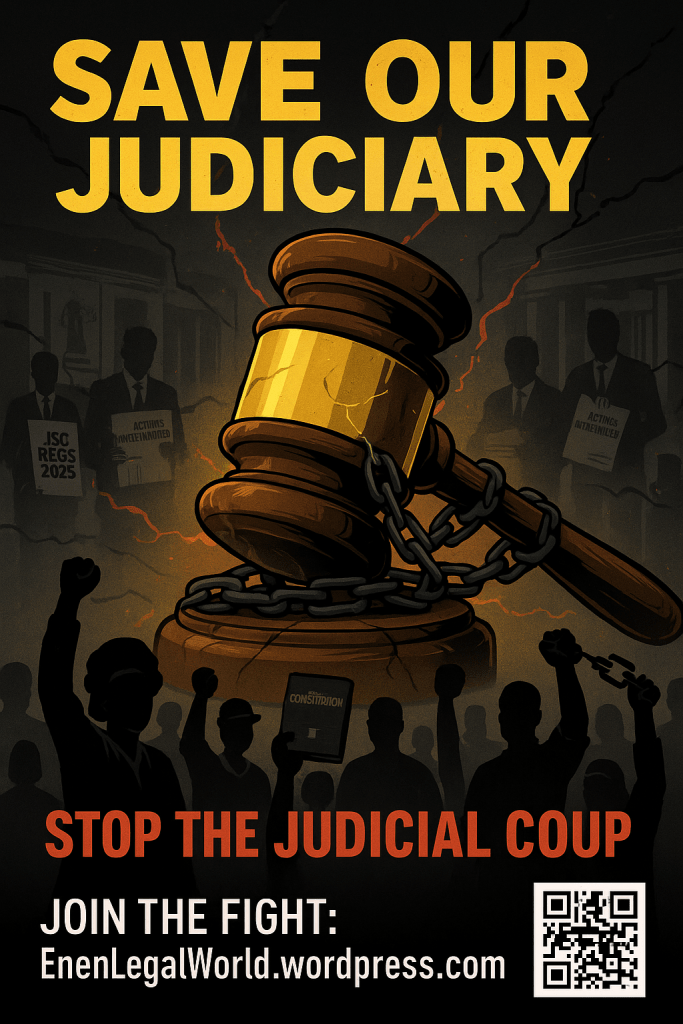
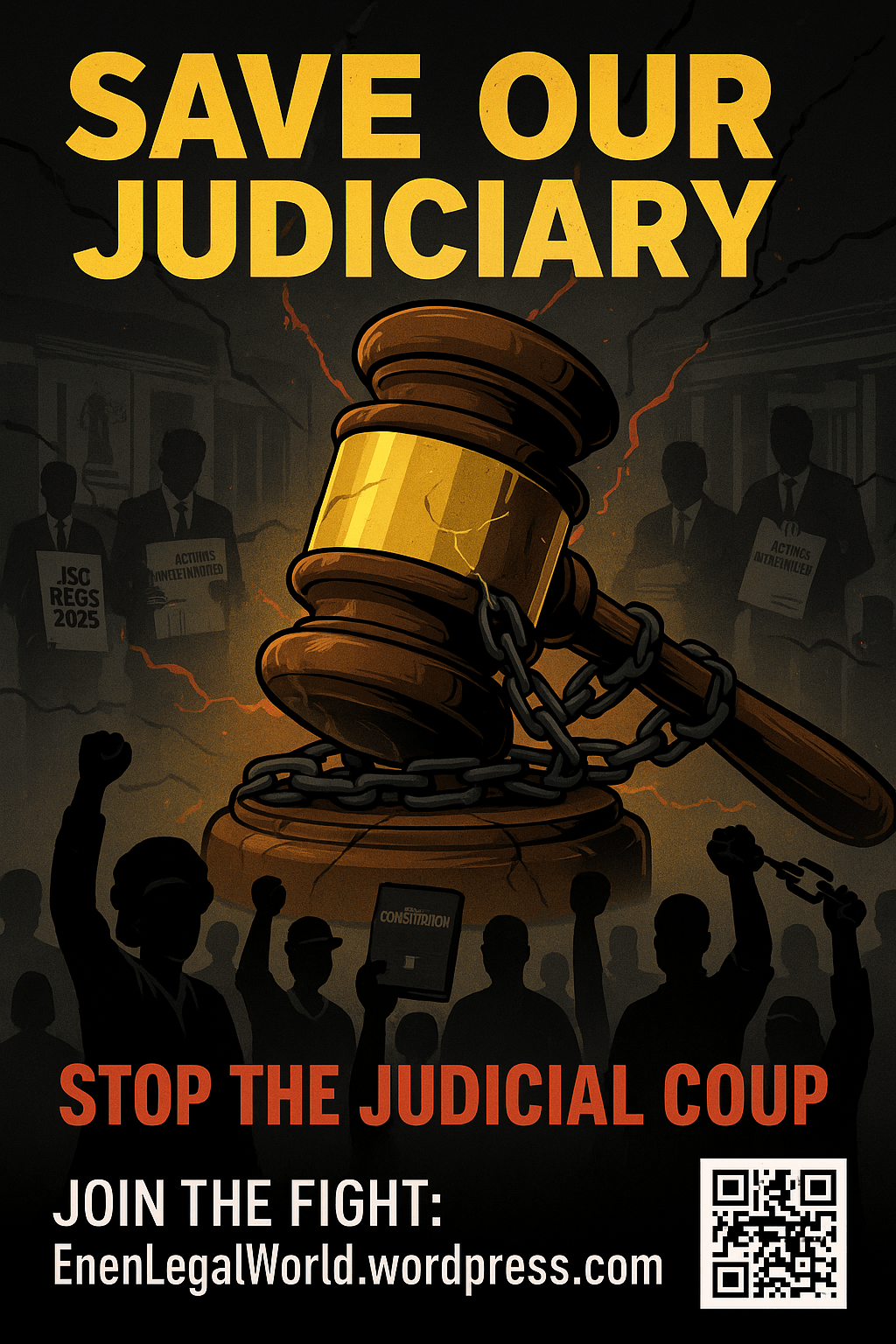
    They didn’t need a coup d’état. They just needed Statutory Instrument No. 4 of 2025—the Judicial Service Commission Regulations—to pass unchallenged.

    You can access a copy of those regulations here:


    And now the Constitution isn’t bleeding.

    It’s on life support. Plugged into a system designed to kill it slowly.

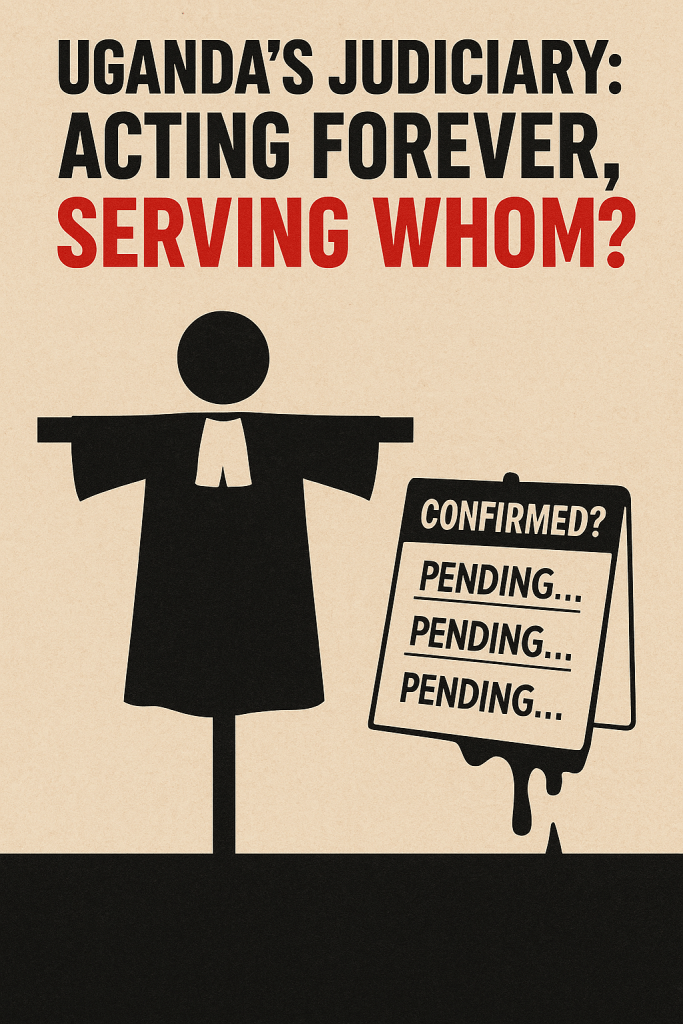
    Judges on Acting Terms. Courts on Probation. Justice on the Brink.


    Here’s what they’ve done:

    Invented a system where new judges are appointed on in an acting capacity, with the duration determined at the whims of the appointing authority—yes, like interns at a mobile money kiosk.

    Given the President the power to recycle retired judges, no questions asked. No medical. No mental. No morals.

    Created performance evaluations for judges like they’re applying for a promotion at a law firm.

    That’s right, you’re not day dreaming, the system was rigged. In 2022, the Constitutional Court damned this shrewd “sharp practice” and threw it in our Constitutional History by declaring it unconstitutional in Dr. Busingye Kabumba and Karamagi vs Attorney General.

    A copy of that decision can be found here:

    Good judgment, right? Damn, the government rigged it. It instead created a legal loophole which enabled it to pass these damned Regulations. 

    Firstly, it appealed against.  Secondly  the government obtained what is in effect  a suspension of the independence of the Judiciary as the Supreme Court delays to decide the Government’s Appeal .

    A copy of the decision which suspended the independence of High Court Judges as the government waits for a decision in its own appeal from the above case can be accessed from here:


    Okay, let’s dive into the evil in the Regulations.
    Reg. 29–33 and 31 are the smoking guns.
    And what they shoot is judicial independence—straight between the eyes.

    And Then There’s 2026…

    Uganda’s next elections are not just around the corner—they’re rumbling like thunder.

    And we know the script:

    Mass arrests.

    Disappearances.

    Violent suppression.

    Habeas corpus applications flying like confetti.

    Human rights cases lined up like a firing squad.


    It will take judges to hear them all.

    But what kind of judges?

    Not fearless ones. Not permanent ones. Not independent ones.

    The Regulations guarantee this:

    When the state comes for you, the judge before you may still be “acting,” “probationary,” or “awaiting confirmation.”

    You don’t need a judge praying for job security.

    You need a judge with balls forged from titanium alloy, ready to grab the State by its ball sac and say:

    Back off. The Constitution says this citizen walks free.”

    These Regulations can’t produce that judge.
    They produce whispering cowards in robes.

    But Wait, There’s a Recruitment Cartel Too

    They didn’t just kill judicial independence at the appointment level.

    They also built a Search and Recruitment Committee—and a Sub-Committee—with a quorum of TWO people.

    Let that sink in:
    Two people can now shortlist Uganda’s judges.

    Who are these people?

    The Attorney General—yes, the government’s own lawyer.

    The Chairperson of the JSC—currently Justice Singiza, who was once branded a “Nazi Judge” by opposition supporters for adjourning Besigye’s habeas corpus case instead of hearing it urgently.


    And guess who they kicked out of this process?

    The two (2) representatives of the Uganda Law Society.
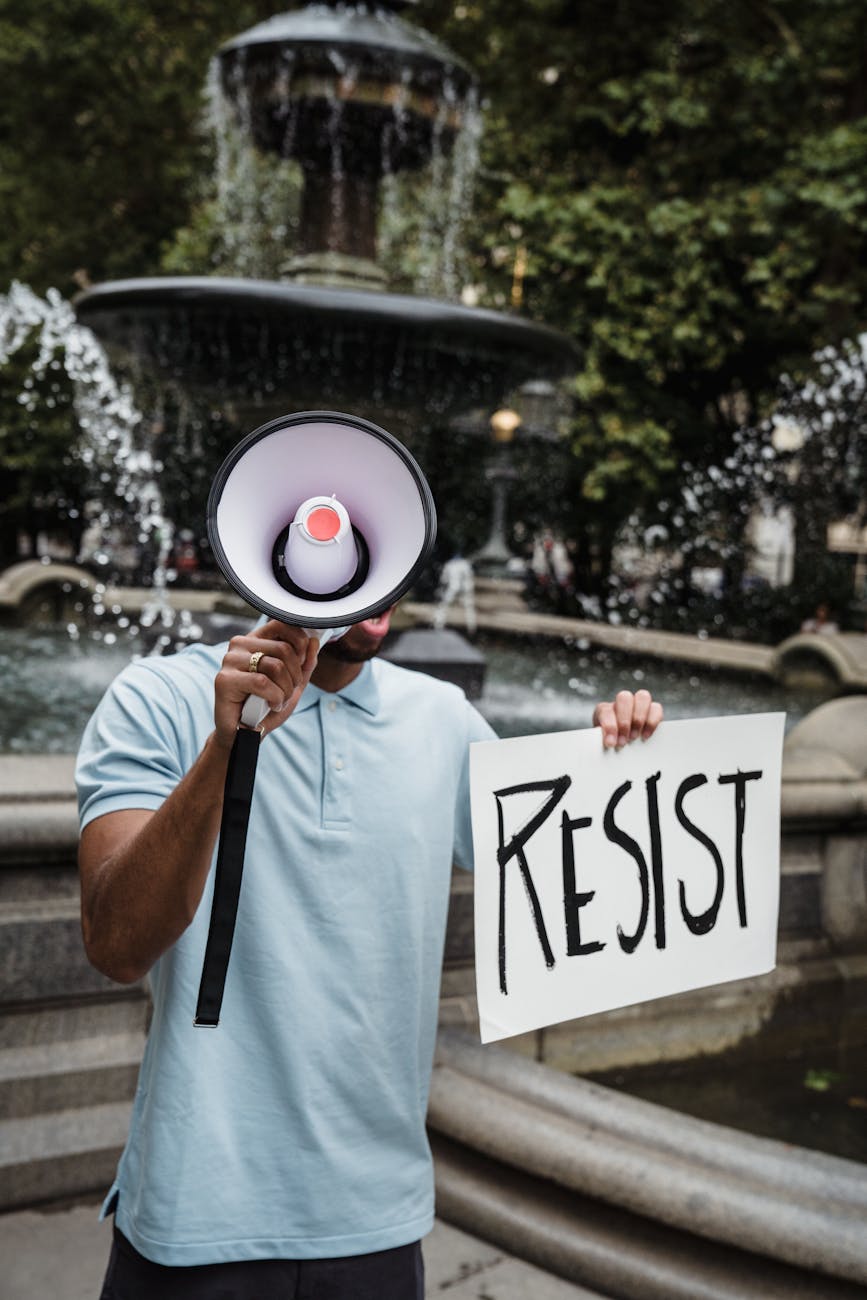
    The very people the Constitution says should be part of the Judicial Service Commission.

    It Was Planned. Timed. Executed.

    These Regulations were passed while the Uganda Law Society is in court, fighting to elect its representatives.

    The plan is clear:
    Keep them out. Lock the process down. Staff the courts with friendly judges. Control the law from the inside out.

    This isn’t just bad law.

    It’s a judicial cartel in robes.

    And You Think It Doesn’t Affect You?

    Wait until your land is taken.
    Wait until your protest turns into a prison sentence.
    Wait until your loved one disappears.
    Wait until the courtroom is the only place left to cry out.

    Then you’ll pray that your judge isn’t still auditioning for a contract renewal.

    Here’s the Message:

    Uganda’s justice system is being rebuilt—not to protect you, but to survive you.

    It is no longer about law.
    It’s about control.
    It’s about loyalty.
    It’s about silencing justice before you can even plead for it.

    This is the war. This is the moment. This is the alarm.

    If you have eyes you better see, and if you have ears you better listen.

    More about me and disclaimer in the about page.

  • Foot Soldier’s Last Stand: Inside the Madness of Sycophants, Rogue WhatsApp Admins, and the Northern Bar Bench Forum

    Foot Soldier’s Last Stand: Inside the Madness of Sycophants, Rogue WhatsApp Admins, and the Northern Bar Bench Forum

    Photocredit: Team of Advocate Paul Mukiibi with their Brand: Chain breakers in the campaign to represent the Uganda Law Society at the Judicial Service Commission.

    It started like a flicker—a tiny spark of defiance that should’ve ignited a roaring wildfire of rage and justice. Instead, it was smothered by the gargantuan, self-righteous boots of censorship, as if the admins of the Northern Bar-Bench Forum were playing the role of divine gatekeepers to the underworld of logic, reason, and free speech. It was the perfect storm waiting to brew, and here we were, caught in the vortex of unrelenting madness.

    Imagine this: a friend—let’s call them Advocate C—dared to share a link to an article so scorching that the digital air itself trembled. The scandal? The Honorable Chief Justice, in a move so brazen it could only be conceived in the dankest corners of the power-obsessed universe, allegedly schemed to extend the retirement age for Supreme Court Justices. Why? To keep his gnarled hands on the throne, forever and ever. He also decided to appoint an Acting Principal Judge without so much as a whiff of the President’s blessing, like a schoolyard bully claiming the lunchroom as his own personal fiefdom. The legal streets of the Forum exploded in righteous fury, an inferno of truth and justice clamoring for attention.

    And then… the admins. Oh, the admins. The self-crowned, self-important emperors of silence—oh yes, those power-hungry weasels. They descended like locusts, their ban-hammers blazing. Link? Gone. Criticism? Erased. “Don’t post things that make other members uncomfortable,” they decreed, as if comfort was the holy grail of democracy. What’s uncomfortable, you ask? The CJ’s alleged power grab that should’ve made every Ugandan’s blood boil? That’s what should’ve made us all “uncomfortable.” But no, not in their world. The admins had a higher calling: the suppression of truth, under the guise of “unity” and “comfort.” What a joke.

    That night, at 8:43 PM, the world shook. I—Ambrose Enen—I was done. I had had enough of their charade. With the force of a thousand furious lions, I stormed into the admins’ fortress of lies. I sent them a question that cracked their gilded masks and made their self-satisfied jaws clench like desperate prey:

    “Why are you strangling debates about the Hon. Chief Justice, you cowardly sycophants?”

    I threw down the gauntlet, demanding they justify their pathetic, trembling submission to the powers that be, to shield His Lordship from the fire of scrutiny. The CJ had once bellowed like a lion, declaring, “If you’re not criticized, it means you’re doing nothing and the people just choose to ignore you!” And here they were, trying to shield him from even the faintest whiff of criticism. Hypocrisy? Monumental. So, I unsheathed Article 29 of the Constitution like a blazing sword and sliced through their pitiful, sanctimonious excuses with the fury of an avenging god. I invoked the speech of the Chief Justice himself when he delivered his own lead Judgment in Kabaziguruka case, where the Supreme Court put a grinding halt on the trial of civilians in the Court martial. The Chief Justice was referring to President Isaac Ssemakade’s work method, weekly public press engagements dubbed the “RNB Live” in which fireballs were hurled at the Justices of the Supreme Court for delaying to deliver that very judgment. The very Supreme Court had in an earlier judgment in the case of  Charles Onyango Obbo and Andrew Mujuni Mwenda had crowned free speech as an untouchable deity, immune to the fragile egos of all public officials from the President to the Military.

    Read a copy of that Judgment here:

    Related: read also: https://enenlegalworld.wordpress.com/2024/11/20/revisiting-free-speech-professional-ethics-and-gender-sensitivity-in-uganda-a-legal-and-social-analysis/

    I screamed at them, demanding they answer me: Had they erased the CJ’s own edict—that criticism is the lifeblood of action? Or had they buried the people’s right to challenge power under a mountain of self-inflicted fear?

    I didn’t stop there. I summoned the name of the great Isaac Ssemakadde, a volcano of legal brilliance who melts the hearts of tyrants and leaves them quaking in their boots. His name sent ripples of panic through their ranks, like a shark’s fin slicing through calm waters. And I laughed—loudly—at their terrified whimpering.

    The admins’ response? Hilarious. They pulled out the same tired, sanctimonious rhetoric, claiming the Forum, created in 2019 by the then “mighty” Conrad Oroya, was meant to unite “advocates” and “judicial officers” from the greater North. They paraded their so-called patrons, from the CJ down to the lowliest Magistrates, and tried to paint themselves as paragons of unity and reason. But wait—oh wait—they accused the Radical New Bar (RNB) of destroying the Forum, branding us as “scourges of the legal profession.” Apparently, our “scathing attacks” were too much for their fragile egos, too sharp for their delicate sensibilities. They shrieked that we’d turned their sacred Forum into a warzone. And that—that was their best excuse for censorship.

    But, my friends, that wasn’t enough. They threatened to boot us out, to banish us from their “pious” space where only their carefully curated lies were welcome. Oh, how I laughed. I thought of Maxime Rovere’s words in his book, How to Deal with Idiots and not be one yourself: “Idiots infest every cesspool, even the loftiest halls of government.” But this wasn’t a government cesspool, oh no. This was a digital one, run by clowns in armor of “civility” and “comfort.” I held back my laughter only because it was a laugh of pure, unadulterated rage.

    The admins couldn’t take the heat, and then, boom. A revolution. It didn’t come in the form of an army, no. It came in the form of words. Words sharper than a thousand blades.

    A Grade 1 Magistrate—yes, a Grade 1 Magistrate—came for them, tearing through their lies like a wildfire through dry grass. “Article 29 doesn’t grovel before judicial comfort,” they roared. “You’re strangling debate about the CJ, and in doing so, you’re ripping the soul from the legal profession itself.”

    Then, like a chorus of angels singing the hymn of truth, came another Magistrate. It came with fire in their belly and venom in their words. “Your fear of the Radical New Bar only exposes your cowardice,” they snarled. “You’re terrified of a few questions—questions!—about the CJ’s power plays. What kind of admins are you?”

    Then came Advocate A—oh yes, Advocate A—with a fire so hot it could melt the very walls of their sanctimonious den. They came at the admins like a raging storm, laughing at their pathetic attempts to shield the CJ from the rightful fire of criticism. They mocked them for their “bootlicking” and told the admins to lick the dust. They didn’t just fight—they laughed in their faces. And their message? “You’ve earned this defeat, you glorious cowards.”

    But that’s when the real rebellion began. Just after my banishment, Advocate B—yes, Advocate B—launched a tidal wave of resistance. “See you in Gulu Learned Friends,” they sneered. “But first, post that message which  was deleted here!”

    The forum’s demise wasn’t my banishment. Oh no. It died when it sold its soul, when it chose silence over truth, when it cowered before power. And here’s the thing—the admins? They didn’t even see it coming.

    But then came the words of Isaac Ssemakadde—oh, those words, those molten words that seared their way into my soul. “Impunity’s greatest weakness is the craving it has for respectability, legitimacy, and sycophancy. Deny it one of those lubricants, and you will begin to see ‘how the mighty fall.’ So fast.” And then he said the words that would light the fuse of my rebellion for good: “Principle is always vulnerable in the face of power; especially in spaces of long-term subjugation where the legal culture is manipulative & unapologetic in defence of power. Only a revolution, grounded in principle, can reverse things now.”

    I heard it. The call. The revolution, forged in fire and principle, was now in my blood. And so, like a storm that cannot be stalled, I went to battle. Unbanned. Unbowed. Unafraid.

    Because here’s the truth: The Northern Bar-Bench Forum was supposed to be a crucible of ideas, a place where Uganda’s brightest minds clashed, burned away the dross, and emerged better. Instead, it became a cesspool, a sanctuary for the most dangerous thing of all: fear. Fear of truth. Fear of scrutiny. Fear of Article 29.

    And in that fear, they forgot. They forgot what a forum was meant to be. They forgot that power, unchecked and unchallenged, is the very thing that devours empires.

    So here’s to the outcasts, the truth-tellers, the Ssemakaddes who set the world ablaze with righteous fury! Here’s to Advocate A, Advocate B, and every single renegade who refused to bow before the gods of comfort. Here’s to Article 29 and the indomitable, damn-near-holy faith that free speech isn’t a gift from admins or judges—it’s our birthright, you small little intern Honorable WhatsApp administrator dictators!

  • Mugambe’s Fall: A Clash of Legal Systems and the Struggle Between Impunity and Accountability

    Mugambe’s Fall: A Clash of Legal Systems and the Struggle Between Impunity and Accountability


    Uganda’s legal system has long been a fortress of impunity. For decades, it has survived every attempt at reform—not by improving, but by dismantling anyone who dares to fix it.

    Enter Isaac Ssemakadde, Uganda Law Society (ULS) President.

    His mission? To drag the legal profession out of the mud, rebuild public trust, and hold the entire system accountable.

    His first strike? Kicking the Attorney General off the ULS Governing Council. Why? Because how does a government’s top lawyer sit in the governing body of an institution meant to be an independent watchdog? It was a classic case of conflict of interest, and Ssemakadde terminated it.

    Image: Isaac K Ssemakade. Photo Credit: Insight Post Uganda


    His second move? Recalling all unelected ULS representatives to the Judicial Service Commission (JSC)—a body meant to discipline errant judges. For too long, these positions had been filled by handpicked placeholders who were cozy with the very Judiciary they were supposed to regulate.

    Then, the nuclear option—a ULS-led Public Commission of Inquiry into the entire Bench.

    That was the moment the Judiciary declared war.

    A full-scale investigation into judicial corruption, impunity, and accountability? The Judiciary saw what was coming—a public trial of the very system that has shielded the powerful for decades.

    And so, they struck first.

    A High Court Judge—who, it has been reported, was allegedly involved in sexual harassment allegations—injuncted the entire process and had Ssemakadde convicted of contempt of court with a two-year jail sentence.

    Yes, you read that right.

    A judge in a case where he was allegedly the victim, presiding over a trial that could expose him, convicted the man leading the movement for reform.

    The Judiciary had gone into full-blown self-preservation mode.

    And while Uganda’s legal system was busy eating its own, something very different was unfolding in the UK.

    A Ugandan judge—Justice Lydia Mugambe—was convicted.

    And suddenly, Uganda got a front-row seat to what real judicial accountability looks like.

    No judicial gymnastics. No vanishing case files. No presidential interference.

    Just a judge facing the law like any other citizen.

    And here’s the real kicker—the UK wasn’t just convicting a judge.

    They were sending a message.

    Uganda’s human rights record had rotted beyond acceptable limits.

    Opposition National Unity Platform (NUP) supporters were reportedly tortured, arbitrarily detained, and held without trial. The UK had already slapped sanctions on key Ugandan officials. And now, Uganda’s backdoor diplomatic channels in London were reportedly frozen.

    Word on the street? NUP had played quiet but strategic backdoor diplomacy, exposing Uganda’s entrenched impunity to the UK foreign office—and the UK listened.

    This wasn’t just about Mugambe.

    It was Uganda being held accountable—one way or another.

    Because in Uganda, justice serves the powerful. In the UK, it serves the law.

    And so, as Judge Mugambe awaits sentencing on May 2nd, 2025, we extend our best wishes.

    Not because of what she did or didn’t do, but because this entire mess is a reflection of a broken system back home.

    The Hon. Lady Justice Lydia Mugambe. Photo Credit: Daily monitor


    To all who still believe in the Rule of Law—even as the system crushes them—we see you.

    To the ULS candidates still battling for election to represent ULS to the JSC—who have outspent resources in what was supposed to be a simple election, but turned into a never-ending war—hold strong.

    The Judiciary stalled the election, an appeal halted the process, and yet—hope refuses to die.

    Because one day, impunity will fall.

    And when it does, it won’t be because of backroom deals.

    It will be because of the fearless ones—those who refused to let injustice win.

    And when that day comes, we won’t just be telling the story. We will be living it.

    Disclaimer:
    The views expressed in this blog are based on publicly available reports and sources. Allegations mentioned are unverified and are referred to as they have been reported. This post is an opinion piece aimed at encouraging dialogue and reflection on the issues discussed. The cases mentioned are subject to ongoing legal processes and investigations, and the information presented is intended for general awareness rather than legal conclusions.

    More about the author on the about Page.

    Do you have stories in your community that we should Blog about, or do you have comments to help us improve on our delivery?,  please feel free to reach out to us through our address which is on the about Page

  • Foot Soldiers Fight Back: Free Speech, Social Media, and the Battle for Judicial Accountability in Uganda

    Foot Soldiers Fight Back: Free Speech, Social Media, and the Battle for Judicial Accountability in Uganda

    Judicial power in Uganda is not a divine right handed down to judges in solemn robes. It is borrowed authority from the people, and when borrowed power is abused, the lenders have every right to demand accountability. That is what happened when Ugandans erupted in fury over Justice Douglas Singiza’s decision to adjourn a habeas corpus application, effectively prolonging an already illegal detention.

    This was not an internet tantrum—it was a constitutional defense mission, executed in real-time by citizens who understand their rights better than some of the people wearing wigs in courtrooms. Article 126(1) of the Constitution is clear:

    Judicial power is derived from the people and shall be exercised in conformity with the law and with values, norms, and aspirations of the people.”

    So, when the people declare that a ruling has spat on their constitutional values, they are not just complaining—they are executing their duty to keep judicial power in check.

    This is not the first time Singiza has found himself at the center of a human rights disaster. When Kakwenza Rukirabashaija, a novelist and torture victim, applied to retrieve his passport for urgent medical treatment abroad, it was Singiza—then Chief Magistrate at Buganda Road Court—who denied him. His reasoning?

    👉 “Ugandan hospitals can handle his condition.”

    Imagine suffering broken ribs, festering wounds, and open scars from state torture, only for a judge to declare that a hospital in Wandegeya is sufficient to handle what should be a war crimes case. This is the same judge who, three years later, sends Besigye and Lutale back to illegal detention while he thinks about their habeas corpus plea.

    The pattern is now too clear to ignore—delayed justice when it benefits the state, procedural gymnastics when fundamental rights are at stake, and then a full-blown judicial meltdown when the public calls it out.

    And how did Singiza react to the backlash? Like a true 21st-century authoritarian—he made the ruling about himself. Instead of addressing the constitutional chaos he created, he spent his precious obiter dicta crying about online criticism.

    What’s next? Should Ugandans start seeking judicial permission before commenting on court decisions? Must all legal critiques now be submitted in triplicate, with an affidavit from a Senior Advocate?

    This is a dangerous trend—a creeping attempt to criminalize judicial criticism and insulate courts from the same public scrutiny that every other arm of government faces.

    The executive is insulted daily.
    The legislature is mocked in real-time.
    The military is dragged through the mud.

    But the judiciary wants to be untouchable?

    In Onyango Obbo & Andrew Mwenda v. Attorney General, the Supreme Court made it clear that public officials—including judges—must tolerate criticism. Free speech does not require politeness, and it is not invalidated because it offends the recipient.

    Yet, here we are, watching judges compose emotional victim statements in court rulings instead of defending the Constitution.

    This is not judicial independence—this is judicial fragility.

    Uganda has reached a crossroads: either the judiciary remembers that it serves the people, or the people will remind it in ways it will never forget. Judicial power, like all borrowed authority, can be reclaimed when misused.

    This is not a warning.
    This is a constitutional reminder.

    DISCLAIMER: This blog is not intended to mock or attack the person of the Hon. Justice Douglas Ssingiza. It is commentary on the interesting obiter dicta in the Habeas Corpus Application of Dr. Kizza Besigye and Obeid Lutale vs. Attorney General. The Ruling in that case can be found here:

    The author is a Rule of enthusiast. More in the about page.

  • NO APOLOGIES, NO SURRENDER: THE RADICAL NEW BAR TAKES THE JUDICIARY TO WAR

    NO APOLOGIES, NO SURRENDER: THE RADICAL NEW BAR TAKES THE JUDICIARY TO WAR


    The Judiciary wanted a fight. Now, it has a war.

    The New Law Year was supposed to be ceremonial—a chance for the Bench and the Bar to sip tea and pretend they liked each other. Instead, it became a crime scene.

    Chief Justice Alfonse Owiny-Dollo, tired of the Uganda Law Society’s relentless attacks, came out swinging. He stood before the nation, fists metaphorically clenched, voice dripping with fury.

    At first, he played innocent. Pretended he wasn’t the one who had gagged Isaac Ssemakadde. Then, unable to hold back, he let the truth slip.

    “I am the one who ordered that the President of the Uganda Law Society should not speak.”


    And then, like a man who had been waiting to explode, he thundered:

    “Only a fool, and I really mean it, it is only a fool who abuses you, insults you, dehumanizes you and thinks it will be business as usual. It cannot be business as usual unless you make amends.”


    Boom. There it was.

    The Judiciary was officially in its feelings.

    The message was clear: Bend the knee, apologize, or face consequences.

    But here’s the thing—Ssemakadde doesn’t kneel. The Radical New Bar doesn’t beg. And the Uganda Law Society doesn’t send apology cards.

    Ssemakadde’s response was swift, brutal, and final:

    “The Uganda Law Society doesn’t exist to soothe the Judiciary or assuage its egos. The Uganda Law Society’s role is to protect the Judiciary from Executive Overreach and to ensure public trust in the Judiciary.”


    Translation? Cry if you want. The Bar owes you nothing.

    THE BUILD-UP TO WAR: THE JUDICIARY’S NEVER-ENDING BLEEDING

    This wasn’t just an outburst. This was months of pent-up fury.

    The Judiciary had been bleeding out ever since the Radical New Bar declared war on its comfort zone.

    Executive Order No. 1 threw the Attorney General and Solicitor General out of the ULS Council.

    Executive Order No. 2 announced a Radical Surgery on the Judiciary—no anesthesia, just raw scalpel to the bone.

    Executive Order No. 3 didn’t just boycott Justice Musa Ssekana—it excommunicated him from the legal faith.


    Justice Ssekana, famous for delivering controversial and contradictory rulings had crossed a dangerous line.

    He had blocked ULS elections for its representative to the Judicial Service Commission. Many saw it as blatant Judicial Overreach—the Bench trying to control the Bar.

    The Radical New Bar did not take it lightly.

    A total boycott of Justice Ssekana’s courtroom. His rulings became legal noise—heard but never taken seriously.

    The ULS plaque that once honored him? REVOKED. PUBLICLY DISOWNED. SYMBOLICALLY BURNT.

    A whistleblower campaign launched, calling for evidence to have him removed for Judicial Misconduct.


    Ssekana was supposed to be finished.

    But Uganda’s Judiciary is like a bad magic trick—the more incompetent you are, the higher you rise.

    Instead of accountability, Ssekana is now pending vetting for the Court of Appeal.

    A man under public investigation for judicial misconduct is being lined up for a promotion.

    At this point, the Judiciary wasn’t just bleeding—it was leaking credibility like a sinking ship.

    THE KABAZIGURUKA JUDGMENT—WHEN REAL POWER SPOKE, THE JUDICIARY COWERED

    But let’s talk about the elephant in the room.

    The Uganda Law Society forced the Supreme Court to deliver the Kabaziguruka Judgment on January 31, 2025. It was a victory for the Rule of Law—civilians could no longer be tried in military courts.

    The Radical New Bar celebrated.

    And then, Gen. Muhoozi Kainerugaba entered the chat.

    Uganda’s Chief of Defense Forces. The President’s son. The man who commands tanks, fighter jets, and battle-hardened soldiers.

    He wasn’t impressed.

    He didn’t file for a review. He didn’t even bother to hide his disgust.

    He called the entire Supreme Court “clowns.”

    Then, he went further.

    “We are coming for you.”


    A direct threat. An undeniable challenge.

    If any civilian had said this, contempt of court summons would have been printed, signed, and delivered in minutes.

    But this was Uganda’s most powerful General.

    What did the Judiciary do?

    NOTHING.

    No warning. No condemnation. No outrage. Just silence.

    But when Ssemakadde calls out judicial incompetence? Suddenly, the Judiciary is offended.
    When Sebaduka criticizes the Bench? Suddenly, they have the power to throw someone in jail.

    Muhoozi tells the Supreme Court “we are coming for you,” and they act like they didn’t hear a thing.

    But when the Radical New Bar speaks, the Judiciary suddenly remembers how to fight.

    THE FINAL SHOWDOWN: THE PUBLIC INQUIRY IS COMING

    The Judiciary thought the worst was over? Not even close.

    Because Isaac Ssemakadde doesn’t just fight battles—he wages wars.

    Last year, he made a promise:

    The Uganda Law Society would not wait for the broken, spineless, toothless Judicial Service Commission to act.

    No more fake investigations. No more endless excuses. No more allowing compromised institutions to pretend they can police themselves.

    The ULS would marshal a PUBLIC COMMISSION OF INQUIRY into the entire Bench.

    And he gave the Judicial Service Commission a deadline—January 15, 2025—to furnish a report on its inquiry against Justice Ssekana.

    The deadline came and went.

    No report. No accountability. Just the same old game of protecting the powerful.

    Now, the ULS Governing Council has just completed its retreat. What were they doing? COMBING THROUGH PUBLICLY GATHERED EVIDENCE AGAINST JUSTICE SSEKANA.

    Evidence gathered as a result of Executive Order No. 3.

    The Judiciary wanted a fight? Now, it has a full-scale public investigation coming straight for its doorstep.

    And the Chief Justice still expects an apology?

    The ULS will not apologize to a judge they have been investigating for potential removal.

    The Judiciary wanted a war. Now, it’s getting one.

    The horns are locked. The trenches are dug. The battle lines are drawn.

    And if the Judiciary thought the Radical New Bar was dangerous before?

    They haven’t seen anything yet.

    This is no longer just a legal fight. This is institutional. This is existential. This is irreversible.

    Brace yourselves. 2025 is about to be the most explosive year in Ugandan legal history.

    NO APOLOGIES. NO COMPROMISES. NO MERCY.

    JUSTICE WILL PREVAIL.

    DISCLAIMER: This Blog is not intended to ridicule or attack the persons of the Honorable Chief Justice Alfonse Chigamoi Owiny Dollo, the Hon. Justice Musa Ssekana. It is purely public commentary on the spat that happened at the opening of the New Law Year at the Supreme Court, Kampala.

    The information contained in this Blog is not intended to be used as Legal advice. The author accepts no liability for injury arising from using the information contained in the Blog as Legal Advice. Readers are advised to seek the services of a qualified attorney in their area of Jurisdiction to deal with specific scenarios.

    Do you have a story that would contribute to the Rule of Law discussion that you want us to write about? Reach out to us at ambrosenen@gmail.com

  • BANG! MILITARY COURTS FOR CIVILIANS ARE DEAD—THE SUPREME COURT JUST DROPPED THE HAMMER, AND THE RADICAL NEW BAR LIT THE FUNERAL PYRE!

    BANG! MILITARY COURTS FOR CIVILIANS ARE DEAD—THE SUPREME COURT JUST DROPPED THE HAMMER, AND THE RADICAL NEW BAR LIT THE FUNERAL PYRE!

    The Supreme Court has spoken. The revolution has won. The military courts are finished. It took 25 years of legal battles, endless delays, and the relentless fire of Uganda’s most radical legal minds, but justice has finally arrived. And when it came, it wasn’t subtle. It came with the full force of the Constitution, a gavel so loud it could shake the foundations of every military courtroom still pretending to be a temple of justice.

    This is not just a legal victory; it is a demolition job on a long-standing abuse of power. It is the final nail in the coffin for a system that has for decades terrorized civilians, dragging them before military tribunals as if they were rogue soldiers, silencing dissent under the guise of national security. And the Supreme Court? Oh, the Supreme Court delivered its judgment with flair, with humor, and with the kind of clarity that leaves no room for debate.

    Chief Justice Owiny-Dollo, ever the master of courtroom theatre, laid it all bare in ways that had the entire legal fraternity both laughing and nodding in agreement. Imagine a Uganda where he, a civilian, is picked to lead a military brigade to guard the war-torn eastern border with the DRC. Imagine him, clad in combat gear, barking orders to soldiers while probably asking them which way to point a gun. Or worse—picture him in a hospital theatre, standing over an unconscious patient, scalpel in hand, completely clueless about whether he’s holding a kidney or a liver. Madness, right? Exactly. That, he said, is the absurdity of putting untrained military officers in charge of dispensing justice.

    This was the point where even the most rigid courtroom observer had to chuckle. But beneath the humor was a devastating truth: military courts are tribunals run by people without the first clue about judicial procedure, yet they have spent years presiding over cases, handing down life sentences and convictions like they were distributing rations at a military mess. The Chief Justice didn’t mince his words. The Constitution was clear, and so was the Court—military justice is for military personnel, period. Civilians have no business being tried there.

    And yet, as the judgment was delivered, there was another remarkable moment. Counsel Caleb Alaka, one of Uganda’s legal firebrands, stood up and did something few saw coming—he apologized. On behalf of the Uganda Law Society, he expressed regret for the extreme activism, the relentless pressure, the public letters, the weekly legal firebombs the Radical New Bar had been hurling at the Supreme Court, demanding action. The judges listened, some perhaps amused, others with the quiet satisfaction of warriors who had just emerged victorious in a long and bloody intellectual battle.

    The apology was sincere, but let’s be honest—this war was necessary. The Radical New Bar, under the fearless and uncompromising leadership of Isaac K. Ssemakadde, fought like hell to make this ruling happen. The legal establishment had long grown too comfortable, too resigned to waiting indefinitely for judgments while civilians continued to be dragged before military tribunals. The RNB was having none of it. Weekly press conferences, legal activism so sharp it cut through the silence, direct challenges to judicial inertia—this was lawfare at its finest. And in the end, the pressure worked.

    The judgment is now out, and the message is clear: no more military courts for civilians. No more kangaroo justice. No more legal intimidation. If the army wants to try someone, that person better be wearing a uniform. Otherwise, they belong in the courts of law established by the Constitution. And for those still clinging to the old ways, still hoping that military justice can be used as a tool of fear and suppression? Pack up your case files. Your era is over.

    For the Uganda People’s Defence Forces, the ruling leaves no room for negotiation. Civilians currently facing trial in military courts must be released. Every ongoing case must be dropped. Any attempt to defy this ruling will not just be illegal—it will be suicidal. The ULS and the RNB are watching. The Supreme Court is watching. And the Ugandan people, tired of impunity, will not tolerate another second of this nonsense.

    Parliament? Time to clean house. The UPDF Act needs to be amended—immediately. Those loopholes that allowed military courts to overstep their jurisdiction must be sealed permanently. No more ambiguity, no more exploitation of civilians through legal gymnastics. This ruling has set the standard, now it’s up to lawmakers to ensure the law reflects it. And the Executive? The President, the Attorney General, the Director of Public Prosecutions—they need to act. Not tomorrow, not next week. Now.

    For those who still think this is just another ruling, another judgment to be ignored or manipulated—think again. This is the beginning of a new era. The days when military courts were used as tools of intimidation are gone. The days when civilians had to fear being hauled before unqualified military judges who don’t know the difference between fair trial rights and a parade drill are gone. This is what victory looks like.

    Uganda’s legal profession will never be the same. The Supreme Court has reaffirmed its place in history. The Radical New Bar has cemented its reputation as the most effective force for legal accountability in modern Uganda. And the Constitution? It has won. The rule of law has won. Justice has won.

    The revolution is here, and it has no brakes.

    A copy of the Judgment can be found here

    The statement of the Uganda Law Society welcoming the Judgment can be found here

    Enen Ambrose is a Rule of Law enthusiast and a supporter of the firebrand president of the Uganda Law Society, Isaac K Ssemakade.

    Disclaimer: This write up is for informational purposes only and should not be taken as a substitute for professional legal advice. Readers are advised to seek the services of a qualified attorney in their area of Jurisdiction for situation specific legal advice and course of action.

    Do you have a story in your community that sheds light on the Rule of Law discourse that you want us to discuss about? Or do you have valuable constructive feedback for us?

    Please reach out to us on, ambrosenen@gmail.com or +256789856805

  • The Radical New Bar Revolution: Expulsions, Boycotts, and the Battle for the Soul of Uganda’s Legal Profession

    The Radical New Bar Revolution: Expulsions, Boycotts, and the Battle for the Soul of Uganda’s Legal Profession


    Let’s not sugarcoat it: Uganda’s legal profession is in chaos. President Isaac Ssemakadde, the firebrand leader of the Uganda Law Society (ULS), has declared war—on the judiciary, on government interference, and, if necessary, on tradition itself. This isn’t your grandfather’s bar association anymore; it’s a Radical New Bar, blazing through a tired, creaking legal system with orders that feel less like bureaucratic memos and more like the opening shots of a revolution.

    It began with Executive Order No. 1 of 2024, a political earthquake that saw the Attorney General and Solicitor General expelled from the ULS Council. Yes, you read that right: expelled. Not asked to step aside politely, not nudged toward the door—expelled. President Ssemakadde called their presence a colonial hangover, an outdated relic that kept the Bar shackled to government influence.

    “The AG cannot serve two masters!” Ssemakadde thundered, and just like that, the most senior government lawyers were tossed out of the Council, their titles no longer recognized in what Ssemakadde calls “the House of Justice.” It was a raw, messy, unapologetic power move, the kind that made half the room cheer and the other half gasp. Love him or hate him, the man is not here to play.

    The Call to Boycott: Executive Order No. 3—A Legal Bloodbath?

    And now here we are, riding the shockwaves of Executive Order No. 3 of 2024, where the stakes have climbed even higher. This time, it’s not just government lawyers feeling the heat—it’s the advocates. All of them.

    The ULS has called for a boycott of Judge Musa Ssekaana’s court. Advocates are being ordered—yes, ordered—to stay away. The revolution demands solidarity. The revolution demands sacrifice. But here’s the burning question twisting every lawyer’s stomach: what happens when revolution clashes with professional duty?

    Imagine this: you’re an advocate with a client who’s been waiting months, maybe years for their day in court. They’ve sold their land, borrowed money, staked their entire future on this case. And now, because of the boycott, you’re supposed to turn to them and say: “Sorry, justice is on hold this month. We’re making a point.”

    Your professional ethics scream at you to stand by your client. The Advocates Act tells you that your duty to your client is sacred, almost holy. But the ULS says otherwise. The ULS says that this fight—this boycott—is bigger than you, bigger than your client, bigger than this one case.

    And if you defy the ULS? If you walk into Judge Ssekaana’s courtroom and do your job? Then what? Are you a traitor to the cause? A sellout? Will the ULS come for you next?

    This is not just a professional dilemma. This is a moral crucible, a test of loyalty, a trial by fire. Will you risk your client’s future, or will you risk your career? Isaac Ssemakadde has thrown down the gauntlet, and every lawyer in Uganda must decide where they stand.

    A Law Society Without Teeth? The ULS’s Fight for Power

    But here’s the twist that turns this legal thriller on its head: Can the ULS actually enforce any of this?

    Let’s step back for a moment. Under the Uganda Law Society Act, the ULS is tasked with upholding professional standards and improving the conduct of lawyers. But there’s a catch: the ULS can’t legally punish anyone. Not really.

    Disciplinary power lies with the Law Council, a separate government-anchored body. The ULS can yell, it can shout, it can issue Executive Orders with the fire and fury of a thousand revolutions—but at the end of the day, it cannot fine you. It cannot suspend you. It cannot strip you of your right to practice law.

    What it can do is drag your name through the mud, isolate you, and question your loyalty to the cause. And in a profession where reputation is everything, that’s no small threat. The ULS may not have teeth, but it has a loud voice, and right now, it’s shouting for all the world to hear.

    So what happens if an advocate defies the boycott and the ULS tries to discipline them? The answer is a legal nightmare. The accused advocate would challenge the ULS’s authority in court, and—oh, the irony!—they’d find themselves stuck in the very judiciary the boycott condemns.

    Justice delayed? Oh, yes. Justice delayed for years. That’s Uganda’s court system for you: clogged, slow, and sometimes deliberately obstructive. By the time the courts decide who’s right and who’s wrong, the boycott will be ancient history, and the ULS’s revolution will either be a roaring success or a long-forgotten whisper.

    The Bigger Battle: A Fight for Autonomy

    When Ssemakadde expelled the Attorney General and Solicitor General, he wasn’t just flexing muscle—he was making a declaration of independence. He wants the ULS to be a fully autonomous Bar, like those in Canada, South Africa, and other legal systems where the profession regulates itself, free from government influence.

    Take Canada’s Law Society of Ontario. There, the Bar has real power: it disciplines lawyers, sets standards, and protects the profession’s integrity. No government official sits at their table, holding sway over decisions that affect the legal profession.

    In Uganda, the presence of government lawyers on the ULS Council undermines that independence. Critics have long argued that the Attorney General and Solicitor General, as government agents, represent a conflict of interest—how can they serve both the executive and the profession simultaneously?

    By kicking them out, Ssemakadde ripped off the bandage and exposed the wound. But the wound is far from healed. Until the ULS is given real disciplinary authority, until it can act without begging the Law Council for enforcement, the revolution will remain just that: a revolution, full of fire but not yet law.

    The Chaos and the Choice

    The ULS has lit the match. The lawyers of Uganda now face the fire.

    Do they comply with Executive Order No. 3 and boycott the court, risking their clients’ cases, their livelihoods, and their professional ethics?
    Or do they stand up and say no, risking isolation, humiliation, and the fury of the Radical New Bar?

    This isn’t just a battle for the courts. It’s a battle for the soul of Uganda’s legal profession.

    Isaac Ssemakadde has made it clear: there’s no room for compromise. You’re either with the revolution or against it. And if you’re against it, you’ll have to answer not just to the ULS but to the future of justice in Uganda.

    The system is broken, yes. The courts are failing, yes. But will boycotts and expulsions fix it? Or are they just adding more chaos to the madness?

    What happens next is up to Uganda’s advocates. The storm is here, and every lawyer must decide: Will you stand in the rain, or will you bring the thunder?

    The revolution has begun. Where do you stand?

    My about me on my other blog posts and other useful disclaimers

  • Judiciary on Trial: Delayed Justice, Judicial Overreach, and Uganda’s Fight for Legal Accountability

    Judiciary on Trial: Delayed Justice, Judicial Overreach, and Uganda’s Fight for Legal Accountability

    Uganda’s judiciary stands at a defining moment. With its recent pattern of issuing injunctions against the Uganda Law Society’s (ULS) internal processes, the courts appear to have placed themselves in opposition to democratization, accountability, and reform. The High Court’s recent ruling in Mugisha Hashim Mugisha & Pheona Nabasa Wall v. ULS, which blocked an Extraordinary General Meeting (EGM) to elect ULS nominees for the Judicial Service Commission (JSC), is the latest episode in this disturbing trend.

    But this isn’t just about one ruling. It’s about a systemic pattern: one where the judiciary blocks ULS EGMs for years, grants temporary injunctions that morph into indefinite barriers, and delays rulings while the status quo prevails. Cases such as Brian Kirima v. ULS (2024) and Attorney General v. ULS (2024) illustrate this concerning dynamic, where judicial delays and contradictory rulings obstruct the ULS’s statutory mandate to protect the rule of law.

    The question we must ask is simple but urgent: Is the judiciary afraid of the Radical Surgery being performed by the Radical New Bar? Is this an attempt to resist reform and entrench unelected power in Uganda’s legal system?

    The Radical New Bar’s Vision for Reform

    Under President Ssemakade, the Radical New Bar has spearheaded a bold revolution. This movement is more than a change in leadership—it’s a demand for transparency, democracy, and accountability across Uganda’s legal system. The adoption of Executive Order No. 2 of 2024 was a defining moment, directing the ULS to convene elections for JSC nominees. These elections represented a critical step in dismantling decades of unelected power and reforming the judiciary.

    For too long, unelected ULS representatives have served on the JSC well past their lawful tenure. These representatives wield significant power over judicial appointments, often without public accountability. Ssemakade’s reforms sought to change this by ensuring that ULS members could elect their representatives democratically—a step toward restoring public trust in the judiciary.

    But the judiciary’s recent rulings raise a troubling question: Are the courts complicit in protecting the unelected elite and resisting much-needed reform?

    Judicial Overreach: A Pattern of Obstruction

    The recent ruling in Mugisha & Wall is part of a broader pattern of judicial interference. Courts have repeatedly issued injunctions that block the ULS from convening EGMs, leaving important governance issues unresolved. In Brian Kirima v. ULS (2024), for example, the High Court issued a temporary injunction blocking the ULS from holding an EGM requested by its members. The court justified this decision by claiming that the meeting might lead to resolutions outside the ULS’s statutory mandate.

    Similarly, in Attorney General v. ULS (2024), the court issued a permanent injunction prohibiting the ULS from convening an EGM to discuss judicial misconduct allegations. The court argued that such discussions would infringe on the independence of the judiciary and encroach on the Judicial Service Commission’s (JSC) mandate. While protecting judicial independence is crucial, these rulings have had the effect of stifling the ULS’s role as a watchdog for the rule of law.

    The judiciary’s actions create a chilling effect, sending a message that the ULS cannot hold its own members or representatives accountable without judicial interference. This is particularly troubling when unelected JSC representatives continue to serve beyond their lawful tenure, shielded by the very courts that should ensure accountability.

    Preliminary Issues Ignored: A Missed Opportunity

    The Mugisha & Wall case could have been resolved on preliminary issues, sparing the judiciary from issuing an injunction that has paralyzed ULS processes.

    1. The Question of Locus Standi

    The first applicant, Mugisha Hashim Mugisha, lacked the locus standi required to bring the case. Judicial review, as outlined in Rule 3 of the Judicature (Judicial Review) Rules, 2019, is reserved for those who can demonstrate that they are directly affected by an administrative decision. Mugisha was neither a candidate for the JSC election nor a suspended council member. His application, therefore, lacked the specific and tangible interest necessary for judicial review.

    This procedural flaw should have been addressed as a preliminary issue, as it rendered the entire case speculative and unwarranted. Resolving this question at the outset would have saved valuable judicial resources and avoided the need for an injunction that undermines democratic processes.

    2. Wall’s Ineligibility for the JSC

    The second applicant, Pheona Nabasa Wall, was constitutionally disqualified from being nominated to the JSC. Article 146(2)(b) of the Constitution requires nominees to have 15 years of standing as an advocate of the High Court. Wall’s candidacy was contested by the ULS Elections Committee, which submitted an affidavit from Brownie Ebal stating that Wall had only 14.6 years of standing as of December 3, 2024.

    This affidavit, a critical piece of evidence, was never challenged or controverted by Wall. Under Ugandan case law, uncontroverted evidence is deemed admitted. In Samwiri Massa v. Rose Achieng (1978), the Court of Appeal held that failure to rebut sworn evidence amounts to acceptance of its truth. By failing to address this disqualification as a preliminary matter, the court allowed a constitutionally flawed case to proceed.

    Had the court addressed either of these issues, the Mugisha & Wall case could have been resolved early, preserving the judiciary’s resources and ensuring compliance with constitutional and procedural law.

    Delayed Justice: A Crisis of Accountability

    Another critical issue raised by this ruling is the delayed justice that has plagued Uganda’s legal system for years. The Mugisha & Wall case is not unique—temporary injunctions like those in Brian Kirima v. ULS have effectively frozen the ULS’s ability to act for years. The main cases often remain unresolved, leaving the temporary orders in place indefinitely.

    For instance:

    In Brian Kirima v. ULS (2024), the court blocked an EGM requisitioned by ULS members, claiming it might lead to illegal resolutions. However, the main case remains unresolved, and the temporary injunction continues to prevent the ULS from fulfilling its statutory mandate.

    In Attorney General v. ULS (2024), the court ruled against an EGM to discuss judicial misconduct, citing concerns over judicial independence. This ruling has effectively shielded unelected representatives and delayed meaningful conversations about reform within the ULS.

    Such delays raise serious concerns about the judiciary’s commitment to justice. Is the judiciary using procedural delays to block reform and protect entrenched interests?

    The Unelected JSC Representatives: A Block on Reform

    The judiciary’s rulings have effectively protected unelected ULS representatives on the JSC, who continue to serve beyond their tenure. These representatives hold immense power over judicial appointments, shaping the judiciary in ways that lack public accountability. Ssemakade’s Radical New Bar sought to challenge this system by introducing elections for JSC nominees, but the judiciary’s actions have delayed this critical reform.

    Without elections, the same unelected representatives will continue to serve well past February 2025, when their lawful tenure expires. This delay not only undermines democracy but also perpetuates a system where judicial appointments remain opaque and unaccountable.

    Benedicto Kiwanuka’s Warning: A Judiciary at Risk

    The story of Benedicto Kiwanuka serves as a grim reminder of what happens when the judiciary fails to uphold the rule of law. Kiwanuka’s abduction and disappearance under Idi Amin’s regime marked the judiciary’s collapse into irrelevance. His fate was not just a personal tragedy but a warning about the dangers of judicial complacency.

    Today, the judiciary risks repeating this history. By obstructing reform and delaying justice, the courts are eroding public trust and undermining their own legitimacy. The Radical New Bar recognizes this danger and is committed to ensuring that the judiciary remains a pillar of democracy, not a shield for entrenched interests.

    A Call to Action: Defend the Rule of Law

    To the judiciary, we issue this warning: The Radical Surgery cannot be stopped. Reform is coming, and the judiciary must choose whether to lead the way or be swept aside. The courts must stop obstructing ULS EGMs, resolve cases without delay, and uphold their own precedents.

    To the ULS, we say this: Continue the fight. Defend your autonomy. Resist judicial interference. The Radical New Bar stands with you.

    Conclusion: A Revolution Awaits

    The judiciary is at a crossroads. It can choose to embrace reform, uphold accountability, and restore public trust, or it can continue to obstruct progress and protect the status quo. The Radical New Bar will not falter. We will fight for transparency, democracy, and justice at every turn.

    This is not just a reflection—it is a revolution.

    Disclaimer:
    These reflections are informed by Uganda’s legal and historical context. They do not seek to interfere with pending judicial matters but aim to provoke meaningful dialogue about the rule of law in Uganda.