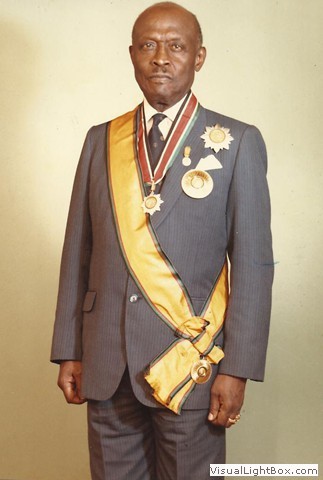

Disclaimer: The story of Cecil Miller is drawn from historical accounts, particularly Paul Mwangi’s The Black Bar. This retelling is a synthesis for the purpose of public education and advocacy. Readers of this Blog are encouraged to purchase a copy for the full account and context of The Black Bar by Paul Mwangi (SC)
If you are joining us for the first time: In Episode 4, Owera Apur knelt under the 160‑year‑old ojede cii tree and poured out his soul. He called on Zakayo, on the ancestors, on the spirits of the land. He asked the question no constitution can answer: How then shall we live when the council is bought and the granary is empty? The leaves trembled. Something, somewhere, had heard the cry.
Tonight, the ancestors reply. Not with wind. With a mirror.
I. THE FOREIGN SEED
In the 1970s a contract judge arrived in Kenya from Guyana. His name was Cecil Henry Ethelwood Miller. By blood he was a Black Pan‑Africanist, a World War II pilot who had “dusted the Aryan race.” By reputation he should have been a hero.
By work ethic he was almost useless.
But President Daniel Arap Moi saw hunger in Miller’s eyes. So Moi gave him Kenyan citizenship, a constitutional tenure as a High Court judge, a large plantation, and a Mercedes‑Benz limousine. The same way Owera Apur opened his granary to his nephew Okello, Moi opened the highest doors of the judiciary to a man who had never built anything.
Miller’s appetite only grew. He wanted to be Chief Justice. He understood the price: total, slavish loyalty to Moi. The ancestors watched the foreign seed take deep root in Kenyan soil.
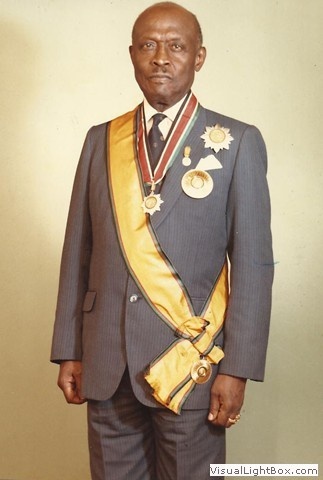
II. THE COMMISSION OF THE INCOMPETENT
In 1983 President Moi wanted to destroy his once‑powerful minister Charles Njonjo. He set up a Judicial Commission of Inquiry to investigate Njonjo for alleged abuse of office, everything from amassing firearms to plotting coups. The commission was widely seen as a kangaroo court, designed to humiliate Njonjo and drive him out of politics.
Miller was one of three commissioners. He walked in carrying two things: a personal grudge against Njonjo (who had once passed him over for promotion) and zero judicial independence.
The transcripts from The Black Bar are excruciating. During the hearings, lead counsel Lee Muthoga probed Njonjo about whether he had paid an MP, Amos Ng’ang’a, to resign his parliamentary seat so Njonjo could run for it. The exchange was tense. Njonjo’s lawyer, Mr. Deverell, kept interrupting with sarcastic remarks, at one point suggesting that “any other consideration” might include buying ice‑cream.
Miller exploded:
“You keep making your jokes, Mr. Deverell. You keep on making your jokes. In the long run you may find it is not going to accrue to your credibility and your status before this inquiry. You keep on making your jokes. You take out your cold icecream and push it into your mouth. Proceed please.”
The outburst revealed Miller’s predetermined hostility. He was not there to inquire; he was there to convict. Deverell saw the commission for what it was: a kangaroo court designed to destroy Njonjo.
The mission succeeded. Njonjo was politically crushed.
And in 1986 Miller was rewarded exactly as he had schemed: he was sworn in as Chief Justice of Kenya.
A man whose judicial temperament was summed up by an ice‑cream joke now controlled every judge in the Republic.
The ancestors were already laughing.
III. THE HABEAS CORPUS THAT MILLER STRANGLED
On 6 April 1987 a man named Stephen Mbaraka Karanja kissed his wife goodbye in Limuru and left for Nairobi. He was never seen alive again.
After seven weeks of desperate searching, his wife filed a writ of habeas corpus asking the court to order the CID Director to produce her husband.
The case came before Justice Derek Schofield. The CID claimed Karanja had been “shot while escaping.” Schofield did not believe them. He ordered an exhumation, an independent post‑mortem, and affidavits.
The grave was empty. No body. No records. Schofield issued a notice to the CID Director to show cause why he should not be committed for contempt.
That was when President Moi sent Chief Justice Cecil Miller himself into Schofield’s chambers with a direct order: “Lay off the case.”
Schofield refused. He told Miller: tell the President to keep his hands off the judiciary, or I will tell the President myself.
Miller did not wait.
On 11 August 1987, without any formal application, without any hearing, Miller summoned the lawyers, seized the file, and transferred the entire matter. He stood the case over “until judges return from vacation.”
Later he moved it to a known government apologist, who ruled that once a man is dead, habeas corpus cannot issue, because “the person or body” does not mean a corpse.
Schofield resigned in disgust and left the country.
The Law Society hosted a farewell dinner. The only senior government officer brave enough to attend was immediately fired.
Stephen Mbaraka Karanja’s family never got justice. The habeas corpus died in silence.
The Chief Justice had personally executed a murder cover‑up in open court.
IV. THE JUDGE WHO FIRED A JUDGE
By now Miller’s interference was routine. He transferred cases at will, summoned lawyers, stood matters over, and told other judges to “lay off” sensitive files.
One man refused to bow: Justice Patrick O’Connor.
Miller tried everything. When nothing worked, he issued a punitive transfer order sending O’Connor to a remote station.
O’Connor defied it.
On 26 September 1988 Miller sat down and wrote a single letter:
“You are hereby dismissed from the service of the Judiciary with immediate effect.”
No hearing. No tribunal. No reasons. Just one letter from a man who had never earned the seat he sat in.
O’Connor was gone.
The message to every honest judge was clear: resist Miller and you die.
One judge had said no. Miller made sure he would never say anything again.
V. THE PARKING LOT
By 1989 Miller had become a drunk, violent eccentric who required armed policemen standing guard outside his chambers, something no Chief Justice before or since has ever needed.
On a September afternoon he returned from lunch heavily intoxicated. He opened the sealed box he called his “disposal orders”, instructions for how his body should be treated after death. Then he began marching around his chambers shouting drill commands to himself.
The policemen called the Commissioner of Police.
Miller burst out, punching the air. He rushed into the High Court parking lot, in full view of journalists, lawyers, and the public.
There, Cecil Henry Ethelwood Miller, Chief Justice of the Republic of Kenya, dropped his trousers.
He placed one shoe on his head.
And he marched again.
Every few steps he stopped, raised his fist, and screamed Moi’s slogan at the top of his lungs:
“Nyayo! Nyayo!”
Nyayo meant “footsteps.” He was marching in the President’s footsteps, straight into naked madness.
The Commissioner of Police and his men wrestled the naked Chief Justice into a car and drove him home.
No newspaper published the photographs.
No radio station broadcast the story.
No television channel dared show the images that filled cameras that day.
Five days later, on 5 September 1989, Miller died. The official cause was listed as septicemia.
The real cause was the ancestors’ audit.
VI. THE ANCESTORS’ AUDIT
The villagers who had abandoned Miller to his gods did not celebrate. They did not dance. They did not say, “See, justice came.”
Because justice did not come. The system that made Miller also protected him, even in madness, even in death. His family stayed in the official residence for months. Armed police guarded his widow. The government enforced his vengeance posthumously.
No one was held accountable. No one was punished. No one even spoke.
But the ancestors had their way.
Not through a court. Not through a petition. Not through a judgment. Through a parking lot and a shoe on a head and a slogan shouted by a naked man.
The ancestors do not file cause lists. They do not wait for submissions. They do not deliberate.
They simply let the consequences ripen. And when the fruit is ready, it falls.
Owera Apur’s invocation was answered—not by the council, not by Parliament, not by any human institution. It was answered by the slow, patient gravity of truth.
VII. HOW THEN SHALL WE LIVE?
So we return to the question.
How shall we live when the granary is empty?
How shall we live when the petition sleeps?
How shall we live when the door does not open?
We live like the villagers who finally understand: there is no institution coming to save us.
We live knowing that the system may never be fixed in our lifetime.
We live knowing that the judges who betray justice may never face a tribunal.
We live knowing that the MPs who refuse to legislate may be re‑elected.
But we also live knowing this:
The ancestors are patient. The gods are not asleep. And parking lots are everywhere.
Miller’s story is not a promise of justice. It is a warning against the illusion that power can protect you forever. It is a reminder that the system you build to shield yourself from accountability may one day become the cage you cannot escape.
So how shall we live?
We live with our eyes open.
We live asking the questions at burials.
We live recording the promises and the failures.
We live building the granary even if we never eat from it.
We live like people who know that the ancestors are watching.
And we leave the rest to them.
In the final episode: Owera Apur rises from the roots. The leaves speak one last time. The choice that cannot be postponed. We will show that while the ancestors SHALL no doubt have their day, we, their descendants still have a role to play to bring all the living “Okello Anyapos” to order, to serve with intergrity, purpose and accountability.
Episode 6 drops tomorrow. 5 PM.
Disclaimer: The story of Cecil Miller is drawn from historical accounts, particularly Paul Mwangi’s The Black Bar. This retelling is a synthesis for the purpose of public education and advocacy. Readers are encouraged to get a copy of the book for a full account of Kenya’s journey of Judicial Accountability as narrated by the author.
#TheUnbuiltGranary #KenyanMirror #AskIt #OjedeCii
—
[End of Episode 5]
 enenlegalworld

Leave a comment