The Uganda Law Society (ULS) has raised concerns over what it describes as a growing shift towards “opaque e-justice,” warning that recent electronic case management directions issued in the high-profile Besigye case risk undermining constitutional guarantees of fair hearing, open justice and equality of arms.
In a press statement released on Tuesday, the Society criticized the case management directions issued on 17 July 2026 by Justice Simon Peter M. Kinobe in High Court Miscellaneous Application No. 0248 of 2026, involving Dr Kizza Besigye and Hajji Obeid Lutale against Gen Muhoozi Kainerugaba and the Attorney General.
A copy of the Press Statement can be accessed here:
According to the ULS, the directions impose stringent electronic filing deadlines under the Judiciary’s Electronic Court Case Management Information System (ECCMIS) while failing to account for litigants who may lack reliable access to computers, internet connectivity, legal representation or other basic resources required to participate effectively in digital proceedings.
The Society argues that such requirements disproportionately disadvantage vulnerable litigants, particularly incarcerated applicants, and risk transforming technology from a tool that expands access to justice into one that restricts it.
The statement further links the concerns to the Society’s earlier advisory issued on 4 June 2026 in response to the Chief Justice’s Administrative Circular No. 1 of 2026. In that advisory, the ULS questioned whether the Judiciary’s digital transformation framework sufficiently safeguards constitutional principles of transparency, public accountability and open justice.
According to the Society, the latest case management directions reinforce those concerns by emphasizing administrative efficiency without corresponding safeguards for public and media access to court proceedings and records.
The ULS also questioned the practicality of requiring incarcerated applicants to comply with tight electronic timelines while the respondents—senior government officials represented by the State—enjoy significantly greater institutional resources.
The Society maintains that this imbalance threatens the constitutional principle of equality of arms and may compromise the right to a fair hearing guaranteed under Article 28 of the Constitution.
Beyond timelines, the statement criticizes the absence of mandatory pre-hearing scheduling conferences in complex constitutional litigation and warns that the Judiciary has yet to establish adequate contingency protocols for power outages, internet disruptions and system failures that could affect electronic proceedings.
The Uganda Law Society called upon the trial judge to review the directions and adopt realistic procedural timelines that ensure meaningful participation by all parties.
It also renewed its call for the rescission of the Chief Justice’s Administrative Circular No. 1 of 2026 and urged the Judiciary to develop a revised digital justice framework that expressly subordinates electronic court administration to constitutional guarantees of openness, fairness and equal access to justice.
The statement concludes with a warning that digital innovation must remain a servant of justice rather than its master.
“Justice that cannot be seen or accessed by the people is no justice at all,” the Society said.
JOIN THE UNDERGROUND ANDFUEL THE MOVEMENT
We have created a dedicated fans WhatsApp Channel. Don’t miss the latest updates, get early bird access to our latest blog posts and more, so much more. Click the following link to follow the Channel: https://whatsapp.com/channel/0029Vb9BQqw5a246bWVsLl3j
Independent institutional critique and advocacy for a radical overhaul of legal culture require time, deep research, and uncompromised independence. If these narratives bring value to your legal journey or challenge your perspective, please visit our HOME PAGE to see how you can support this platform directly and keep the critique fierce and relentless.
That, in many ways, was the question hanging over the inaugural ECCMIS Symposium that I recently attended as a member of the Judiciary Affairs Committee of the Uganda Law Society, a technology enthusiast, and perhaps most importantly, a practising advocate who has experienced firsthand both the promise and frustrations of Uganda’s digital transition.
This newsletter is a continuation of my earlier reflections on the necessity of technological adoption within our profession. Then, I argued that lawyers must embrace technology or risk being left behind. Today, however, I wish to discuss a different concern: how we ensure that digital transformation does not leave people behind.
The Bar Speaks
Our ULS leadership—President Isaac Ssemakadde, SC, and VP Anthony Asiimwe—were clear: while the Bar supports modernization, we must prioritize accountability and interoperability. As Vice President Asiimwe noted, deadlines continue to run even when the system fails, creating a dangerous procedural environment for advocates. The leadership emphasized that a digital system that cannot guarantee the safety of our filings is, for all practical purposes, a liability to the Rule of Law.
Beyond the Headlines
Much has already been said about ECCMIS, the Judiciary’s flagship case management system. The symposium brought together judicial officers, ICT specialists, researchers, and members of the Bar to discuss the realities of implementation. What emerged was neither a story of triumph nor failure, but one of transition.
Mr. David Sunday Kikabi, Director of ICT at the Judiciary, clarified that the transition remains phased, operating in 49 court stations, representing roughly twenty percent of the Judiciary’s footprint. Hon. Justice Christopher Madrama reminded participants that meaningful criticism must appreciate the operational realities of implementing a national digital infrastructure. Lady Justice Immaculate Busingye offered a historical reminder that ECCMIS was born from the Bar’s outcry over missing court files and administrative inefficiencies.
The Day Technology Sent Me Home
Several years ago, I dispatched my legal assistant to certify specific company records for use as evidence. The process had migrated to digital URSB portals, and the traditional method was no longer available.
Looking back, the issue was not the technology itself, but the lack of preparedness and notice. We arrived at a destination only to discover the road had been moved.
The Walk of Shame
This experience mirrors a reality we have lived or heard of: a lawyer travels with a client, fully prepared, to file court a client’s case, including an urgent application for an interim injunction, a high stakes life and death-last minute filing where the plan is to secure an urgent exparte interim relief, only to be guided that manual filing is nolonger being accepted, rather that everything is being filed online and worst of all, the system is itself down!. The “walk of shame” of the lawyer and his client back to chambers to figure out what to do next undermines the dignity of our profession and erodes trust.
The Namukasa Test
Perhaps the most profound contribution came from Lady Justice Monica Mugyenyi, who asked: Can Namukasa use it? If our justice system is technologically sophisticated but socially inaccessible, it has merely transformed the appearance of the problem, not solved it.
What the Research Revealed
Research presented during the symposium identified recurring concerns, including bandwidth limitations, intermittent outages, server congestion, and user-experience challenges. In some instances, courts equipped for ECCMIS have reverted to manual processes due to operational interruptions. These findings should not be viewed as evidence of failure. Rather, they remind us that digital transformation is a process of continuous refinement.
Waiting for perfection is not a strategy; building bridges is.
Bridge One: Training the Profession. I am championing a volunteer-led Trainer-of-Trainers programme to bring practical ECCMIS training to regional bars. I invite the Judiciary’s ICT Directorate to collaborate in developing a standardised framework to equip advocates with the skills to navigate the digital environment confidently.
Bridge Two: Interoperable Solutions. During the symposium, Riyale Tech Solutions showcased the Riyale Legal Suite, an ECCMIS-integrated practice management platform that helps law firms manage and track ECCMIS updates, court cases, hearing dates, documents, clients, billing and invoicing, court schedules, and day-to-day operations. By streamlining legal workflows and digitizing firm operations, Riyale Legal Suite supports the transition to a paperless practice and improves efficiency across the firm. Paperless courts need paperless law firms, and Riyale Legal Suite bridges the gap. Having reviewed the platform, I believe it offers practical solutions for many of the challenges currently facing firms during the transition to digital practice. If you missed symposiom, Access the Riyale Tech Presentation here. Advocates interested in exploring the platform further may contact me for demonstrations, implementation support, and licensing arrangements.
The Road Ahead
The future of justice will undoubtedly be digital. The question is whether it will also remain accessible.
If Namukasa can navigate the system with confidence, if advocates can serve their clients without fear of technological paralysis, and if justice can continue moving even when a server fails, then ECCMIS will have achieved something far greater than digitisation. It will have expanded access to justice. And that is a future worth building.
Now let me be equally clear. I hold no equity, ownership, employment, or decision-making role in Riyale Tech Solutions or any affiliated legal technology provider discussed in this article. Any professional introductions that may arise between practitioners and technology providers do not influence the opinions expressed here, which remain independently formed.
Let us build the connections that matter.
Enen Ambrose
Advocate & Member, Judiciary Affairs Committee, Uganda Law Society
Phone/WhatsApp: 0789856805 | Email: enen@enenlegalworld.com or ambrosenen@gmail.com
A procedure that turns courts into shrines of injustice, where freedom is a fairy tale and land is lost
Author’s Note:The Chronicles of His Worship Mulyanyama is a serialized literary commentary designed to constructively critique the institutional and structural implications of the Magistrates Courts (Amendment) Act, No. 6 of 2026. This work is a creative exploration of the human infrastructure behind public service and is not intended to ridicule, embarrass, or undermine the integrity of the Judiciary.
The stack of criminal files had not moved in eight years.
One hundred of them. One hundred human beings. One hundred stories of land, hunger, and a law that refused to die.
The State had never filed committal bundles. The accused had been on remand since before the last census. Neither could be granted bail – not by Mulyanyama. Only the High Court could do that. And the High Court had done nothing.
Yokoyadi’s Hoe – Eight Years
Yokoyadi was the elder brother of Ocen Okello – the bean supplier who had been chasing a school’s debt for four years. When their parents died during the LRA insurgency, Yokoyadi dropped out of school. He worked as a porter, a brickmaker, a night guard. He never went to court. He only wanted to protect the three acres their grandfather had cleared with a machete.
Then Majutu arrived. An urban elite. A man who bought land after the war and spoke of “development.” Majutu wanted Yokoyadi’s plot. He offered a pittance. Yokoyadi refused.
One morning, Majutu’s workers came to mark the boundary. Yokoyadi ran out with his hoe. He did not swing it at anyone. He struck the ground between them. He shouted: “Either you kill me first, or I die on this land. It will not leave my family.”
That evening, Majutu called a police officer he knew. He reported aggravated robbery. He claimed Yokoyadi had threatened him with a deadly weapon – the hoe – and attempted to steal his mobile phone. There were no witnesses except Majutu’s own workers.
Yokoyadi was arrested. Remanded. The State never filed proper committal papers. The case did not move.
Eight years later. Majutu had erected a fence. He had built a guest house. He had planted eucalyptus where Yokoyadi’s father was buried.
Yokoyadi had not seen a judge in five years. The file sat on Mulyanyama’s desk – a monument to a hoe that had become a life sentence.
The Pastor’s Form – Eight Years
Micaki was a widow. She could not read or write. She trusted people in uniforms – including Pastor Solomon, who ran a Pentecostal church in the trading centre.
One afternoon, Pastor Ayak visited Micaki. He told her the government was giving free money to elderly vulnerable persons. He had a form. He just needed her thumbprint. She was grateful. She dipped her thumb in the stamp pad.
Just as she was about to press it on the paper, her son Emmanuel walked in. He had returned from Lira for a visit. He saw the form. He yanked it from the pastor’s hand. He read it. It was not a government grant. It was a gift inter vivos – a transfer of ten acres to the pastor’s church foundation entirely for free!
Emmanuel shouted. He demanded that the pastor leave. He chased him out of the compound. He did not touch him. He did not threaten his life. He simply raised his voice and pointed to the road.
Two weeks later, a vagrant was found dead near the pastor’s church – a man known to drink at the local bar. Pastor Ayak went to the police. He told them Emmanuel had threatened him, that Emmanuel was violent, that Emmanuel must have killed the vagrant in a robbery.
There was no evidence. No witness placed Emmanuel near the body. But the pastor was influential. His church had friends in the district. Emmanuel was arrested. Charged with murder. Capital offence. No bail.
Eight years later. Pastor Ayak had built a primary school and a church on Micaki’s land. A banner read: “New Hope Pentecostal School – Transforming Lives.”
Micaki sat on the roadside, watching children play where her cassava used to grow.
Emmanuel had never been tried. The State had no witnesses. The file would not die.
The Attempt
Mulyanyama could not grant bail. He could not dismiss the charges. The law said he could only communicate the charges and call up the file for mention – to track the status of police inquiries or investigations. He could not provide any effective remedy for freedom – even though the law said every suspect was innocent until proven guilty or until conviction.
He was not a magistrate. He was a warehouse for human beings.
So he bundled the 100 files. He wrote a cover letter to the Resident Judge of the High Court Circuit. He asked for supervisory intervention. He personally drove the files to the High Court registry.
A week later, his phone rang. He did not recognise the number. He answered.
“Worship Mulyanyama.”
The voice was tired. Not cruel. Tired.
“This is the Resident Judge.”
Mulyanyama straightened. “Good afternoon, my Lord.”
“I am looking at your letter. The one about the committal files.”
“Yes, my Lord. The accused have been on remand for eight years. The State has not filed commital papers. I cannot grant bail. I cannot dismiss the charges. I was hoping your Lordship could exercise supervisory –”
The Judge cut him off.
“I have murder sessions across four districts. I have bail applications from two prisons. I have a donor‑funded SGBV session starting next week. I do not have time for one hundred twenty one files that should have been dealt with at your level.”
Mulyanyama: “With respect, my Lord, the law does not permit me to –”
“Then the law is an ass.”
Silence.
“Listen to me, Worship. I am not your appeal court. I am not your clerk. Those files are your problem. Deal with them.”
The line went dead.
Mulyanyama stared at his phone. He understood now: the Judge was not cruel. He was simply drowning. And the 100 files were the first to sink.
The Interns
One afternoon, a group of internship students from Gulu University arrived at Omwonyo‑le. They were bright, eager, and armed with notebooks. Their supervisor had assigned them to sensitise remand inmates about their rights – the right to be presumed innocent, the right to legal representation, the right to a speedy trial.
Mulyanyama allowed it. He had no power to refuse. He also had no power to help.
The students sat with Yokoyadi. They explained Article 28 of the Constitution. They spoke of bail, of committal, of the State’s duty to file papers.
Yokoyadi listened. Then he asked: “If all that is true, why have I been here eight years?” ,”Is there anything you can do to assist me?“
The students had no answer. They were not qualified advocates. The law did not permit them to file anything, to apply for anything, to demand anything. They could only teach rights – not enforce them.
They visited Emmanuel. He did not speak. He stared at the wall. One student tried to hold his hand. He pulled away.
That evening, the students sat outside the court, silent. Their supervisor told them: “You have seen the gap between the law on paper and the law in practice. Now you must decide if you still want to be lawyers.”
Mulyanyama watched them leave. He thought of the innocence of these brilliant Bachelor of Laws Degree students and what the future of Law and Legal practice probably held in store for these “emiti emito”– Luganda, his mother tongue’s proverbial expression of “children”. He thought of the 100 accused persons who had appeared before him for periods ranging between 7 to 8 years.
He did not write in his diary that night. There was nothing left to say.
Before you ask why justice delays… ask these questions:
How many Yokoyadis are waiting in your local prison – eight years, ten years, twelve? How many Emmanuels are on remand because a wealthy, influential, highly connected and malicious complainant whispered a lie? And why does the law still force a magistrate to hold a hearing that serves no purpose?
Eight years is not a delay. Eight years is a sentence – served without conviction.
Enen Ambrose. Advocate. Member: Judiciary Affairs Committee of Uganda Law Society.
This post is a pure work of fiction and creative literature. The characters, dialogue, specific incidents, and settings—including the character of His Worship Mulyanyama and the location of Omwonyo-le Magistrates Court—are products of the author’s imagination or are used fictitiously. Any resemblance or exact matches to actual persons, living or dead, real-life judicial officers, or specific ongoing cases is entirely coincidental. This text is created solely for the purpose of systemic legislative critique and systemic advocacy; it is not maliciously constructed, nor should it be interpreted as an attempt to defame, misrepresent, or malign any living individual or public office holder.
The legal references in this Series is for information purposes only and is not intended to be used as a substitute for legal advice. The author does not assume responsibility or admit liability arising from the use of the contents of this blog as legal advice.
The author strongly encourages readers to consult a licensed attorney for specific context related legal advice.
JOIN THE UNDERGROUND ANDFUEL THE MOVEMENT
We have created a WhatsApp Channel. Don’t miss the latest updates, get early bird access to our latest episodes and more, so much more. Click the following link to follow the Channel: https://whatsapp.com/channel/0029Vb9BQqw5a246bWVsLl3j
Independent institutional critique and advocacy for a radical overhaul of legal culture require time, deep research, and uncompromised independence. If these narratives bring value to your legal journey or challenge your perspective, please visit our HOME PAGE to see how you can support this platform directly and keep the critique fierce and relentless.
Author’s Note:The Chronicles of His Worship Mulyanyama is a serialized literary commentary designed to constructively critique the institutional and structural implications of the Magistrates Courts (Amendment) Act, No. 6 of 2026. This work is a creative exploration of the human infrastructure behind public service and is not intended to ridicule, embarrass, or undermine the integrity of the Judiciary.
At 9:43am, the white Land Cruiser rolled into Omwonyo‑le.
Nobody looked surprised. Not the warders. Not the litigants. Not even His Worship Mulyanyama.
Only Alyek Molly looked up from the registry.
She had not been paid in three months.
That morning, before leaving home, she had crushed her mother’s last blood‑pressure tablet into halves – so it could survive two more days.
Her tuition at Kampala International University (Mbale campus) was due on Friday. Second year, Bachelor of Laws. She still kept her old Diploma in Law transcript folded inside her registry drawer – next to unpaid electricity receipts.
When she saw the Land Cruiser, she did not smile. But her shoulders relaxed. Just a little.
The memo was short. Cold. Typed.
“All ordinary cause‑list matters stand adjourned pending implementation of the Mobile Justice Outreach Session.”
Fifteen days.
Ocen Okello closed his eyes.
Four years. Four. Not because his case was difficult. Because the defendant – a government primary school – had failed to bring its final two witnesses. Again.
The first adjournment: His Worship Mulyanyama had been away at donor‑funded SGBV training. The next three: the school simply came empty‑handed. Each time, the defence begged. Each time, His Worship adjourned – in the interest of justice. Each time – no costs.
Counsel Ogwang Adede had financed this trip from Lira by himself.
This time, his client simply could not raise it.
Not because he did not want justice. Because justice was competing with school fees.
With last month’s Bolicap debt – the money he had borrowed to bring both himself and counsel to this same court… for a hearing that never took off.
With the money still owed to Okello Ajing, who had rescued him that same morning when every other door had gone silent.
With sugar. With paraffin. With soap.
And somewhere inside that collapsing arithmetic… sat the question of whether justice was becoming more expensive than the debt he had come to recover.
So Counsel Ogwang Adede came anyway. On his own fuel. On his own time. On his own thinning patience.
And on the dangerous assumption… that today, after four years, somebody inside Omwonyo‑le would finally be ready to finish a case.
Today, Counsel Ogwang Adede had come ready – not prepared to swallow one more adjournment dressed as “the interest of justice.”
He had the court file under one arm. His diary in the other hand.
And in the margins of his notebook – authorities, annotations, and one final prayer:
Order 17 Rule 4 of the Civil Procedure Rules.
Close the defence. Take oral submissions. Fix the matter for judgment.
Four years was enough.
Today he had not come to negotiate with delay. Today… he had come to end it.
Then Alyek Molly pinned the memo. And nobody entered Court No. 2.
Imat Nekolina did not understand the white car.
She only knew that her case was not today. Again. She approached Alyek Molly. “When?”
Alyek shrugged. “After the mobile court.”
“My witness,” Imat said quietly, “the doctor says he has less than fourteen days.”
Alyek said nothing. She had heard this before too. But her mind was already calculating: fifteen days of per diem. Enough for her mother’s medication. Enough for Friday’s tuition. She did not wish for the donor to come. But she could not afford to wish otherwise.
Mulyanyama watched from his chambers.
He saw Counsel Ogwang Adede standing on the cracked steps – file, diary, notebook – the oral application still just a prayer in his head. He saw Imat Nekolina’s face. He saw Ocen Okello kick his Boxer motorcycle back to life – and ride away without looking back.
The Visitor was already inside Court No. 1, setting up his laptop.
The donor had paid for fifteen days. Per diem. Transport. Lunch allowance. Enough… to make resistance expensive.
That evening, Mulyanyama texted a friend: “They call it access to justice. I call it access to their priorities.”
The friend replied: “Did you eat?”
Mulyanyama did not answer.
Before you blame a magistrate for “delayed justice”… ask two questions:
Who funded the last special session in your court? And how many times did the government defendant adjourn without cost?
Two days later, another envelope arrived.
Not white. Brown. Government brown.
The subject line read:
TRANSFER OF FILES – FOR JUST CAUSE.
Mulyanyama read it once. Read it twice.
Then looked at his phone.
One message waited. Just three words.
Did you eat?
Institutions are not always captured by force. Sometimes… they are rented. One allowance at a time.
Enen Ambrose, Enen Legal World
Member: Judiciary Affairs Committee
Uganda Law Society
Enen Legal World.
For Feedback or comments: enen@enenlegalworld.com
Legal Disclaimer
Fiction & Non-Defamation Notice:
This post is a pure work of fiction and creative literature. The characters, dialogue, specific incidents, and settings—including the character of His Worship Mulyanyama and the location of Omwonyo-le Magistrates Court—are products of the author’s imagination or are used fictitiously. Any resemblance or exact matches to actual persons, living or dead, real-life judicial officers, or specific ongoing cases is entirely coincidental. This text is created solely for the purpose of systemic legislative critique and systemic advocacy; it is not maliciously constructed, nor should it be interpreted as an attempt to defame, misrepresent, or malign any living individual or public office holder.
The legal references in this Series is for information purposes only and is not intended to be used as a subtitute for legal advice. The author does not assume responsibility or admit liability arising from the use of the contents of this blog as legal advice.
The author strongly encourages readers to consult a licensed attorney for specific context related legal advice.
There is a moment in the Gospel of Mark that haunts every leader, every judge, every system builder.
Jesus goes to the Garden of Gethsemane to pray. He takes Peter, James, and John. He is sorrowful, troubled, facing the cross. He asks them to stay awake, to watch with him.
Then he walks away, prays, returns – and finds them sleeping.
“Simon, are you asleep? Could you not keep watch for one hour?” (Mark 14:37)
He warns them: “Watch and pray, so that you will not fall into temptation. The spirit is willing, but the flesh is weak.” (Matthew 26:41)
They sleep again. Then the mob arrives. Jesus is arrested. And the disciples flee. Peter denies him three times out of fear.
The consequence of sleeping? Failure at the moment of testing.
II. Gethsemane, Buganda Road Court, 2026
On 21 May 2026, an advocate appeared before a Magistrate at Buganda Road Chief Magistrate’s Court. His client had been charged with obtaining 600 million shillings by false pretence. The Advocate had uploaded bail application documents onto ECCMIS – the Judiciary’s flagship electronic case management system.
The Advocate asked to be heard on bail.
The Magistrate tried to access the uploaded documents.
The network failed.
ECCMIS would not display the files. The magistrate could not see the bail application. And instead of invoking the fallback provisions of the law – instead of assisting the advocate under Rule 9(4) and Rule 24(5) of the Judicature (Electronic Filing) Rules, 2025 – the Magistrate declined to hear the application.
The Advocate was remanded to Luzira Prison until 4 June 2026.
The system slept. And justice went to Luzira.
Image: Buganda Road Court. Photo Credit, Nile Post, a member of the Next Media Company.
III. The Spirit Is Willing – But the Flesh Is Weak
The Judicature (Electronic Filing, Service and Virtual Proceedings) Rules, 2025 (S.I. No. 21 of 2025) are, on paper, remarkably progressive.
Rule 24(5) of the Rules provide thus:
The court may, in its discretion, adjust the schedule for responding to any affected filings, postpone the next court event, or provide other relief. It is my view that “others relief” includes a fall back position to actually hear the bail application manually, the network failure notwithstanding.
The spirit of these Rules is willing. No judiciary transitions from paper to digital systems without friction, uncertainty, or implementation failures – and Uganda is no exception.
But the flesh – the actual ECCMIS software and the training (or lack thereof) of judicial officers – is weak.
The magistrate did not invoke Rule 24(5) Did not provide other relief i.e. a fall back position to actually hear the bail application, Why?
Two possibilities – and both point away from individual malice and toward systemic failure.
IV. Why Did the Court Sleep? Two Systemic Failures
First: No offline caching in ECCMIS.
If ECCMIS had an automatic local cache, the Magistrate’s computer would have downloaded all documents for that day’s matters the night before – or upon morning boot, or periodically. Even if the live network failed, the cached documents would remain accessible. The bail application would have been visible. The hearing could have proceeded.
But ECCMIS, as currently deployed, appears to depend heavily on live connectivity. When the network fails, the court becomes blind. That is not a user error. That is an architecture flaw – though I write as an external observer, not as someone with access to internal design documents.
What is needed: A software update that configures ECCMIS to:
· Pre‑cache all case files for matters listed on a given day. · Update the cache every morning or whenever internet is available. · Allow offline access with a clear timestamp (“cached as of [time]”). · Sync back to the central system once connectivity is restored.
This is not rocket science. Email clients do it. Mobile banking apps do it. Google Drive, One Drive and other online file back-up systems do it. Even WhatsApp caches messages offline. The Judiciary’s ECCMIS can do it – if the builders prioritise resilience over assumption of constant connectivity.
Second: Inadequate training of judicial officers.
Rule 60 of the 2025 Rules commands:
The court shall, in collaboration with stakeholders, periodically undertake training for court users, judicial officers, unrepresented litigants and the public on use of ECCMIS.
Where is that training? If Magistrates do not know they can assist under Rule 9(4), if they do not know they can order a paper fallback – then the Rules are dead letters. The fault is not primarily the Magistrate’s. The fault is the system that failed to prepare her.
The Magistrate in Buganda Road was not malicious. She was unprepared. She was left alone with a broken network and no institutional backup. And like Peter in Gethsemane, she found herself in a situation where the institution had not equipped her to watch – the failure was systemic, not merely personal.
V. The Blame Must Shift
Public anger after the Buganda Road incident has, predictably, focused on the Magistrate. Some have called her incompetent. Others have suggested bias.
I disagree.
The Magistrate is the front‑line foot soldier of a digital transformation that was rolled out without full readiness. She was given a system that struggles offline, and no training on what to do when it fails. She was handed a beautiful set of Rules (S.I. 2025 No. 21) but not the practical tools to implement them.
The real responsibility lies with:
· The architects of ECCMIS – who designed a system that assumes perpetual internet connectivity in a country where power and data are unreliable. · The Judiciary’s leadership – who rolled out the paperless mandate without ensuring that every Magistrate understands Rules 9 and 24, and without installing basic offline caching. · The training units – who have not conducted the mandatory training required by Rule 60.
Yes, the Magistrate could have done more. She could have read the Rules. She could have asked for an adjournment. She could have called the registry. But when a system fails, we do not blame the soldier alone. We also examine the armour and the General who deployed him and gave the orders.
VI. A Concrete Way Forward
The solution is not to abandon ECCMIS. It is to fix it.
1. Technical fix: offline caching. The Judiciary’s ICT team must implement automatic local caching on all court computers. This is a one‑time software upgrade that pays for itself within weeks by eliminating network‑related adjournments.
2. Training fix: mandatory, periodic, verifiable. Every judicial officer and court clerk must undergo hands‑on training on:
· How to use offline mode. · How to invoke Rule 9(4) to assist litigants. · How to grant relief under Rule 24(5). · How to handle network failures without remanding people, especially when the question of Bail, which touches on the liberty and presumption of innocence of an accused person comes up for consideration.
3. Accountability fix: a practice direction. The Chief Justice should issue a practice direction reminding all courts of their obligations under Rules 9 and 24, and requiring that any refusal to hear a matter due to ECCMIS failure be accompanied by a written explanation of why Rules 9(4) and 24(5) for fall back positions could not be followed.
VII. Gethsemane, 2026 and Beyond
Jesus did not condemn the disciples for sleeping. He warned them. He told them to watch and pray – because the flesh is weak.
The flesh of ECCMIS is weak. The network fails. The cache is absent. The training is insufficient. But the spirit of the Rules is willing.
The question is whether the Judiciary will watch – or continue to sleep.
Because every time a Magistrate refuses to assist a litigant when ECCMIS fails, every time an Advocate or his client is remanded because the network is down, every time justice is delayed or denied not by malice but by unpreparedness – that is not a technical glitch.
That is the agony of an unprepared court.
And the consequence is always the same: those who came seeking justice flee. Their rights are denied. Their liberty is lost. And the system that was meant to protect them becomes the very instrument of their suffering.
“Could you not keep watch for one hour?”
The hour is now. The network will fail again. The question is not if – but when, and how the court responds.
Will we equip our Magistrates (and in fact all judicial officers) to stay awake? Or will we keep sending accused persons to Luzira because the cache was empty and the training never came?
The spirit is willing. Let us finally strengthen the flesh.
DISCLAIMERS: This blog is not an attack on the Magistrate who handled the Buganda Road matter. Magistrates work under enormous pressure with limited resources. The critique here is directed at systemic failures: the architecture of ECCMIS, the inadequacy of training, and the absence of offline preparedness. Fair commentary is not personal attack.
This blog is not legal advice. Readers should consult qualified attorneys for case‑specific guidance.
Enen Ambrose Member, JudiciaryAffairsCommittee, UgandaLawSociety For comments or feedback: enen@enenlegalworld.com
There is another kind of quiet violence in procedure.
Not when the law assumes communication where none exists. But when communication eventually occurs, and the law still struggles to recognise its procedural legitimacy because it arrived through unfamiliar technological form.
Days ago, in my earlier critique, The Quiet Violence of Procedure: When Digital Service Serves No One, I warned against a growing procedural danger within Uganda’s evolving E‑Justice architecture. I argued that a notice uploaded into ECCMIS is not necessarily a notice received; that “deemed service” is not always effective service; and that digital systems may satisfy procedural form while silently excluding the very litigants whose rights stand at risk.
The concern then was technological presumption.
This time, the concern is technological distrust.
The Case and Its Difficulties
In Bakampa Brian Baryaguma v Bbaaka Property Consultants (U) Ltd (Misc. Cause No. 0033 of 2023, 22 May 2026), the High Court held that service through WhatsApp, without prior leave for substituted service, was improper. The Applicant, self‑represented, sent the application to the Respondent company director’s WhatsApp number on 24 February 2023. The director only saw the message weeks later, on 4 April 2023, before instructing counsel who filed a response on behalf of the company.
The Court struck out the affidavit of service, holding that the Applicant was not authorised to effect service under Order 5 rule 7 of the Civil Procedure Rules and had not first obtained leave for substituted service. The Court further struck out the Applicant’s supporting affidavit for being argumentative and containing matters of law (contrary to Order 19 rule 3 CPR), and dismissed the application with costs.
I do not defend every aspect of the Applicant’s filings. The supporting affidavit may well have been defective under Order 19. The Applicant also admittedly did not first attempt conventional corporate service under Order 29 rule 2 CPR, nor did he obtain prior leave before resorting to WhatsApp. Those are genuine procedural weaknesses.
I raised a critical concern about the preparedness of lawyers for paperless transition come June 2026. This blog inverses that question back to the courts themselves. With a ruling which effectively rolls back all the gains in the courts’ E-justice and digital transformation journey, I equally ask, “are our courts really ready for a fair, meaningful and realistic digital transformation?“
The Conceptual Problem
The real issue is not whether procedural safeguards around electronic service should exist. The question is: should courts continue treating direct electronic communication as inherently inferior to conventional physical service, even where actual notice is eventually achieved and no prejudice is demonstrated?
Historically, substituted service existed because direct communication with a litigant had become impossible, impracticable, or evasive. Newspaper advertisements, affixing summons to premises, or leaving documents with third parties were indirect approximations designed to create the possibility of awareness where direct access could not be achieved.
WhatsApp communication to a litigant’s verified personal number occupies a very different space.
It is direct. It is individualised. It is traceable. And in many modern contexts, it may be more personal than conventional physical service itself.
Traditionally, courts have accepted service where documents are left with receptionists, secretaries, guards, clerks, or relatives – all based on the assumption that the communication will eventually reach the intended recipient. A WhatsApp message arrives directly on the litigant’s personal handset, often with timestamps, delivery indicators, and sometimes read receipts.
Ironically, historically accepted physical substituted service may sometimes be less direct than modern electronic communication.
That forces an uncomfortable question: In the smartphone era, why should communication sent directly to a litigant’s verified personal number automatically be treated as procedurally inferior to leaving papers with a receptionist, such that prior leave for substituted service is required?”
The Delay Problem – And Why It Is Not Decisive
Of course, the facts of this case reveal an important caution. The Respondent director did not see the message immediately. Weeks passed before the communication came to his attention. That delay cannot simply be ignored.
But the existence of delay does not necessarily establish that the medium itself was defective.
Physical summons may equally sit unread on office desks for weeks. Letters may remain unopened. Receptionists may misplace documents. The proper procedural inquiry cannot merely be whether awareness occurred instantly, but whether the chosen method was reasonably calculated to bring the proceedings to the attention of the affected party.
Here, the communication eventually did exactly that. The Respondent became aware. Counsel was instructed. An affidavit in reply was filed. Participation followed.
Which raises another important constitutional question: What actual prejudice was ultimately suffered?
That question becomes particularly pressing under Article 126(2)(e) of the Constitution, which requires courts to administer substantive justice without undue regard to technicalities – especially where the litigant is self‑represented and navigating complex procedural terrain without legal assistance.
Even if the Court was correct that service was technically defective, one may still ask whether striking out the affidavit of service, striking out the supporting affidavit, and dismissing the entire application with costs was proportionate. Could the Court instead have directed proper service and allowed rectification, particularly in a human rights enforcement application?
Uganda’s Own Jurisprudence Already Points Forward
Long before this dispute arose, Uganda had already begun integrating technology into adjudication. The Constitution (Integration of ICT into the Adjudication Processes for Courts of Judicature) (Practice) Directions, 2019 encouraged the use of technology to improve efficiency and expedition. The Judiciary’s ongoing embrace of ECCMIS, electronic filing, virtual hearings, and paperless procedure reflects an unmistakable institutional movement toward digitally facilitated justice.
More importantly, Ugandan jurisprudence has already recognised technologically facilitated service itself.
In Male H Mabirizi K. Kiwanuka v Attorney General, Justice Ssekaana Musa expressly acknowledged that service through “email or facebook or whatsApp or any other technologically advanced means” are methods calculated at bringing proceedings to the attention of parties. The Court further recognised that personal service is required only “wherever practicable” before concluding that service was effective because participation followed.
That reasoning shifts procedural legitimacy away from ceremonial delivery and toward communicative effectiveness.
And that is where the Bakampa ruling becomes difficult to reconcile with the Judiciary’s broader digital trajectory.
A Concrete Way Forward
What is needed is not a revolution, but a practice direction.
The Chief Justice should issue guidance clarifying that electronic service via WhatsApp, SMS, or similar direct messaging platforms – when sent to a verified number and followed by reasonable confirmation (such as a follow‑up call or text) – may be recognised as valid service without prior leave, provided that:
· The sender proves actual notice (e.g., delivery receipt, screenshot, or acknowledgment); · No prejudice is caused to the recipient (e.g., sufficient time to respond); · The court retains power to set aside service if injustice is shown.
This would bring Uganda’s procedural law into alignment with its own constitutional commitment to substantive justice and its declared embrace of digital transformation.
Conclusion
Uganda’s courts now stand between two procedural imaginations. One remains rooted in paper legitimacy and inherited analog assumptions. The other recognises that constitutional fairness depends not on the medium, but on whether proceedings actually come to the attention of the affected party.
That tension is no longer merely technological. It is jurisprudential.
In Geoffrey Gatete & Another v William Kyobe, the Supreme Court distinguished between “deemed service” and “effective service,” warning that procedural law may presume notice without proving actual awareness. The Bakampa difficulty inverts that concern: awareness eventually existed, participation followed, yet the communication remained procedurally suspect because it arrived through a medium still viewed with doctrinal caution.
This is not an argument against procedural safeguards. It is an argument for procedural realism in the age of digital justice.
Because justice does not only fail when communication never reaches. Sometimes, it also falters when the law hesitates to recognise communication after it has already arrived.
DISCLAIMERS:
This blog is not an attack on the Learned Judge in the Bakampa decision. It is fair commentary intended to foster a discussion and self reflection on the Judiciary’s forthcoming paperless transition to fully digital courts, for E-justice and digital transformation must serve justice rather than suffocate or truncate it.
This blog is not intended to be used as a substitute for legal advice. The author accepts no liability or responsibility for any losses that arise from use of information as legal advice. Readers are encouraged to consult a licensed attorney of their choice for situation specific legal advice.
Enen Ambrose Member, Judiciary Affairs Committee, Uganda Law Society.
For comments or feedback, write to: enen@enenlegalworld.com
In a matter of days, somewhere in Kampala, an advocate will walk into chambers carrying a file. A real file. Bound in cardboard. Stuffed with pleadings. Scarred by coffee stains. Held together by registry stamps, handwritten notes, and the quiet traditions that have shaped Uganda’s legal profession for generations. He will place it on his desk. He will call his clerk. He will ask about the service. He will ask whether the registry finally responded. He will ask whether the ruling was uploaded. He will ask if tomorrow’s matter still appears on the court list. And without fully realizing it… He may already be practising history.
And on 1 June 2026, every advocate practising before courts integrated into ECCMIS will begin to feel the reality of it. Paper files, as we know them, begin to lose their dominance. Not theoretically. Not academically. Not someday. This June.
Suddenly, a question that once sounded futuristic now feels deeply personal: Is the Ugandan legal profession actually prepared for digitally operational courts? Not on conference banners. Not in panel discussions. Not on LinkedIn posts celebrating innovation. In chambers. In active files. In client communication. In deadlines. In operational reality. And if we are being honest, this conversation did not begin with me.
The Judiciary has moved. ECCMIS has moved. The Uganda Law Society has moved. Developers have moved. Institutions have moved. The only chambers left to convince… may now be our own. Because if we are being painfully honest, many firms are still operating through fragmented systems held together largely by human effort. Some clerks still physically chase court lists.
Some advocates still log into ECCMIS repeatedly “to check.” Some clients still travel to court only to discover their matter was adjourned hours earlier. Some managing partners still call chambers late in the evening, asking whether rulings were uploaded. Some firms still lose valuable hours searching through paper trails for information that should already be accessible instantly. None of this reflects incompetence. It reflects transition. And in June, transition becomes unavoidable. Because nostalgia will not file pleadings. Sentiment has never uploaded a PDF. And operational inefficiency increasingly carries reputational consequences.
Days ago, in my previous article, The Quiet Violence of Procedure, I argued that justice does not always fail loudly. Sometimes it fails quietly – inside missed notifications, delayed communication, inaccessible records, and systems that store information without truly delivering it to the people who need it. Technology alone does not solve that problem. Preparedness does.
Shortly after publishing that article, I received a phone call from a Ugandan technology company, Riyale Tech Solutions. I assumed the conversation would be defensive. Instead, the invitation was remarkably simple: “Counsel… come and see.” So I went. And what I encountered forced me to confront an uncomfortable possibility:
What if the profession is not facing a technology problem at all… but a preparedness problem?
Because what I saw was not merely software in the conventional sense. It was an attempt to redesign how legal practice operationally functions in the ECCMIS era. Imagine chambers operating from one secure digital environment where drafting, filing, billing, scheduling, client communication, and court updates exist together rather than in disconnected fragments.
A matter moves in ECCMIS – and the Advocate knows immediately. A notice is issued, and the chambers know immediately. More importantly, the client knows too. Automatically.
Through WhatsApp. Through SMS. Through email. No chasing. No uncertainty. No “let me first call my clerk.”
For years, lawyers adapted themselves to court systems. For the first time, platforms are beginning to adapt around lawyers.
And perhaps most surprisingly, this is not imported software retrofitted for Uganda. It is Ugandan-built technology designed specifically around the operational realities of Ugandan legal practice.
A client in Kampala, Gulu, Arua, Mbarara, Nairobi, London, or Dubai can securely monitor the progress of their matter in real time. Invoices are generated systematically. Records organize themselves. Court updates synchronize automatically. Internal workflows become visible. Communication becomes traceable. In that moment, a law firm stops functioning merely as a paper-dependent physical office and begins operating as a modern legal institution.
This article is not an advertisement. It is an observation about where legal practice in Uganda appears to be heading. Because in the ECCMIS era, legal excellence may still win cases – but operational efficiency will increasingly win client confidence. And that reality raises difficult questions. Which firms will adapt fastest? Which firms will attract the next generation of clients? Which chambers will build operational resilience? Which firms will continue spending valuable hours managing paperwork while competitors focus on strategy, advocacy, and growth? Technology itself does not threaten the legal profession. Irrelevance does. Paperless courts alone do not create digital justice. Prepared lawyers do. Over the past week, conversations around legal technology have intensified – among advocates, managing partners, clerks, judicial officers, and law students alike, all asking versions of the same question: “What does readiness actually look like?” For the first time, I may now have at least one answer. Because on June 1st, paper may begin leaving Uganda’s courtrooms. But excuses may begin leaving the profession, too.
Riyale Tech Solutions offers a comprehensive legal management system integrated with ECCMIS, designed to support law firms transitioning into Uganda’s digital court environment. It centralises case management, client records, document handling, billing, scheduling, and daily operations into a single structured system. Through real-time synchronisation with ECCMIS, case updates are automatically reflected without requiring repeated manual logins. The platform also delivers instant notifications via email and WhatsApp, ensuring that both advocates and clients remain informed as matters progress.
Now let me be equally clear. I hold no equity, ownership, employment, or decision-making role in Riyale Tech Solutions or any affiliated legal technology provider discussed in this article. Any professional introductions that may arise between practitioners and technology providers do not influence the opinions expressed here, which remain independently formed.
Enen Ambrose
Battle hardened RNB Ethusiast; deliberately pushing #Digital Transformation, one of the 4Ds of the RNB Back on track Mantra. Member, Judiciary Affairs Committee Uganda Law Society For feedback or questions: enen@enenlegalworld.com
A comparative East African reflection on artificial intelligence, procedural fairness, and the future of legal drafting
Enen Legal World Logo.
A self-represented litigant in Nairobi used artificial intelligence to draft his pleadings. He reviewed, edited, and adopted every word. He swore no fabricated cases, no false citations. He acted transparently, disclosing his use of AI tools.
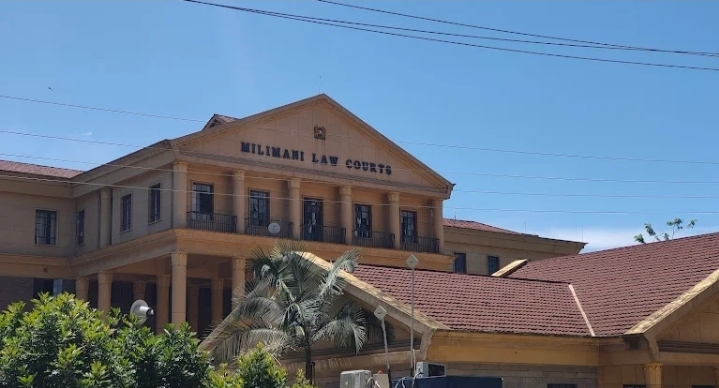
Then the High Court of Kenya at Milimani set aside his judgment, called his conduct an abuse of process, and barred him from ever filing any “machine‑generated” pleading in any Kenyan court – unless Parliament first passes a law explicitly allowing AI‑assisted drafting.
That is not judicial caution. It is judicial anxiety in the face of technological disruption.
The Ruling in Brief
In Republic of Kenya, High Court at Nairobi County, Milimani High Court, HCJRMISC/E120/2025 (ruling delivered 16 April 2026), Justice J. Chigiti (SC) considered whether it is legal to draft pleadings using artificial intelligence tools. The respondent/ex parte applicant admitted using what he described as ordinary digital tools, including legal research tools, to assist in writing. He maintained that he had personally reviewed, edited, and adopted every document and remained personally responsible for all factual statements on oath and legal citations. He argued that his pleadings contained no fabricated cases, false citations, or invented quotations, and that, being self‑represented, he had used lawful tools to participate effectively in court.
The Court disagreed. It held that:
· The use of personalised drafting tools, structures and methodologies not provided for under the rules of drafting was “deplorable”. · Allowing such departures would create a “litigation disaster” leaving judges with no guiding beacons. · Generating pleadings through unknown tools or AI gives an unfair advantage to the user, amounting to an affront to access to justice under Article 48 of the Constitution. · The fact the applicant admitted using such tools amounted to an abuse of court. · The applicant could not “vouch for or verify for the court the truthfulness or accuracy” of AI‑generated pleadings, because that would mean he acted as a judge in his own case, violating natural justice.
On that basis, the Court barred the applicant from filing any other pleadings in any court that are machine‑generated, unless a law is passed in Kenya allowing or providing for drafting using artificial intelligence tools.
The Court did observe that technology is a powerful socio‑economic growth tool when harnessed within a legal framework, and invited the Rules Committee to consider amending the Civil Procedure Rules through public participation to embrace technology and AI drafting rules. But the prohibition stands.
The Flaws in the Judgment
Respectfully, the ruling cannot withstand serious scrutiny. I identify four fundamental errors.
1. The “Procedural Integrity” Error
The Court reasoned that because the Civil Procedure Rules do not mention AI, using AI is unlawful. But the Civil Procedure Rules do not mention laptops, either. They do not mention word processors, grammar‑check software, the delete key, or the backspace button. No judge has ever struck a pleading for being typed rather than handwritten.
Silence in the rules is not a prohibition. It is a gap that the rules themselves empower courts to fill – reasonably, proportionately, and with an eye to justice, not to ritual.
2. The “Unfair Advantage” Error – This One Is Fatal
The Court held that a litigant using AI has an unfair advantage over one who does not, and that this violates equality of arms.
Let us apply that logic consistently.
· Google vs. Law Reports – A lawyer with a smartphone and an internet connection can find authorities in seconds. Another, relying on a dusty shelf of hardbound law reports, takes hours. Is that unfair? No judge has ever said so. · AfricanLii / KenyaLii – These digital databases make case law searchable, cross‑referenced, and instantly accessible. A litigant without them is at a disadvantage. Has any court called that an affront to Article 48? On the contrary, the Judiciary itself promotes these tools. · Ulii (Uganda Legal Information Institute) – It now uses AI to summarise judgments. No judge in Uganda has condemned it. No advocate has been barred for citing an AI‑generated summary. The tool is public, free, and welcomed. · Modern medicine – A patient in a Nairobi teaching hospital has access to MRI scans, robotic surgery, and AI‑assisted diagnostics. A patient in a remote clinic does not. That inequality is real. But no court has banned MRI machines because not everyone can afford them. The answer is to spread the technology, not to ban it.
The Court confused asymmetry with injustice. An asymmetry is unjust only when it is arbitrary (only one side gets the tool), hidden (use is not disclosed), or undermines a core right (such as the ability to test evidence). None of those conditions applied here. The litigant disclosed his AI use. The tools are widely available. And the core right – to present a truthful, coherent pleading – was enhanced, not undermined.
If the Court’s logic were applied consistently, we would still be filing pleadings in quill and ink. The unfair advantage is not in the tool. It is in the refusal to adapt.
3. The “Judicial Capacity” Error
The Court said it cannot “verify” AI‑generated content, so the safer course is to ban it entirely.
But courts never “verify” how a human wrote a pleading. They do not audit pen strokes, interview secretaries, or review dictation logs. They look at the final document. If it contains lies, fake cases, or false citations, they sanction the filer. That same framework works perfectly well for AI.
The Court could have required disclosure, a personal verification oath, and a statement that no fabricated content is included. That is governance, not prohibition. Instead, it chose the nuclear option.
4. The “Parliament’s Prerogative” Error
The Court held that only Parliament, not the courts, can authorise AI use in legal process.
Artificial intelligence is not a controlled substance. It is a tool. Courts do not need a statute to permit the use of search engines, word processors, or online databases. They do not need an Act of Parliament to allow a lawyer to take a typing class.
Mandating a legislative framework for basic productivity software is not judicial restraint. It is jurisdictional abdication.
—
A Constitutional Mirror: Article 159 of the Kenya Constitution
The ruling’s approach sits uneasily with Kenya’s own constitutional framework. Article 159(2)(d) of the Kenya Constitution 2010 commands that “justice shall be administered without undue regard to procedural technicalities.”
Procedure exists to serve justice – not to imprison it. A prohibition on an entire category of drafting tools, without any evidence of misuse, elevates form over substance. That is precisely what Article 159 warns against.
If a self‑represented litigant files a pleading that is truthful, coherent, and personally verified, does the mere fact that an AI assisted in its composition make it less worthy of consideration? The Constitution suggests the answer is no.
—
What the Court Could Have Done – And What Others Are Doing
A more thoughtful, proportionate approach is not only possible; it is already being implemented elsewhere.
In Kenya itself, Justice Bahati Mwamuye recently struck out an AI‑assisted filing – but for procedural defects (missing notice statements, non‑compliant affidavits), not for AI use itself. He gave the litigant leave to refile. That is proportionate. (See AllAfrica, 11 March 2026)
Internationally, Singapore’s State Courts have issued a detailed Guide on the Use of Generative Artificial Intelligence Tools by Court Users (effective 1 October 2024). Lawyers may use AI but remain fully responsible for all content; must fact‑check; must not fabricate evidence; violations may lead to sanctions. No prohibition. Just governance. (Registrar’s Circular No. 9, State Courts of Singapore)
In Estonia, small contract disputes below €7,000 can be decided by an AI judge that proposes a decision; a human judge then reviews and may modify or set it aside. That system has reduced backlog without sacrificing due process. (Law Society Journal, Australia, August 2024)
Even Kenya’s own Chief Justice, Martha Koome, announced in August 2025 that the Judiciary is developing an AI Adoption Policy Framework to guide integration of AI tools while safeguarding judicial independence, data privacy and due process. (Judiciary of Kenya official website, 11 August 2025)
The Chigiti ruling is swimming against the tide of its own institution’s planning.
The correct path is clear:
· Disclosure – A litigant or lawyer using AI to draft pleadings should disclose that fact. · Verification – The filer must personally review and adopt all content, swearing to its truthfulness. · Accountability – False citations, fabricated cases, or misleading content remain sanctionable, whether written by a human or generated by a machine. · No prohibition – The tool itself is not the offence. Misuse is.
The Legal Profession Responds
Prominent Kenyan lawyers have reacted with dismay.
Ahmednasir Abdullahi, SC, one of Kenya’s most respected advocates, wrote on X: “What an absurd decision. Does it matter whether one drafts pleadings using AI tools or uses a typewriter? It is none of the court’s business.” (Nairobi Law Monthly, 21 April 2026)
Steve Biko Wafula, senior counsel, published a detailed critique: “This ruling reads less like modern jurisprudence and more like a judicial panic attack in the face of technological change… The court had a first‑rate jurisprudential problem in its hands and squandered it, trying instead to drag the administration of justice back into the pre‑digital age.” (Soko Directory, 21 April 2026)
These are not fringe voices. They are the heart of the Kenyan bar.
A Word to My Ugandan Colleagues – And to Our Judges
I write from Uganda, where we have not (yet) seen a ruling of this kind. Our judges have quietly tolerated – perhaps even welcomed – the steady digitisation of practice. We use e‑filing, and we cite Ulii’s AI‑generated summaries without panic.
But the same instinct that produced the Chigiti ruling lives everywhere: the fear that the machine will replace the judge, that the algorithm will swallow the advocate, that technology will dissolve the profession’s hard‑won exclusivity.
That fear is misplaced.
AI does not abolish judgment. It does not abolish ethics. It does not abolish the court’s ultimate authority. What AI abolishes is inefficiency – hours spent searching for authorities that software can locate in seconds, repetitive drafting, and the false prestige built around scarcity of technical knowledge.
And perhaps that is what truly frightens some corners of the profession. When information becomes democratised, gatekeepers begin to sweat.
But justice does not belong to the gatekeepers. It belongs to the public. And the public does not care whether a pleading was drafted by candlelight, typewriter, Microsoft Word, or artificial intelligence. The public cares whether justice is accessible, affordable, timely, intelligible, and fair.
If AI helps achieve that mission, then resisting it is not conservatism. It is obstruction. And obstruction disguised as professionalism remains obstruction.
Conclusion: The Future Cannot Be Injuncted
History is littered with institutions that initially resisted the printing press, telephones, computers and the internet – only to later embrace them as essential tools.
Did the world wait for a complete legal framework before embracing mobile money? Did banks issue a constitutional petition before M‑Pesa rewired African commerce? Did Western Union obtain an injunction against digital wallets because “money transfers” had traditionally been their sacred territory? Of course not.
Technology arrived. Society adapted. Regulators followed. That is how civilisation has always moved.
The same will happen with AI in the legal profession. The only remaining question is: will courts lead this transformation – or become footnotes in it?
To our Kenyan brothers and sisters: this ruling is a warning for all of us. Not because Kenya is wrong, but because the same instinct – to fear the machine, to reach for a prohibition when a guideline would suffice – lives in every jurisdiction, including ours. The question is not whether Uganda will face this debate. The question is whether we will face it more wisely.
And to any judge reading this: thank you for your service. But please, do not ban the future. Regulate it, guide it, human‑oversight it – but do not pretend that a tool becomes an abuse simply because it is new.
This time, let us not make the same mistake.
― END ―
Disclaimer: This blog is a critique of a judicial ruling and a contribution to the conversation on technology and legal practice. It is not intended as legal advice, nor as an attack on any judicial officer or institution. The author remains committed to the rule of law, judicial independence, and the responsible integration of technology into the administration of justice.
Enen Ambrose. (File photo)
Enen Ambrose
Member: Judiciary Affairs Committee
Uganda Law Society
For feedback or questions, write to: enen@enenlegalworld.com