As the Uganda Law Society (ULS) prepares for the election of its representatives to the Judicial Service Commission (JSC), we find ourselves at a critical juncture. President Isaac K. Ssemakade’s leadership under the Radical New Bar (RNB) has reignited the ULS’s commitment to justice, accountability, and transparency. Through RNB Executive Order No. 2 of 2024, he courageously recalled unelected representatives to the JSC, a move that was both revolutionary and necessary.
This bold action was only the beginning. The forthcoming elections must uphold these revolutionary ideals by ensuring compliance with the law and protecting the credibility of the ULS.
Salute comrade Kafuko Nicholas.
I take this moment to personally credit Kafuko Nicholas, whose letter to the ULS Electoral Commission was the first to sound the alarm on the eligibility of certain candidates for the JSC positions. His insights into the inconsistencies and potential breaches of the law were not only timely but crucial in sparking this debate. Kafuko’s determination and dedication to upholding the rule of law remind us that true change begins with individuals willing to challenge the status quo.
The Fundamental Issue: Greed and Conflict of Interest
One cannot help but reflect on the underlying motivation of individuals who seek to hold onto one public office while simultaneously vying for representation in another. This is not merely a question of eligibility; it is a manifestation of greed of the highest order.
The role of a ULS representative to the JSC demands complete independence, impartiality, and a commitment to the society’s interests above all else. Clinging to a public office while seeking this role undermines these principles. It reflects an unwillingness to relinquish power and privileges, raising serious questions about the candidate’s intentions and priorities.
Public Officers and Electoral Integrity
The Constitution of Uganda provides a clear definition of public officers under Article 175(a) and (b): those holding positions in public service and drawing their salaries from the Consolidated Fund. This definition unequivocally includes individuals employed in public universities, statutory bodies, and other government-funded entities.
Uganda’s electoral laws for mainstream offices, including Members of Parliament, the Presidency, and Local Government, require public officers to resign before contesting. This ensures that such candidates do not misuse state resources or exploit their official positions to gain an unfair advantage.
In the Mukasa v. Uganda Revenue Authority (Civil Appeal No. 78 of 2009) case, the Court of Appeal reinforced the understanding that public officers are individuals whose remuneration originates from government funds. This precedent further solidifies the argument that those holding public offices must resign before contesting for positions such as ULS representatives to the JSC.
The Role of the Radical New Bar.
President Ssemakade has laid the foundation for a new era of accountability and transparency within the ULS. However, the true test of the Radical New Bar Revolution lies in its ability to confront systemic flaws and safeguard the integrity of its processes.
The nomination of public officers for the JSC election represents a clear conflict of interest and a betrayal of the principles the ULS stands for. Allowing such individuals to contest would not only violate the law but also tarnish the credibility of the Radical New Bar.
My Reflections: Greed vs. Service
At its core, the ULS represents a commitment to justice, fairness, and public service. The pursuit of multiple offices for personal gain betrays these values. It signals a prioritization of self-interest over the collective good of the legal fraternity and the judiciary.
To those clinging to their public offices while seeking election to the JSC, I say this: the Radical New Bar is not a vehicle for your ambitions. It is a movement for accountability and reform, and it will not accommodate greed or unethical practices.
A Call to Action: Reform and Accountability
The ULS must seize this opportunity to address the systemic gaps that have allowed this situation to arise. I call upon the following stakeholders to act decisively:
1. Uganda Law Society
Amend the ULS Elections Regulations to explicitly require the resignation of public officers before nomination. This will align ULS processes with national electoral standards and prevent future ambiguities.
2. Parliament of Uganda
Introduce comprehensive reforms to harmonize electoral laws across all institutions, ensuring that the principles applied to mainstream elections are equally enforced in quasi-governmental and professional bodies.
3. Judicial Service Commission
Uphold strict eligibility criteria and work closely with the ULS to ensure that representatives are selected through a lawful and transparent process.
4. Civil Society and Legal Advocacy Groups
Amplify public awareness of these issues and hold all stakeholders accountable for maintaining the integrity of the JSC election.
5. Legal Fraternity
Embrace the spirit of reform and actively oppose any attempts to subvert the principles of fairness and transparency.
Protecting the Revolution
The Radical New Bar has sparked a revolution, but revolutions are fragile. They require constant vigilance, courageous leadership, and an unwavering commitment to the values they seek to uphold.
President Ssemakade has demonstrated his willingness to confront the status quo, but his legacy—and the legacy of the Radical New Bar—depends on what we do next. By enforcing the law, addressing systemic flaws, and rejecting greed and self-interest, we can ensure that the ULS remains a beacon of justice and integrity.
Conclusion
The forthcoming election of ULS representatives to the Judicial Service Commission is not just a procedural matter; it is a defining moment for the Radical New Bar Revolution. We must honor the contributions of individuals like Kafuko Nicholas, whose vigilance has highlighted critical flaws in the process.
Let this be a turning point. Let us demand accountability, embrace reform, and reject greed in all its forms. Together, we can protect the Radical New Bar Revolution and ensure that the Uganda Law Society lives up to its mission as a guardian of justice and fairness.
The time to act is now. Let us build a legacy of integrity and accountability that will inspire future generations of legal professionals.
About the Author.
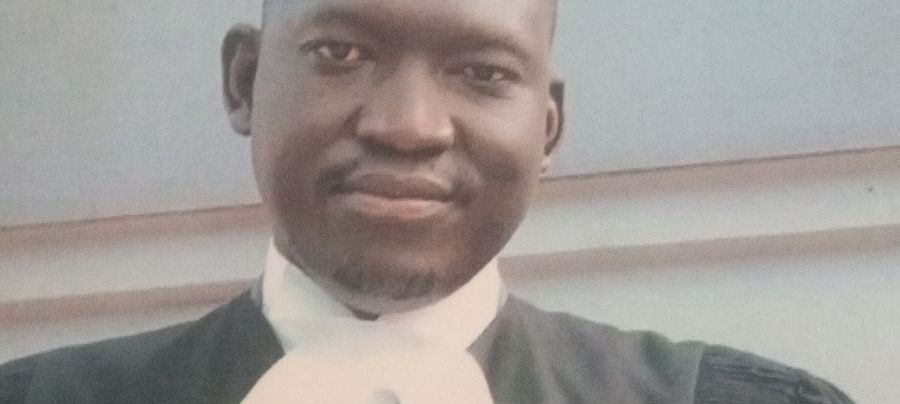
The author is a Rule of Law enthusiast, a fan of President Isaac K Ssemakade and the Radical New Bar Revolution. He practices with M/S Okurut-Magara Associated Advocates in the up country Town of Adjumani.
DISCLAIMER:
This write up contains merely personal reflections for information purposes and is not intended to provide legal advice. Readers are strongly encouraged to seek the services of a professional attorney in their area of Jurisdiction for situation specific advice and appropriate courses of action.
Contact us:
Mobile: 0789856805
Email: ambrosenen@gmail.com
 enenlegalworld
Leave a comment