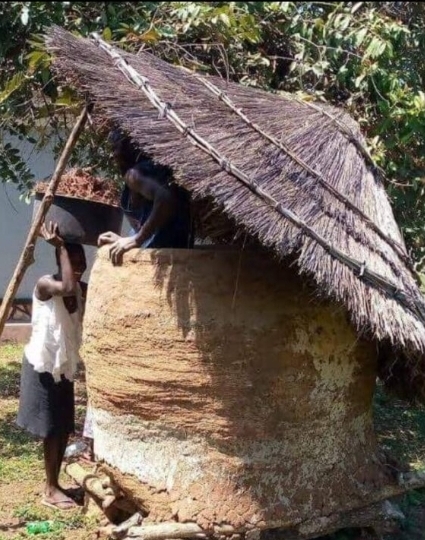

There is a village called Abongodero. Abongodero means without a granary.
The villagers named it after Mzee Zakayo’s ingenuity.
Zakayo was clever. He never built a granary of his own. Instead, he raised cattle, fat bulls, glossy heifers. When hunger season approached, he would walk to a farmer whose granaries groaned with millet and offer a bull in exchange for rights to a certain number of storehouses. Enough to feed his household. Enough to impress the neighbors.
The arrangement was sealed with a handshake. Everyone knew Zakayo’s cattle. Everyone knew he paid.
The villagers admired him.
“..Look at Zakayo!..”they whispered around evening fires. “He eats from granaries he never built!“
They admired him so much that they named the village after his ingenuity.
Abongodero.
But abundance has a wicked sense of humor.
Zakayo’s children grew up knowing which families owed them food, which granaries bore their father’s mark. They inherited cattle, but not discipline. They inherited the right to eat, but not the wisdom to plant.
One of them was Okello Anyapo.
Anyapo. The lazy one.
Okello inherited land so fertile it blushed when rain touched it. Black soil. Generous soil. Soil that would have yielded harvests his grandfather never imagined.
But his hoe remained smooth. His fields grew weeds tall enough to vote.
When hunger came, Okello blamed the sun for burning too bright. He blamed the rain for falling too hard. He blamed the ancestors for not speaking loudly enough. He blamed everyone except his idle hands.
Across the stream lived Owera Apur.
Apur the Farmer.
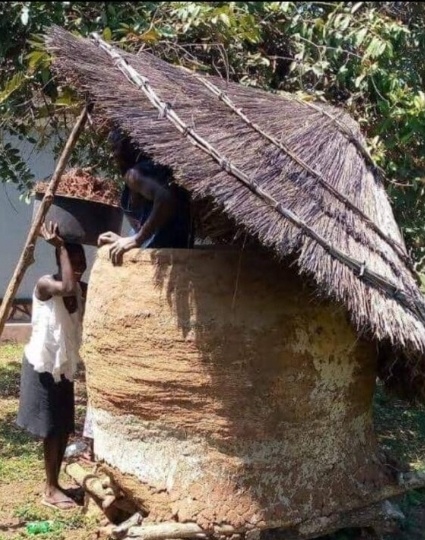
He did not give speeches about productivity. He simply woke before the rooster finished its gossip. He dug. He planted. He weeded. He waited. His granary stood behind his hut like a quiet monument to repetition.
He had no cattle to trade. He had only his back, his hands, and his patience.
His granary stood full.
Proof that the land was never the problem.
Then hunger came like a leopard.
The families who once owed Zakayo’s children had rebuilt their stores. They no longer needed cattle. They needed their millet for themselves.
Okello’s inheritance could not be traded for what no one would sell.
Hunger clawed him thin.
He crossed the stream.
“Uncle,” he said. “We are blood. Remember Father Zakayo? The village bears witness to his name.”
In Lango, dignity comes before shame. Owera sighed. He looked at his granary—full from seasons of sweat.
He opened the door.
“Enter,”he said. “Take what you need.”
Not ownership. Not supervision. Not rules.
Just access.
Okello entered empty and emerged round.
He returned the next day. And the next. Soon he stopped pretending to farm at all.
Why sweat when sacks yawn open?
Why ration when no one counts?
Why plant when the granary door never closes?
By planting season, Owera opened his store to prepare for the rains.
It echoed like a drum.
Empty.
When confronted, Okello adjusted his waistband and smiled.
“You allowed me.“
“There were no rules.“
“I merely accessed.”
And that is how Abongodero learned what their ancestors should have known:
You never send a starving man to the granary.
[End of Episode 1]
Stay tuned and on the look out for Episode 2 of the legend of Abongodero.
 enenlegalworld
Leave a comment