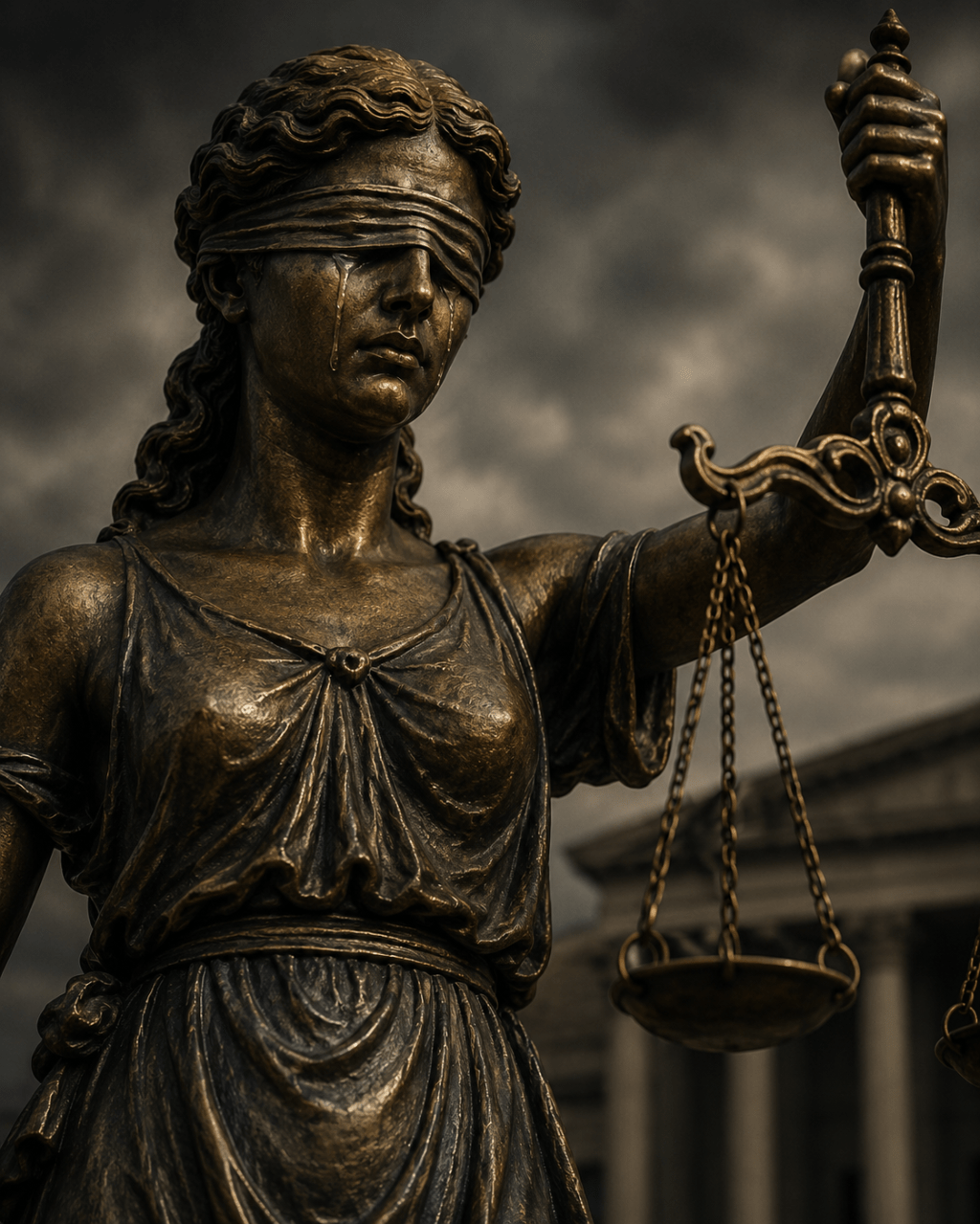

Imagine your son leaves home to go to the farm.
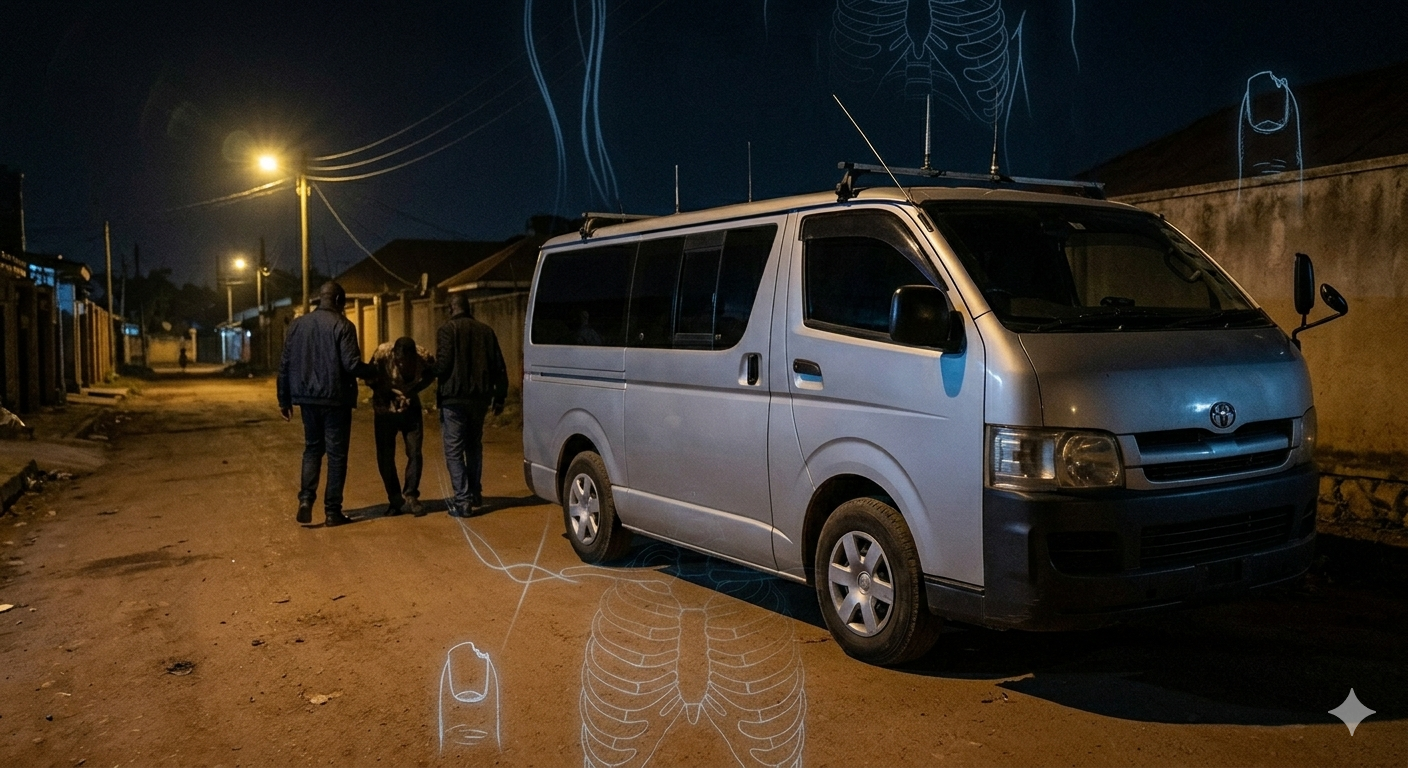
He never returns.
Days become weeks.
Weeks become months.
You move from police station to police station looking for him.
Nobody tells you where he is.
Nobody tells you what he has done.
Nobody tells you when he will come home.
Then one morning, somebody calls.
“He is being produced in court.”
You rush there.
He arrives limping.
His mother begins to cry.
Even before he speaks, everybody in court can see that something happened.
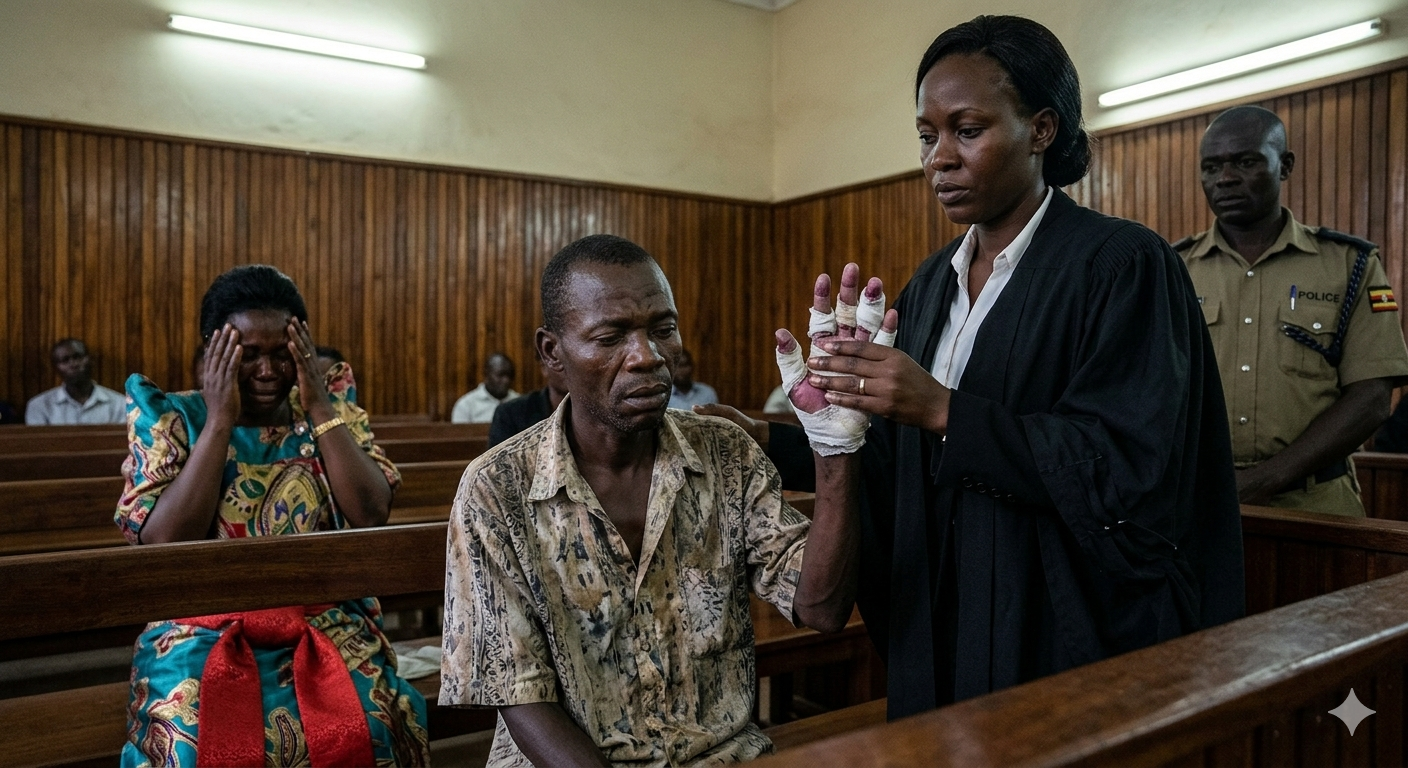
The State says he is a criminal.
He says he was tortured.
The Court agrees that his rights were violated.
But the trial continues anyway.
That is why the Constitutional Court’s decision in Faruku Muhamed and 2 others v Attorney General matters. A copy of the judgment can be accessed here
Many Ugandans will never read the judgment.
Many will never understand the legal arguments.
But every Ugandan should understand what is at stake.
Because this case is not really about criminals.
It is about power.
For nearly twenty years , in cases like those of Uganda Law Society and the famous Kayunga riots Uganda’s courts had been slowly teaching the State a simple lesson:
There are some lines you do not cross.
Some rights are so important that violating them comes at a heavy price.
That principle was not created to protect criminals.
It was created to protect citizens.
It was created because Uganda knows what happens when people in power stop fearing the Constitution.
Our Constitution was not written in paradise.
It was written after years of arbitrary arrests.
Years of torture.
Years of disappearances.
Years of constitutional crises.
Years in which the ordinary citizen stood almost naked before the power of the State.
The framers understood something simple.
A government should never be allowed to break the law in order to enforce the law.
That is why some rights were declared non-derogable.
Untouchable.
Non-negotiable.
Beyond convenience.
Beyond politics.
Beyond excuses.
The Faruku decision changes that conversation.
The Court has not legalized torture.
The Court has not abolished constitutional rights.
The Court has done something more subtle.
It has reduced the cost of violating them.
And history teaches us that constitutional decline rarely begins when rights are abolished.
It begins when violating them becomes cheaper.
Supporters of the decision ask a fair question.
Should a murderer walk free because he was tortured?
Should a terrorist escape punishment because his rights were violated?
Those questions sound persuasive.
Until we ask another.
If the State already had enough evidence to convict, why was torture necessary in the first place?
Why break the ribs?
Why remove the fingernails?
Why apply electric wires?
Why violate the Constitution at all?
That is the question Uganda should be asking.
Instead, we are being encouraged to focus on what happens after the violation.
Sue for damages.
File another case.
Seek compensation.
But every Ugandan knows the reality.
The person who emerges from years of detention, trial, imprisonment, poverty and trauma rarely possesses the energy, resources or influence required to start another legal battle.
The remedy exists on paper.
Life exists in reality.
And those two things are not always the same.
Perhaps the most frightening symbol of this reality is a single word.
“Drones.”
There was a time when a drone was something that flew in the sky.
Today, many Ugandans hear that word and think of something else entirely.
Think about how abnormal that is.
Think about how much had to happen before an entire country accepted that vocabulary.
Think about how many stories are hidden inside that single word.
The abnormal has become normal.
The shocking has become routine.
The unacceptable has become familiar.
And when that happens, constitutional erosion is already underway.
Some people will say these concerns are exaggerated.
They will say rights still exist.
They will say courts remain independent.
Perhaps.
But constitutional history is filled with societies that discovered too late that rights on paper are not the same thing as rights in practice.
A Constitution is not tested when it protects the popular.
It is tested when it protects the unpopular.
It is not tested when it restrains the weak.
It is tested when it restrains the powerful.
The true measure of constitutionalism is not how the State treats those it likes.
It is how the State treats those it fears, suspects, opposes or despises.
That is why this moment matters.
Not because a criminal might benefit.
But because power always expands into spaces where consequences disappear.
Today it may be a suspected criminal.
Tomorrow it may be a journalist.
The next day it may be a businessman.
The day after that it may be an opposition supporter.
One day it may be your son.
Or your daughter.
Or you.
The Supreme Court may yet reverse this decision.
History may yet correct it.
But the real answer will not be found in law reports.
It will be found in what follows.
If State agencies become more respectful of constitutional rights, perhaps the Court’s faith in alternative remedies will be vindicated.
If they do not, future generations may look back upon Faruku as the moment Uganda’s Constitution was not destroyed—
but the moment it was asked to stand aside while power carried on with business as usual.
Our Constitution was meant to be a fence around the citizen.
A fence is only as strong as the dog that guards it.
If the dog can no longer bite, only the thief has reason to celebrate.

That is why some of us are mourning today.
Not because the Constitution is dead.
But because it has been asked to whisper where once it could roar.
DISCLAIMER:
The contents of this Blog are not intended to be used as a substitute for legal advice. The author shall not accept liability for use of the contents of this Blog as legal advice. Readers are encuraged to consult qualified advocates for real life situations for legal advice.
JOIN THE UNDERGROUND AND FUEL THE MOVEMENT

We have created a dedicated fans WhatsApp Channel. Don’t miss the latest updates, get early bird access to our latest blog posts and more, so much more. Click the following link to follow the Channel: https://whatsapp.com/channel/0029Vb9BQqw5a246bWVsLl3j
Independent institutional critique and advocacy for a radical overhaul of legal culture require time, deep research, and uncompromised independence. If these narratives bring value to your legal journey or challenge your perspective, please visit our HOME PAGE to see how you can support this platform directly and keep the critique fierce and relentless.
Enen Ambrose. Advocate
Member, Judiciary Affairs Committee,
Uganda Law Society
& Founder–Enen Legal World
 enenlegalworld
Leave a comment